

Phones using the sensor should arrive this year
Sony is positioning the chip as a secondary sensor, not the main event, which is pretty typical for telephoto hardware. Manufacturers are set to start receiving the LYTIA 610 at the end of June, and the first phones with it are expected to appear this year.
The bigger question is whether this kind of sensor-level upgrade will become the new normal for zoom cameras. If it does, the winners are phone buyers who finally get a telephoto lens that feels less like an afterthought and more like part of the selling point.
Phones using the sensor should arrive this year
Sony is positioning the chip as a secondary sensor, not the main event, which is pretty typical for telephoto hardware. Manufacturers are set to start receiving the LYTIA 610 at the end of June, and the first phones with it are expected to appear this year.
The bigger question is whether this kind of sensor-level upgrade will become the new normal for zoom cameras. If it does, the winners are phone buyers who finally get a telephoto lens that feels less like an afterthought and more like part of the selling point.
- Resolution: 64 megapixels
- Sensor size: 1/2-inch
- Video: 4K at 120 fps
- HDR video: 4K DAG-HDR at 60 fps
Phones using the sensor should arrive this year
Sony is positioning the chip as a secondary sensor, not the main event, which is pretty typical for telephoto hardware. Manufacturers are set to start receiving the LYTIA 610 at the end of June, and the first phones with it are expected to appear this year.
The bigger question is whether this kind of sensor-level upgrade will become the new normal for zoom cameras. If it does, the winners are phone buyers who finally get a telephoto lens that feels less like an afterthought and more like part of the selling point.
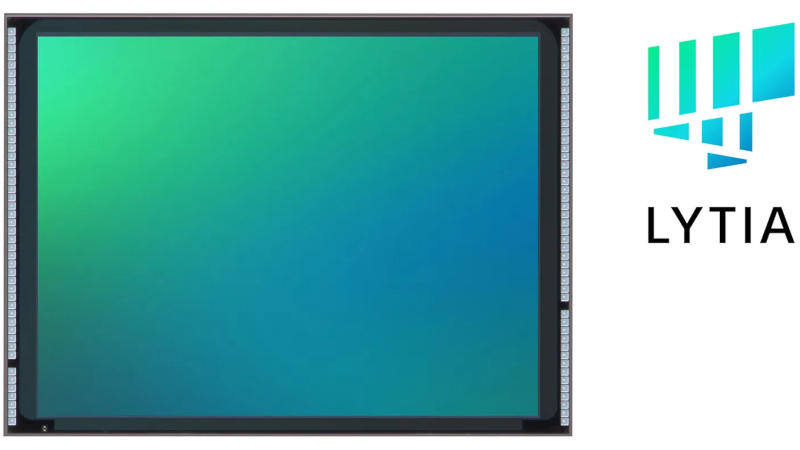
Sony has unveiled the LYTIA 610, a 64-megapixel 1/2-inch mobile sensor built to make smartphone zoom cameras sharper and quicker to focus. Its odd-sounding trick is simple enough: Sony says this is the first mass-produced sensor to use an RB2×2 On-Chip Lens structure, pairing image clarity with faster autofocus in a format aimed at secondary cameras.
That matters because telephoto modules often get treated like the awkward cousin of the main camera: smaller, slower, and easier to ignore. Sony is trying to close that gap with a design that mixes different OCL layouts for different subpixels, plus remosaicing processing that the company says improves sharpness by more than 20% compared with its regular sensors of the same pixel size. In a market where every phone maker wants a convincing zoom story, that is a useful lever rather than a flashy one.
RB2×2 OCL and Quad Bayer design
The sensor uses a Quad Bayer matrix and combines two lens schemes in one package. Sony applies 1×1 OCL to the green subpixels, which handle image detail, while red and blue subpixels get 2×2 OCL, meaning four pixels feed into one lens for quicker and more accurate autofocus.
That split is clever because it treats detail and focus as separate jobs instead of forcing one compromise to do everything. It is also a reminder that camera quality is increasingly being fought at the sensor level, not just in software, where phone brands love to claim miracles after the fact.
4K video at 120 fps and faster readout
Beyond still photos, the LYTIA 610 adds speed-focused hardware, including energy-efficient logic circuits and an optimized parallel analog-to-digital converter. Sony says it is the first 1/2-inch sensor in its lineup to support 4K video at 120 fps, plus 4K DAG-HDR video at 60 fps.
- Resolution: 64 megapixels
- Sensor size: 1/2-inch
- Video: 4K at 120 fps
- HDR video: 4K DAG-HDR at 60 fps
Phones using the sensor should arrive this year
Sony is positioning the chip as a secondary sensor, not the main event, which is pretty typical for telephoto hardware. Manufacturers are set to start receiving the LYTIA 610 at the end of June, and the first phones with it are expected to appear this year.
The bigger question is whether this kind of sensor-level upgrade will become the new normal for zoom cameras. If it does, the winners are phone buyers who finally get a telephoto lens that feels less like an afterthought and more like part of the selling point.