

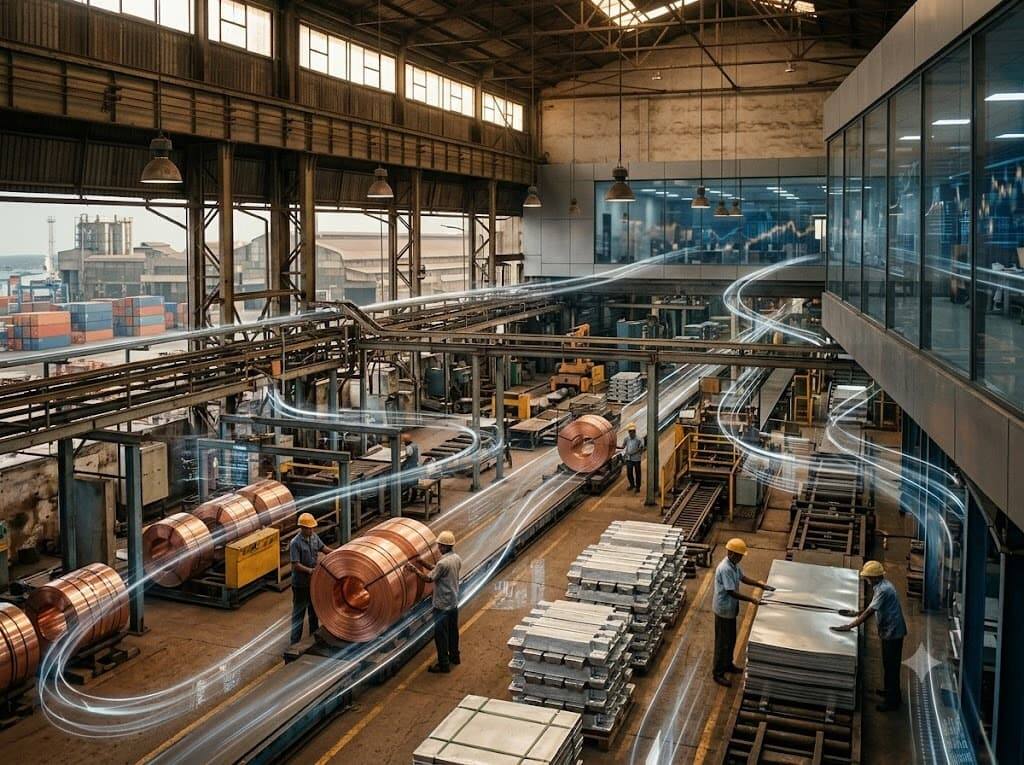
India’s biggest stock exchange is moving into a more industrial corner of finance. National Stock Exchange of India Ltd, or NSE, has signed a memorandum of understanding with Bombay Metal Exchange Ltd to develop derivatives for non-ferrous metals, giving companies a way to lock in prices and reduce the pain of sharp swings in raw materials.
The NSE metal derivatives push comes as the exchange also advances its IPO paperwork, filing a Draft Red Herring Prospectus with the Securities and Exchange Board of India. The exchange is trying to do two things at once: deepen its grip on India’s commodity plumbing and turn itself into a public company.
What NSE and Bombay Metal Exchange are building
The agreement brings together NSE’s trading infrastructure and BME’s long experience in non-ferrous metals. BME has been around for more than 90 years, which should help the new products feel less like a finance experiment and more like something tied to the realities of buying and selling physical metal.
- New derivatives for non-ferrous metals
- Tools for producers, processors, traders, importers, and exporters
- Education efforts around exchange-based risk management
That matters because India is a heavy consumer of industrial metals such as copper, aluminium, zinc, lead, and nickel. More factory output, more infrastructure work, more renewable energy projects and more electric vehicles all mean more exposure to price volatility, and businesses hate volatility almost as much as they hate paperwork.
Why hedging demand is likely to grow
NSE says the goal is to widen access to hedging tools and improve price transparency across supply chains. That’s a sensible pitch: in markets where costs can move faster than margins, futures and derivatives are often less about speculation than survival. Rival exchanges and metal hubs elsewhere have spent years trying to pull physical traders into more formal hedging systems, and India’s industrial base gives NSE a large pool of potential users if the products are liquid enough.
For BME, the deal gives its niche market a bigger stage. For NSE, it adds another layer to a business already central to India’s financial system, just as it prepares for a public listing. The open question is whether manufacturers and traders will actually migrate from old habits to exchange-traded risk tools, or whether education and trust-building will be the harder part of the deal.