

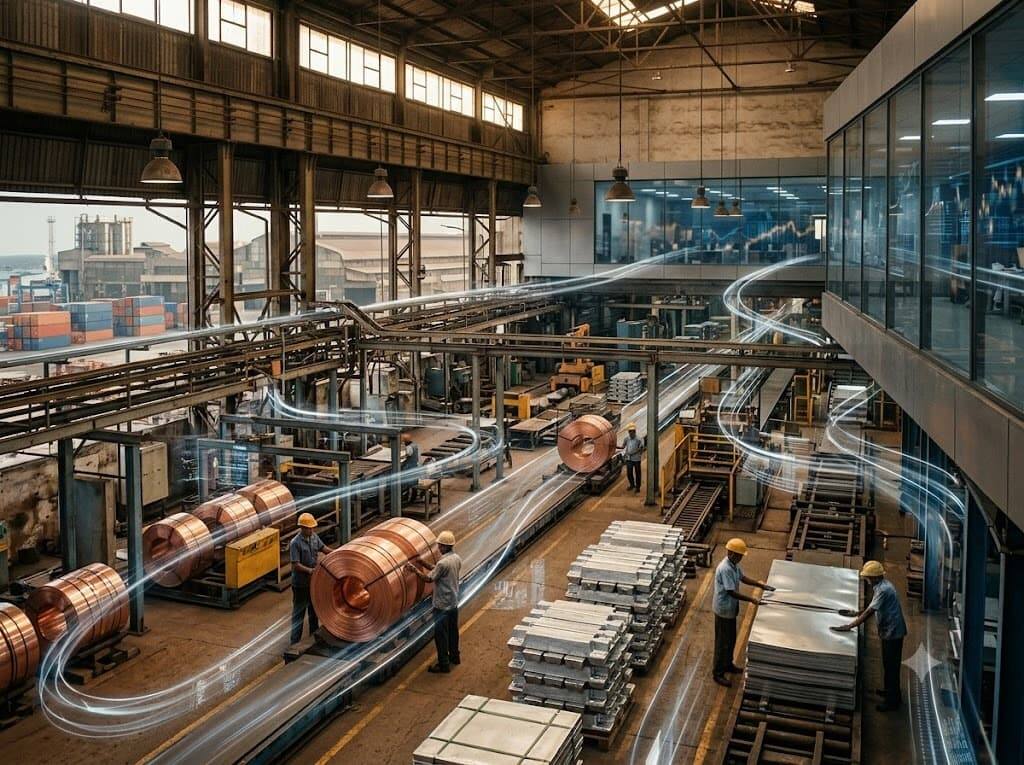
India’s biggest stock exchange is moving into a corner of the market that matters far beyond trading screens: the price risk faced by factories, traders, and exporters of industrial metals. National Stock Exchange of India Ltd, better known as NSE, has signed a memorandum of understanding with Bombay Metal Exchange Ltd to develop derivatives for non-ferrous metals, giving businesses a way to lock in prices and blunt the impact of swings in copper, aluminium, zinc, lead, and nickel.
The timing is doing a lot of work here. India’s industrial build-out, infrastructure spending, renewable energy push, and electric-vehicle ambitions all increase exposure to volatile metal costs, so hedging is moving from a specialist habit to a practical necessity. NSE is also preparing for its own public listing, which makes this tie-up look like both product expansion and a statement of intent.
How NSE and BME plan to build metal derivatives
BME brings more than 90 years of experience in non-ferrous metals, while NSE brings the scale and plumbing of a major exchange. Put together, the two want to broaden the use of hedging tools, improve price transparency across supply chains, and reach everyone from producers and processors to importers, exporters, and traders.
That mix matters because metal markets often split into two worlds: the physical market where companies actually buy and sell material, and the financial market where they manage risk. BME’s president, Sushil R Kothari, said the collaboration should strengthen that connection, which is a polite way of saying the current setup has not always been efficient enough for ordinary businesses.
Why metal hedging is getting more attention in India
NSE says India is one of the largest consumers of industrial metals, and that scale makes price shocks harder to absorb. In plain English: when input costs jump, margins get squeezed fast, especially for smaller manufacturers that cannot simply pass the bill on to customers.
- Goal: give businesses a way to fix metal prices in advance
- Scope: copper, aluminium, zinc, lead, and nickel
- Participants: producers, processors, traders, importers, and exporters
- Extra focus: education on exchange-traded risk management
Educational outreach is a smart addition, because derivatives only help if companies understand how to use them without treating them like casino chips. That has been a recurring problem in commodity markets globally: the instruments exist, but adoption stays thin until exchanges make them easier to understand and easier to trust.
NSE’s IPO filing adds another layer
Alongside the metals deal, NSE has filed a draft red herring prospectus with India’s securities regulator, SEBI. That is a formal step toward an IPO, and it suggests the exchange is trying to show breadth, relevance, and growth at the same time it seeks public-market approval.
If the partnership works, NSE gets a stronger foothold in commodity infrastructure just as it heads toward listing. The bigger question is whether Indian industry adopts these tools quickly enough to turn a well-designed product into an active market, because exchanges can launch contracts overnight – liquidity usually takes longer and has a stubborn habit of ignoring corporate strategy decks.