

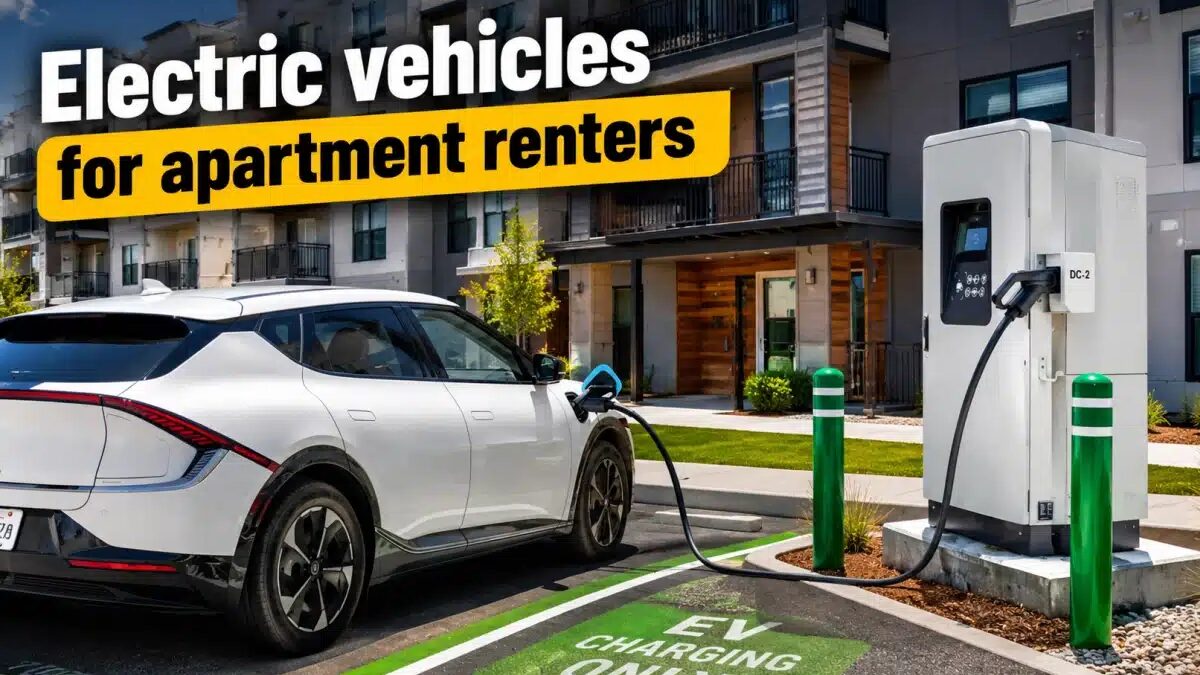
Apartment EV ownership is possible for renters, but the answer depends on one blunt question: where will you plug in? Owning an electric vehicle as a renter is not a fantasy reserved for lucky garage owners. For apartment dwellers, the car itself is often the easy part; the charging plan is what decides whether EV life feels civilized or vaguely punishing.
The gap is real. Roughly one-third of U.S. households live in multifamily housing, yet only about 5% of those properties have on-site EV charging. That helps explain why renters are still far less likely to own EVs than people in single-family homes, even when income is held constant. The good news is that the market is starting to move: building codes are tightening, public charging is spreading, and some states are giving tenants more leverage.
How apartment EV drivers should size up their setup
Before shopping for a car, renters should map the boring stuff first. Look for any outlet near your parking spot, garage, carport, or building structure. Even a standard 120-volt outlet can be useful if your daily driving is modest. Then check your real mileage, not your aspirational one: the average American drives about 37 miles a day, and staying under 60 miles daily makes apartment EV ownership much easier.
Public charging is the next pressure point. Apps like PlugShare can show whether Level 2 chargers are clustered near home, work, grocery stores, or shopping centers. If you regularly drive 80 to 100 miles a day and have no access to charging at home, you are signing up for a much less relaxed routine. That is especially true because apartment EV drivers often rely on public infrastructure that still lags behind home charging in convenience and reliability.
- Best-case renter setup: outlet near parking, short daily drives, and nearby Level 2 charging
- Borderline setup: no home charging, but multiple convenient public chargers nearby
- Poor setup: long daily mileage and no practical charging within reach
Right-to-charge laws and landlord conversations
Your state matters almost as much as your parking spot. Some places now have right-to-charge protections that make it easier for tenants to request charging access, while others leave renters with little help. That legal patchwork is one reason apartment hunting is becoming part real-estate search, part electrical audit.
Landlords are not all opposed to EV charging, but they usually respond to clear, practical asks rather than vague enthusiasm. The smart move is to bring specifics: what outlet is available, what kind of charger you need, and how often you actually drive. The apartment market has spent years treating EV ownership as a homeowner perk; renters are forcing it to grow up a bit.
Buying an EV for apartment life
Range matters, but not in the way glossy marketing suggests. A renter with easy access to public Level 2 charging may do fine with a more modest battery, while someone with no nearby charging should think harder about range and charging speed. DC fast charging is useful, but it is built for road trips and emergencies, not as a daily substitute for plugging in at home.
That is the real trade-off for apartment EV ownership: you can absolutely make it work, but the burden shifts from the car to your routine. If charging is dense, local, and predictable, renting does not stand in your way. If it is not, the inconvenience will announce itself every few days, usually right when you are running late.