

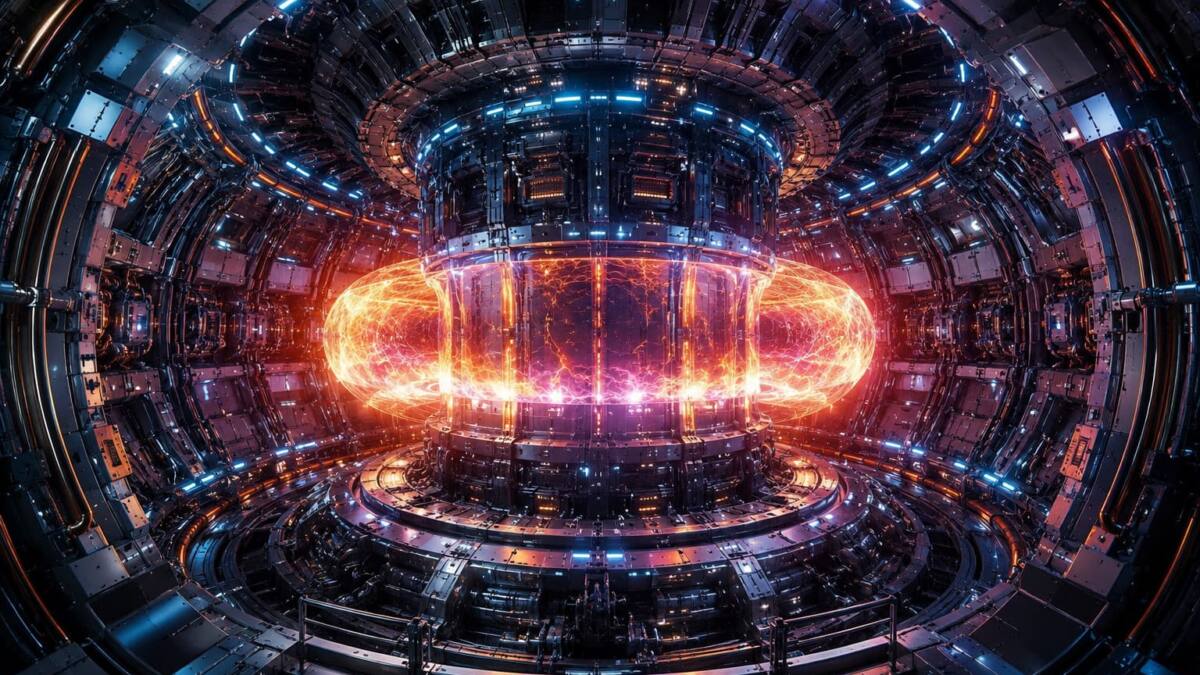
Germany has opened HEDI, a new research hub for laser fusion research aimed at one of energy science’s most stubborn problems: making fusion power less like a lab miracle and more like an actual industry. The High Energy Density Initiative, or HEDI, will be based around the University of Rostock and the Helmholtz-Zentrum Dresden-Rossendorf, with a focus on extreme matter, laser-driven fusion, and the physics that future reactors will have to get right if they are ever to leave the demo stage.
The launch on 18 June brought together regional leaders, federal officials, and researchers, which is usually a good sign that a project has moved from PowerPoint to concrete. That matters because fusion still suffers from a familiar problem: the engineering gets the headlines, while the underlying material science does the hard work. Germany is betting that understanding fuel under savage pressure may be the faster route to commercial relevance than chasing reactor hype alone.
What HEDI will study
One of HEDI’s main priorities is inertial confinement fusion, the approach in which powerful lasers compress and heat a fuel capsule until it reaches star-like conditions. Researchers will also examine ”warm dense matter” and ”hot dense matter” – exotic states of matter that show up not just in fusion experiments, but also in stars, gas giants, and other places where normal chemistry gets overwhelmed by pressure.
- Work on light elements under pressures of millions and billions of atmospheres
- Studies of how fuel behaves inside experimental reactor conditions
- Use of the European XFEL for high-end x-ray research
The money, partners and timeline
An Institute of High Energy Density Physics was created at the start of June to support the effort, backed by federal funding and the government of Saxony. Mecklenburg-Vorpommern is also putting in about 20 million euros for a new research complex, which is planned for completion by 2030. That kind of public investment is a sign that fusion is no longer being treated as a distant science fair attraction; governments want capability, supply chains, and eventual industrial spin-offs.
HEDI has already lined up a partnership with Marvel Fusion, the German startup developing commercial laser fusion systems. That is a smart pairing: the university side gets access to a company with a market target, while the startup gets a deeper scientific base than most private labs can build alone. If fusion is going to work outside national labs, that crossover between academic physics and industrial design is where the real test begins.
Why this German hub is more than a symbolic launch
The promise of fusion has always been clean energy with almost no carbon emissions and far less long-lived radioactive waste than conventional nuclear power. The catch is that the fuel and materials inside these machines behave in ways that are still poorly understood. HEDI’s pitch is straightforward: before engineers can build better reactors, scientists have to get much better at describing what matter does when it is squeezed into conditions that look more like a star than a power plant.
That leaves the obvious question: can Germany turn this into a durable edge while rivals in Europe, the US and Asia keep pushing their own fusion programmes forward? If HEDI can produce useful data fast enough, it may become one of the quieter but more important pieces in the global race for commercial fusion.