

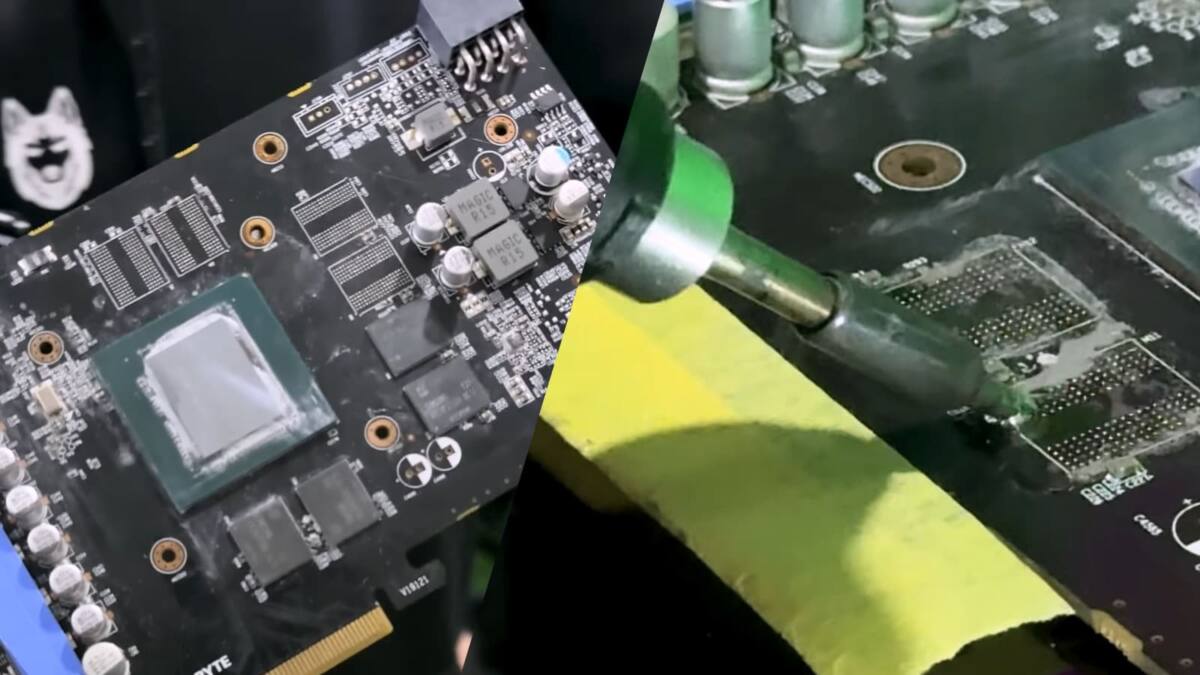
A GeForce GTX 1650 has been pushed from 4 GB to 8 GB of memory by replacing its GDDR6 chips, with no BIOS tweak required. The stunt sounds almost too neat for a GPU upgrade, which is exactly why it is interesting: it only works on versions built around the TU106 chip, and the real challenge turned out to be avoiding dead memory chips during the swap.
The experiment came from YouTube creator Paulo Gomes, who physically swapped four 1 GB memory chips for four Samsung HC16 2 GB chips. After the surgery, the card booted normally, detected the new memory size on its own, and kept working without any firmware changes. That is the sort of outcome hardware modders dream about and board partners usually hope nobody tries at home.
How the GeForce GTX 1650 memory upgrade worked
The modification was straightforward in principle: remove the original chips, solder on higher-capacity ones, and let the system do the rest. In practice, the process came with one annoying complication, because two faulty chips had to be dealt with during the upgrade. The key detail is the platform itself: only some GTX 1650 variants based on TU106 support these GDDR6 parts, so this is a trick for a specific slice of cards, not a universal recipe.
- Original memory: 4 GB GDDR6
- Upgraded memory: 8 GB GDDR6
- New chips: Samsung HC16, 2 GB each
- BIOS changes: none
- Automatic result: new capacity detected by the system
Benchmark numbers jumped, but games are another story
In Unigine Superposition, the card’s score rose from about 624 points before the upgrade to 1245 afterward. That is a big leap on paper, but synthetic tests love extra VRAM in a way real games do not always mirror. The better comparison here is not raw speed; it is whether the card can stop choking when textures, buffers, and scene data outgrow 4 GB.
That is why the memory bump could matter more for smoothness than for headline frame rates. More VRAM can reduce stutter, limit texture pop-in, and make borderline scenes behave better, especially on older cards that were sold with stingy memory configs in the first place. Still, without published game benchmarks from Gomes, the practical payoff is still an open question.
Why this GeForce GTX 1650 mod will stay niche
This is a clever proof of concept, not a casual weekend upgrade. Memory-chip replacement needs the right board layout, compatible parts, and steady hands, which knocks most owners out before they even think about opening the shroud. The broader industry lesson is obvious enough: if a card has unused hardware headroom, enthusiasts will eventually find it.
The more interesting question is whether more aging GPUs can be pushed this way without firmware gymnastics. If they can, expect modders to keep mining extra life from budget cards long after vendors have moved on. If not, the GeForce GTX 1650 will remain what it already is here: a neat demo with just enough real-world promise to keep people watching for the next teardown.