

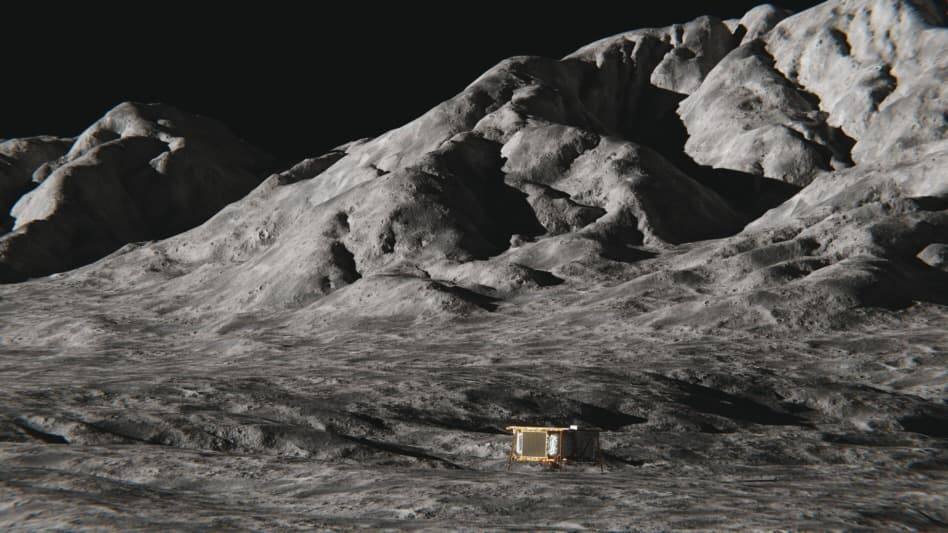
Instinct Space has junked its original plan for a Moon-orbit navigation network and is now betting on something far more direct: small, relatively cheap lunar landers launched to low Earth orbit first, then sent on to the Moon to drop cargo on the surface. The London startup says the real bottleneck is not finding your way around the Moon, but paying for the trip there in the first place.
That is a sensible pivot, if a less glamorous one. A lunar lander service sounds a lot less neat in a pitch deck than a GPS-style constellation, but it is the kind of business customers actually pay for as the commercial Moon race shifts from one-off stunts toward repeatable logistics.
A lunar lander sized like a dishwasher
Instinct says its first mission is planned for late 2028. The company is targeting a lander about the size of a household dishwasher, with capacity for up to 20 kg of payload and a quoted delivery cost of about $550,000 per kilogram. That pricing still isn’t cheap, but in lunar terms it is trying to look a lot less absurd than the traditional one mission, one giant bill approach.
- First mission: late 2028
- Payload capacity: up to 20 kg
- Estimated delivery cost: about $550,000 per kilogram
Why Instinct Space is betting on many small missions
The new model uses cheaper rides to low Earth orbit, after which the lander does the rest of the trip itself. That is basically space industry logic in miniature: outsource the expensive lift, simplify the vehicle, and spread the risk across more flights. It also follows a pattern seen across the sector, where companies are increasingly leaning into transport infrastructure and orbital services instead of building single, all-or-nothing spacecraft.
Instinct says it has already spent about $1.2 million of Y Combinator funding on propulsion and navigation testing for the future lander. It also claims there is demand waiting on the sidelines, including a May contract with Luxembourg-based Polimak Space to study delivery of regolith-related equipment. That is a small but telling sign: the market may be thinner than hype machines suggest, but it is not imaginary.
The bigger lunar logistics race
Instinct’s move lands in a crowded and increasingly practical corner of the space economy. The American CLPS programme already provides commercial cargo delivery to the Moon, which means any newcomer has to justify itself on price, cadence, or access to customers outside that ecosystem. That is why the startup’s pitch leans on international buyers and frequent small flights rather than prestige missions with giant payloads and even bigger invoices.
The real question is whether enough customers want to send tiny, specialised payloads to the lunar surface often enough to keep the pipeline full. If they do, Instinct’s pivot looks smart. If not, the company may have simply traded one hard problem for a cheaper version of the same headache.