

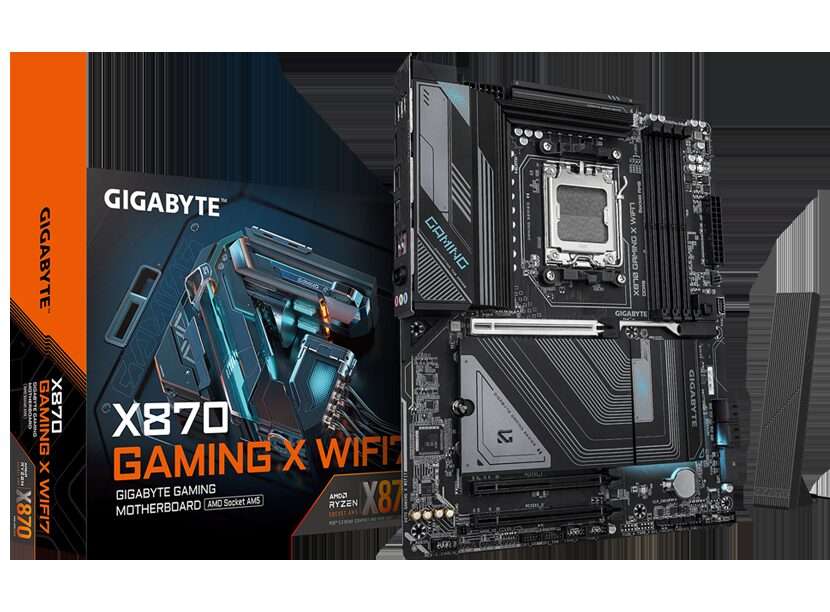
Gigabyte has started lining up its consumer AM5 motherboards for AMD’s next wave of Ryzen Pro 9000 processors, rolling out BIOS updates for boards based on X870, B850, B840, and even the entry-level A620 chipset. The list includes the headline-grabbing Ryzen 9 Pro 9965X3D, a chip that looks a lot like the Ryzen 9 9950X3D with a corporate badge and a slightly lower boost clock.
That move is a small but telling sign that AMD’s business-class desktop parts are moving from slide-deck territory into actual platform prep. Motherboard vendors don’t bother with BIOS support this early unless launch hardware is close enough to matter, and with Intel still leaning hard on its commercial branding, AMD clearly wants a cleaner story for enterprise buyers who don’t want to choose between workstation muscle and managed-device features.
Ryzen Pro 9000 specifications
The Ryzen 9 Pro 9965X3D is the first desktop chip in the Pro line to carry 3D V-Cache. It has 16 cores, 32 threads, a boost clock of up to 5.5 GHz, 128 MB of L3 cache, and a 170 W TDP. Compared with the consumer Ryzen 9 9950X3D, the setup is almost identical, except for a boost frequency that is 200 MHz lower.
- Ryzen 9 Pro 9965X3D: 16 cores, 32 threads, up to 5.5 GHz, 128 MB L3 cache, 170 W TDP
- Ryzen 9 Pro 9965: 16 cores, 32 threads, up to 5.5 GHz, 64 MB L3 cache
- Ryzen 9 Pro 9955: 12 cores, 24 threads, up to 5.4 GHz
- Ryzen 7 Pro 9755X3D: 8 cores, 16 threads, 96 MB L3 cache
- Ryzen 7 Pro 9755: 8 cores, 16 threads, up to 5.4 GHz
Gigabyte BIOS updates for AM5 motherboards
What’s interesting is not just that Gigabyte updated its premium X870 boards, but that it also extended support to B840 and A620. That widens the potential install base for Ryzen Pro chips and makes the launch less dependent on expensive boards, which is exactly how you make business platforms easier for IT departments to adopt in volume.
AMD said earlier that the first workstations and business PCs based on Ryzen Pro 9000 would go on sale in the third quarter. BIOS support now appearing across Gigabyte’s lineup suggests the rest of the motherboard industry is already in launch mode, even if the product pages haven’t quite caught up yet. The corporate pitch is old-fashioned but effective: more security, more remote management, and longer support than the average consumer chip.
What comes next for Ryzen Pro 9000 systems
The real test will be whether these Pro parts stay niche office fare or start showing up in higher-end small business rigs that currently default to consumer Ryzen models. If AMD can keep the pricing sane and the OEM rollout broad, the Pro label could become the easier sell for buyers who want workstation-class hardware without the usual enterprise tax.