
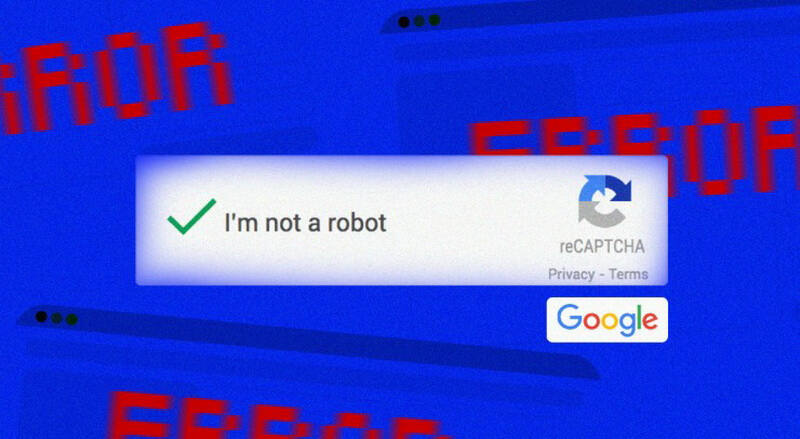
Google is testing a new reCAPTCHA-style check that asks people to grant webcam access and wave a hand at the screen. The Google CAPTCHA is designed to replace old image puzzles that bots can increasingly solve more easily than humans, so your next ”prove you’re not a robot” moment may involve a quick performance in front of your laptop.
The new method analyzes a short clip of hand movement and extracts 21 hand landmark coordinates, which are the joint-position measurements used to recognize gestures. Google says the video is not tied to a user’s identity, audio is never recorded, and the footage is deleted immediately after verification. That privacy pledge is doing a lot of heavy lifting, because a lot of users will still hear ”webcam check” and reach for the nearest tin foil.
How Google’s hand-wave CAPTCHA works
According to Google Cloud Fraud Defense, the system is designed to improve ”live user” detection and help sites block automated account creation, stolen-credential attacks, and other forms of online fraud. That is a sensible goal: the CAPTCHA arms race has been drifting away from distorted text and toward image grids, puzzles, and now behavior-based checks because AI bots are increasingly able to handle the old stuff.
- Permission requested: webcam access
- Verification action: wave a hand toward the camera
- Technical output: 21 hand landmark coordinates
- Google’s claim: no identity linkage, no audio recording, immediate deletion of video
Privacy pushback and easy workarounds
The backlash was predictable. Some privacy-conscious users see this as another step toward normalizing biometric monitoring online, especially for something as routine as access verification. One X user said the webcam-based check was ”much worse” than older CAPTCHA tests and called the new approach ”creepy” – which is not exactly the brand sentiment Google was probably aiming for.
There is also the awkward question of effectiveness. One user said they bypassed the check with a virtual camera and AI-generated animation, which is the sort of workaround that instantly dents the aura of security. That is the problem with security theater: if the trick is easy to spoof, the audience notices.
Why biometric checks are spreading
Cybernews notes that this kind of biometric verification is likely to spread as more countries adopt age-verification tools to enforce social-media restrictions for people under 16. That wider shift matters because it moves web verification away from ”solve this puzzle” and toward ”prove you are a real human with a device-ready body part,” which is a much bigger ask.
The more websites lean on camera-based checks, the more friction they create for users who do not want to hand over biometric signals for a login screen. Google may be betting that convenience will win, but the real contest is whether people accept this as normal before attackers learn to imitate it too.