

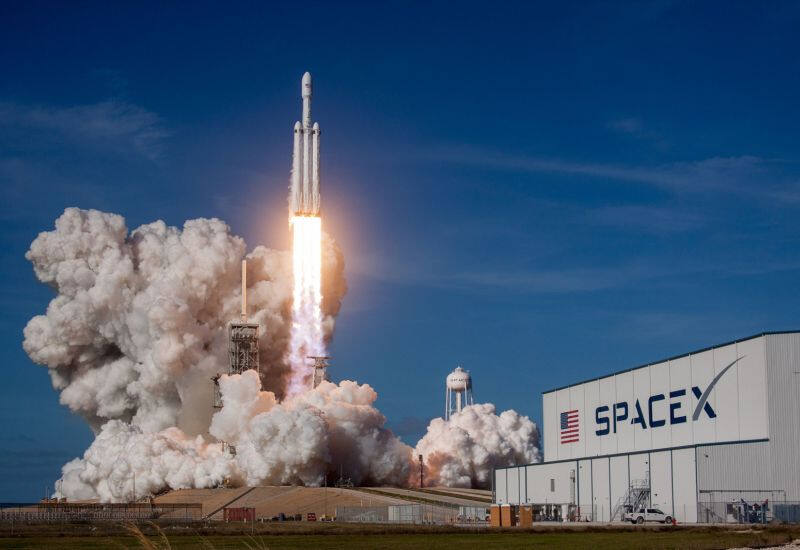
Elon Musk may be closer than ever to folding SpaceX and Tesla into a single corporate machine, and the people around him apparently think the odds of stopping it are slim. The idea sounds absurd until you remember how much of Musk’s empire already overlaps: shared people, shared capital, shared ambitions, and, increasingly, shared technology. If a Tesla and SpaceX merger ever happens, it would create a company with a combined market value of about $4 trillion.
The reporting, based on The New York Times, points to a structure that would likely use a stock-for-stock exchange rather than a cash deal. That matters because both companies are already tightly woven together operationally, from talent movement to work on advanced AI chips, and Tesla also owns a stake in xAI, which sits inside the wider SpaceX orbit. This is less a merger of strangers than the formalization of a relationship that has been running hot for years.
Tesla and SpaceX merger could create a $4 trillion company
A merged SpaceX-Tesla group would be a sprawling industrial monster. It could cover rocket launches, satellite internet, artificial intelligence, computing infrastructure, robotaxis, electric cars and trucks, batteries, solar panels, stationary storage systems, and even the X social network. Tesla’s Optimus humanoid robots would also stay near the front of the queue, because that’s the sort of moonshot Musk never seems to leave behind.
For Musk, the attraction is obvious: tighter control, cleaner capital allocation, and one giant story for investors to buy. For everyone else, the question is whether one executive should be able to stitch together so many strategically sensitive businesses under one roof. That concern is exactly why regulators could become a problem even if shareholders do not.
Tesla shareholders face a weak legal shield
On paper, Tesla investors could try to fight back. In practice, Texas corporate law makes that difficult, because minority shareholders need at least 3% of a company to bring an action against management. At Tesla’s current market value of $1.5 trillion, that would require a coalition holding at least $45 billion worth of stock. That is a huge ask, even before you get to the awkward fact that many large investors are more fan club than watchdog.
Musk already controls about 20% of Tesla’s voting power, and the company’s board has long been packed with allies. SpaceX is even more lopsided: 82% of the votes are in Musk’s hands. A deal would still need approval from two-thirds of Tesla shareholders under Texas rules, but that hurdle looks softer than it should, especially given Musk’s ability to keep investors captivated while doing things that would get most CEOs escorted out of the building.
- SpaceX voting control: 82% for Musk
- Tesla shareholder approval threshold: two thirds
- Minority shareholder lawsuit threshold in Texas: 3%
Regulators may worry more than investors
The sharper resistance may come from government agencies, not from Wall Street. Tesla and SpaceX both touch the AI market, which gives US antitrust officials a possible angle, and the national security implications of a combined company would be hard to ignore. Europe could object as well, though its leverage would probably be limited unless it could make a convincing case that the merged group dominates a specific market.
There is also the political reality. With Donald Trump in office, federal regulators may be less eager to pick a fight with Musk and his companies. That does not make a merger easy; it just means the usual brakes could be a little less reliable than they would be under a more hostile administration.
Investors still hold the final veto
The real test may not be legal at all. It may be whether Tesla investors eventually decide that the Musk show has gone far enough. If the combined company keeps delivering, they may shrug and stay aboard. If the economics start to look shaky, even his unusually loyal shareholder base could discover a backbone.
For now, the more interesting bet is simple: if Musk decides the marriage makes sense, the structure to make it happen is probably already within reach. The tougher part is not engineering the deal. It is convincing everyone else that a single Musk empire is a good idea.