

To help with that jump, the company built the AST5000 ASIC for the platform, with processing bandwidth of up to 10 GHz and multi-beam operation designed to raise network capacity while cutting interference. That is the sort of unglamorous silicon work that decides whether a satellite constellation becomes a real service or just a very expensive demo.
- Launch vehicle: SpaceX Falcon 9
- Launch time: 17 June 2026 at 02:39 a.m. Eastern time
- Payloads: BlueBird 8, BlueBird 9 and BlueBird 10
- Antenna area: about 223 m2
- Block 1 peak speed: up to 98.9 Mbit/s
- New generation peak traffic: approaching 200 Mbit/s
AST SpaceMobile is trying to scale before rivals close the gap
The batch launch is also a signal that AST SpaceMobile wants to accelerate after a year in which the direct-to-device race has only gotten more crowded. SpaceX has its own Starlink phone ambitions, while competitors such as Lynk Global have been pushing narrowband direct-to-phone coverage; AST is betting on a bigger antenna and a more ambitious broadband pitch instead of creeping forward with tiny bursts of capacity.
The company says satellites up to BlueBird 37 are already in production, and it has contracts with multiple global mobile operators serving about 3 million people. That is not yet a planet-scale network, but it is enough to show why AST wants more launches, more quickly: coverage grows only when the spacecraft are actually in orbit, not sitting in a factory with a nice logo on the side.
The open question is whether AST SpaceMobile can keep the launch cadence up while avoiding another failed deployment. If it can, the company may finally turn its oversized hardware into usable coverage at scale; if not, the race to connect phones directly from space will keep rewarding the rivals that can ship more often, even if their promises are a little less dramatic.
That same giant footprint makes the satellites bright enough to irritate astronomers, which is the trade-off baked into this model of space-based mobile coverage. Every company pitching direct-to-device service wants mass-market reach; the night sky gets the bill.
AST SpaceMobile BlueBird 8, 9 and 10 launch speeds up the network
AST SpaceMobile says the new spacecraft support voice calls, broadband data, and video straight to unmodified 4G and 5G smartphones. It also expects almost a doubling of peak speed versus the first BlueBird Block 1 satellites, which reached up to 98.9 Mbit/s; the new generation is advertised as capable of approaching 200 Mbit/s peak traffic.
To help with that jump, the company built the AST5000 ASIC for the platform, with processing bandwidth of up to 10 GHz and multi-beam operation designed to raise network capacity while cutting interference. That is the sort of unglamorous silicon work that decides whether a satellite constellation becomes a real service or just a very expensive demo.
- Launch vehicle: SpaceX Falcon 9
- Launch time: 17 June 2026 at 02:39 a.m. Eastern time
- Payloads: BlueBird 8, BlueBird 9 and BlueBird 10
- Antenna area: about 223 m2
- Block 1 peak speed: up to 98.9 Mbit/s
- New generation peak traffic: approaching 200 Mbit/s
AST SpaceMobile is trying to scale before rivals close the gap
The batch launch is also a signal that AST SpaceMobile wants to accelerate after a year in which the direct-to-device race has only gotten more crowded. SpaceX has its own Starlink phone ambitions, while competitors such as Lynk Global have been pushing narrowband direct-to-phone coverage; AST is betting on a bigger antenna and a more ambitious broadband pitch instead of creeping forward with tiny bursts of capacity.
The company says satellites up to BlueBird 37 are already in production, and it has contracts with multiple global mobile operators serving about 3 million people. That is not yet a planet-scale network, but it is enough to show why AST wants more launches, more quickly: coverage grows only when the spacecraft are actually in orbit, not sitting in a factory with a nice logo on the side.
The open question is whether AST SpaceMobile can keep the launch cadence up while avoiding another failed deployment. If it can, the company may finally turn its oversized hardware into usable coverage at scale; if not, the race to connect phones directly from space will keep rewarding the rivals that can ship more often, even if their promises are a little less dramatic.
The rocket lifted off from SLC-40 at Cape Canaveral Space Force Station at 02:39 a.m. Eastern time on 17 June 2026, and SpaceX later confirmed that all three satellites separated successfully. For AST SpaceMobile, it was also a public reset after the loss of BlueBird 7 on a Blue Origin New Glenn mission that ended with the spacecraft being left in too low an orbit.
BlueBird 8, 9 and 10 are built for direct smartphone links
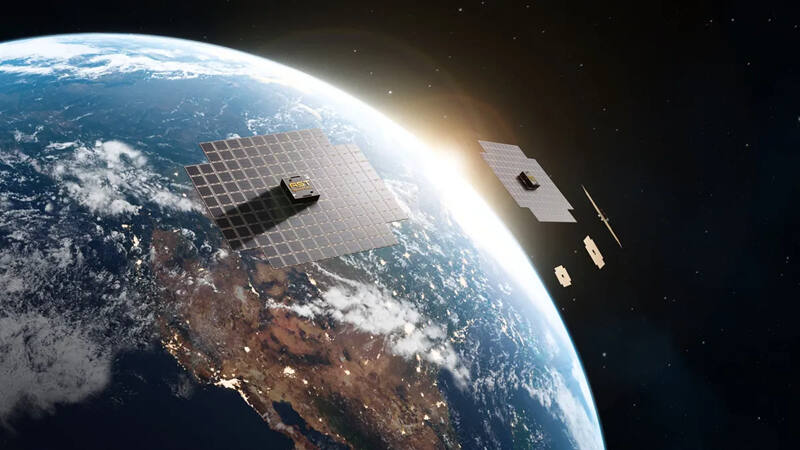
The new satellites are part of the company’s next generation of BlueBird hardware and carry large deployable phased-array antennas measuring about 223 m2. AST SpaceMobile says those are the largest commercial communications antennas ever deployed in low orbit, and the size is not vanity engineering: it is what lets the spacecraft catch weak signals from standard mobile phones without extra hardware, terminals, or external antennas.
That same giant footprint makes the satellites bright enough to irritate astronomers, which is the trade-off baked into this model of space-based mobile coverage. Every company pitching direct-to-device service wants mass-market reach; the night sky gets the bill.
AST SpaceMobile BlueBird 8, 9 and 10 launch speeds up the network
AST SpaceMobile says the new spacecraft support voice calls, broadband data, and video straight to unmodified 4G and 5G smartphones. It also expects almost a doubling of peak speed versus the first BlueBird Block 1 satellites, which reached up to 98.9 Mbit/s; the new generation is advertised as capable of approaching 200 Mbit/s peak traffic.
To help with that jump, the company built the AST5000 ASIC for the platform, with processing bandwidth of up to 10 GHz and multi-beam operation designed to raise network capacity while cutting interference. That is the sort of unglamorous silicon work that decides whether a satellite constellation becomes a real service or just a very expensive demo.
- Launch vehicle: SpaceX Falcon 9
- Launch time: 17 June 2026 at 02:39 a.m. Eastern time
- Payloads: BlueBird 8, BlueBird 9 and BlueBird 10
- Antenna area: about 223 m2
- Block 1 peak speed: up to 98.9 Mbit/s
- New generation peak traffic: approaching 200 Mbit/s
AST SpaceMobile is trying to scale before rivals close the gap
The batch launch is also a signal that AST SpaceMobile wants to accelerate after a year in which the direct-to-device race has only gotten more crowded. SpaceX has its own Starlink phone ambitions, while competitors such as Lynk Global have been pushing narrowband direct-to-phone coverage; AST is betting on a bigger antenna and a more ambitious broadband pitch instead of creeping forward with tiny bursts of capacity.
The company says satellites up to BlueBird 37 are already in production, and it has contracts with multiple global mobile operators serving about 3 million people. That is not yet a planet-scale network, but it is enough to show why AST wants more launches, more quickly: coverage grows only when the spacecraft are actually in orbit, not sitting in a factory with a nice logo on the side.
The open question is whether AST SpaceMobile can keep the launch cadence up while avoiding another failed deployment. If it can, the company may finally turn its oversized hardware into usable coverage at scale; if not, the race to connect phones directly from space will keep rewarding the rivals that can ship more often, even if their promises are a little less dramatic.
AST SpaceMobile has moved from one-satellite-at-a-time launches to batches, sending BlueBird 8, BlueBird 9, and BlueBird 10 into low Earth orbit on a SpaceX Falcon 9. The AST SpaceMobile BlueBird 8, BlueBird 9 and BlueBird 10 launch matters because the company is chasing a network that can connect ordinary smartphones directly from space, and scaling that kind of service one giant satellite at a time was never going to be a fast hobby.
The rocket lifted off from SLC-40 at Cape Canaveral Space Force Station at 02:39 a.m. Eastern time on 17 June 2026, and SpaceX later confirmed that all three satellites separated successfully. For AST SpaceMobile, it was also a public reset after the loss of BlueBird 7 on a Blue Origin New Glenn mission that ended with the spacecraft being left in too low an orbit.
BlueBird 8, 9 and 10 are built for direct smartphone links
The new satellites are part of the company’s next generation of BlueBird hardware and carry large deployable phased-array antennas measuring about 223 m2. AST SpaceMobile says those are the largest commercial communications antennas ever deployed in low orbit, and the size is not vanity engineering: it is what lets the spacecraft catch weak signals from standard mobile phones without extra hardware, terminals, or external antennas.
That same giant footprint makes the satellites bright enough to irritate astronomers, which is the trade-off baked into this model of space-based mobile coverage. Every company pitching direct-to-device service wants mass-market reach; the night sky gets the bill.
AST SpaceMobile BlueBird 8, 9 and 10 launch speeds up the network
AST SpaceMobile says the new spacecraft support voice calls, broadband data, and video straight to unmodified 4G and 5G smartphones. It also expects almost a doubling of peak speed versus the first BlueBird Block 1 satellites, which reached up to 98.9 Mbit/s; the new generation is advertised as capable of approaching 200 Mbit/s peak traffic.
To help with that jump, the company built the AST5000 ASIC for the platform, with processing bandwidth of up to 10 GHz and multi-beam operation designed to raise network capacity while cutting interference. That is the sort of unglamorous silicon work that decides whether a satellite constellation becomes a real service or just a very expensive demo.
- Launch vehicle: SpaceX Falcon 9
- Launch time: 17 June 2026 at 02:39 a.m. Eastern time
- Payloads: BlueBird 8, BlueBird 9 and BlueBird 10
- Antenna area: about 223 m2
- Block 1 peak speed: up to 98.9 Mbit/s
- New generation peak traffic: approaching 200 Mbit/s
AST SpaceMobile is trying to scale before rivals close the gap
The batch launch is also a signal that AST SpaceMobile wants to accelerate after a year in which the direct-to-device race has only gotten more crowded. SpaceX has its own Starlink phone ambitions, while competitors such as Lynk Global have been pushing narrowband direct-to-phone coverage; AST is betting on a bigger antenna and a more ambitious broadband pitch instead of creeping forward with tiny bursts of capacity.
The company says satellites up to BlueBird 37 are already in production, and it has contracts with multiple global mobile operators serving about 3 million people. That is not yet a planet-scale network, but it is enough to show why AST wants more launches, more quickly: coverage grows only when the spacecraft are actually in orbit, not sitting in a factory with a nice logo on the side.
The open question is whether AST SpaceMobile can keep the launch cadence up while avoiding another failed deployment. If it can, the company may finally turn its oversized hardware into usable coverage at scale; if not, the race to connect phones directly from space will keep rewarding the rivals that can ship more often, even if their promises are a little less dramatic.