

The real test for AI adoption
The question now is whether Huang’s ”just start interacting with AI” message becomes the default, or whether governments keep forcing a slower, more defensive rollout. If the next phase of AI is defined by power shortages, stricter export rules, and louder public resistance, the technology may still grow fast – just with a lot more friction than Silicon Valley likes to admit.
The real test for AI adoption
The question now is whether Huang’s ”just start interacting with AI” message becomes the default, or whether governments keep forcing a slower, more defensive rollout. If the next phase of AI is defined by power shortages, stricter export rules, and louder public resistance, the technology may still grow fast – just with a lot more friction than Silicon Valley likes to admit.
The real test for AI adoption
The question now is whether Huang’s ”just start interacting with AI” message becomes the default, or whether governments keep forcing a slower, more defensive rollout. If the next phase of AI is defined by power shortages, stricter export rules, and louder public resistance, the technology may still grow fast – just with a lot more friction than Silicon Valley likes to admit.
- Nvidia market cap: $5 trillion
- OpenAI and Anthropic: potentially above $1 trillion if they go public
- Huang’s preferred fix: new social norms, plus clearer safety rules
The real test for AI adoption
The question now is whether Huang’s ”just start interacting with AI” message becomes the default, or whether governments keep forcing a slower, more defensive rollout. If the next phase of AI is defined by power shortages, stricter export rules, and louder public resistance, the technology may still grow fast – just with a lot more friction than Silicon Valley likes to admit.
- Nvidia market cap: $5 trillion
- OpenAI and Anthropic: potentially above $1 trillion if they go public
- Huang’s preferred fix: new social norms, plus clearer safety rules
The real test for AI adoption
The question now is whether Huang’s ”just start interacting with AI” message becomes the default, or whether governments keep forcing a slower, more defensive rollout. If the next phase of AI is defined by power shortages, stricter export rules, and louder public resistance, the technology may still grow fast – just with a lot more friction than Silicon Valley likes to admit.
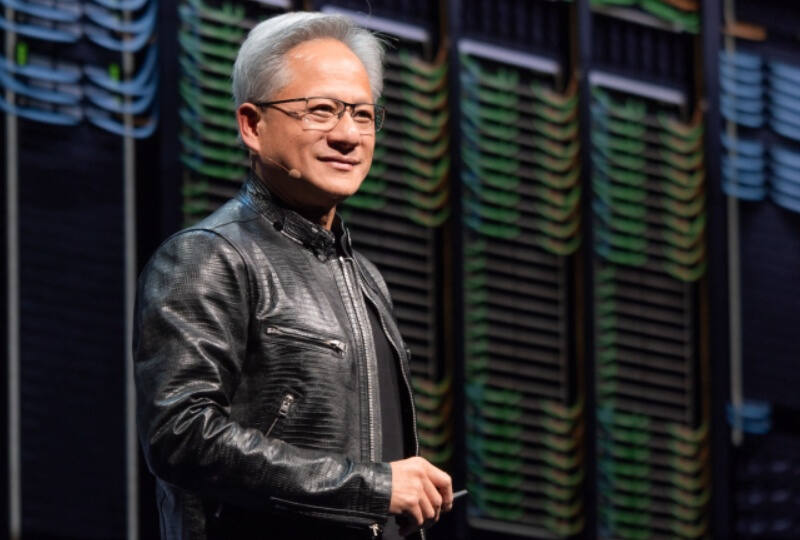
Nvidia chief executive Jensen Huang wants the public to stop treating artificial intelligence like a visiting asteroid and start treating it like a technology that needs rules, habits, and a little common sense. In an interview with Associated Press, he argued that AI can speed up economic growth, unlock scientific advances, and help ordinary people do complex work on a computer without learning to code – while society builds ”new social norms” around it.
That pitch lands in a very noisy moment. AI is now a political punching bag, with protests over data centers, fears about job losses, and a widening sense that the spoils are concentrating in a handful of companies. Nvidia’s own rise to a $5 trillion market cap makes Huang an awkward messenger for egalitarian reassurance, but it also gives him a front-row seat to the boom that is reshaping tech, energy demand, and public policy at the same time.
Huang’s case for everyday AI use
Huang’s argument is basically: the more people interact with AI, the faster the awkward phase ends. He says the tools can build websites, read dense documents, help steer advanced research, and even help plan a kitchen remodel. The broader point is that AI lowers the barrier to advanced digital work, which is exactly why it scares people who worry it will also lower the barrier to replacing them.
He also reached for a familiar historical analogy: cars. Society once reacted to automobiles with real fear, then adapted by changing streets, installing sidewalks and crosswalks, and keeping children off the road. Huang’s message is that AI needs a similar social redesign, not a moral panic.
The wealth problem around AI
There is, however, a reason the debate feels sharper than the usual ”new technology, new rules” script. The money is enormous and extremely concentrated. Nvidia sits at the center of that wave, while OpenAI and Anthropic could potentially cross the $1 trillion mark if they go public, which is exactly the kind of number that makes people ask who, besides shareholders, gets to enjoy the upside.
Donald Trump has floated partial government ownership in AI companies as a way to spread the gains more evenly, and OpenAI chief executive Sam Altman has backed the idea. Huang is not convinced. He said these are American companies whose success already benefits ordinary investors, taxpayers, and workers, and he pointed to knock-on demand for energy, construction, and technology firms as more of the AI stack gets built out.
Export controls and the energy bottleneck
Huang is much more aligned with Washington on safety and national security than his critics might expect, but he also wants caution before the government tightens the screws too far. The U.S. has recently moved toward tougher oversight, including export controls on some advanced AI models and a voluntary government review process for new AI systems before release. Huang backed the idea of national security as a priority, while warning that policymakers need to be precise about the risks they are trying to contain.
His bigger concern is power, literally. Huang says the U.S. is already at a disadvantage on energy supply, and that the country has spent too long suppressing energy production. That matters because AI is not just about chips and models; it is also about the grid, data centers, and the industrial plumbing needed to keep them running. Europe and China have spent years wrestling with similar bottlenecks, which makes this less a niche policy debate than a race over who can actually feed the machines.
- Nvidia market cap: $5 trillion
- OpenAI and Anthropic: potentially above $1 trillion if they go public
- Huang’s preferred fix: new social norms, plus clearer safety rules
The real test for AI adoption
The question now is whether Huang’s ”just start interacting with AI” message becomes the default, or whether governments keep forcing a slower, more defensive rollout. If the next phase of AI is defined by power shortages, stricter export rules, and louder public resistance, the technology may still grow fast – just with a lot more friction than Silicon Valley likes to admit.