

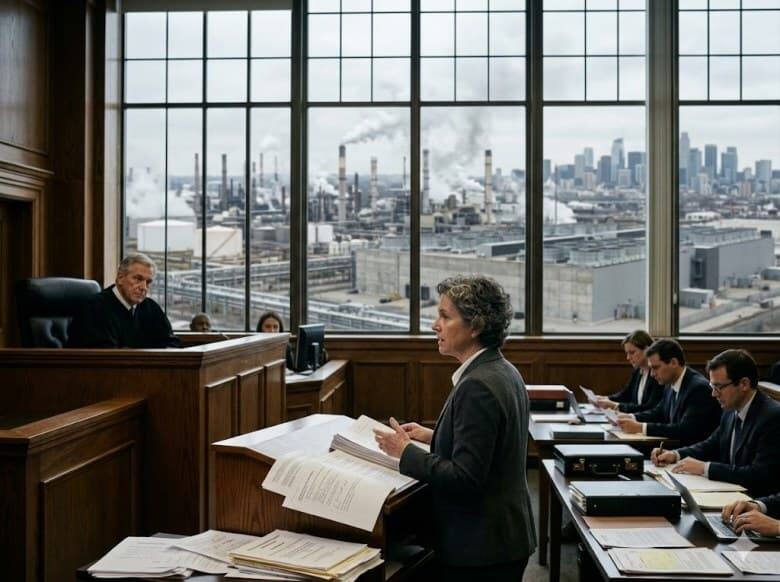
The U.S. Department of Justice has stepped into xAI’s gas turbine fight in Mississippi, arguing that forcing limits on the company’s power supply could hurt AI systems tied to national security work. That is an unusually blunt federal endorsement for a company already under fire from environmental groups over emissions and unpermitted equipment.
The dispute centers on xAI’s Colossus 2 site in Southaven, Mississippi, where the company has been using unregistered gas turbines to keep its compute-heavy infrastructure running. The NAACP filed suit, and the Southern Environmental Law Center says the number of turbines at the site grew from 27 to 57 since April, alongside a 111% rise in nitrogen oxide emissions. In plain English: the more power xAI needs, the uglier the local air gets.
Why the Justice Department is backing xAI
In its filing, the department says the lawsuit could threaten ”national, economic, and energy security” by cutting power to AI systems that support Department of Defense operations. It also says xAI’s Grok is one of a small number of models used in critical, classified, and top-secret networks. That is the sort of argument that tends to move courts faster than a normal zoning dispute.
The move fits a broader pattern in Washington: AI infrastructure is increasingly being treated like strategic infrastructure, not just a private data-center problem. Tech companies have been leaning on that logic for months, but here the government is saying the quiet part out loud. Energy access is now part of the national-security conversation, whether local regulators like it or not.
xAI Colossus 2 emissions fight in Mississippi
Colossus 2 is one of xAI’s two major data centers, and it depends on extra power to feed a high-load AI stack. Environmental groups say the gas turbines are not just a paperwork problem; they are a fast-growing source of pollution wrapped inside a machine-learning story. That tension is becoming common as AI labs race to add capacity while states and cities try to keep emissions in check.
- Turbines reported at the site: 27 in April, rising to 57
- Reported NOx emissions increase: 111%
- Site location: Southaven, Mississippi
The energy race around AI datacenters
This is bigger than one court case. Across the industry, AI builders are running into the same problem: compute expansion is easy to promise and hard to power. Some rivals are chasing grid deals, others are reaching for on-site generation, and both paths run straight into permitting fights and public backlash.
For now, xAI has something most companies in this position would happily take: federal backing. The harder question is whether that support survives the environmental case, or whether Mississippi becomes the template for how far AI firms can push emergency-style power setups before regulators push back.