

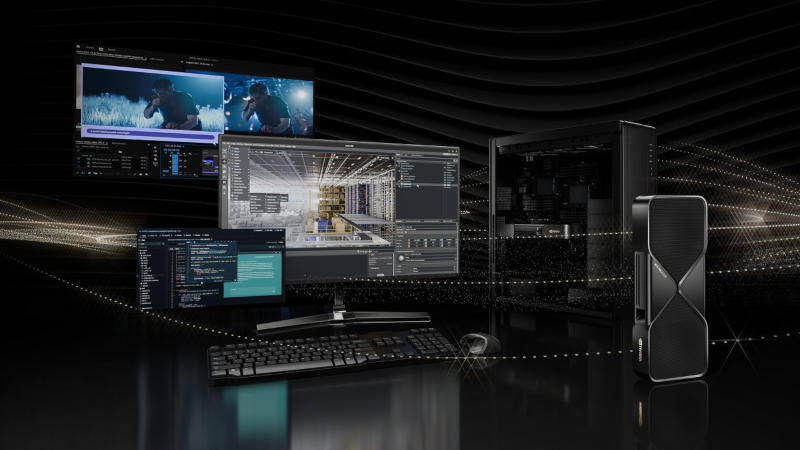
Nvidia has pushed the recommended price of its flagship RTX Pro 6000 Blackwell workstation card to $13,250, a sharp jump from the launch price listed just a year earlier. The increase is a tidy 55%, and it is another reminder that memory shortages are no longer a consumer-PC problem alone – they are reaching the expensive, enterprise-grade parts too.
The company now sells three RTX Pro 6000 Blackwell variants: the standard Workstation Edition, the more power-efficient Workstation Edition Max-Q, and a Server Edition aimed at large deployments. The Workstation Edition and Max-Q debuted in March 2025 at $8,565, which already put them squarely in ”if you have to ask” territory. The new sticker price makes the gap even harder to ignore.
RTX Pro 6000 Blackwell pricing across retailers
Nvidia’s own listing is not the only number in play. A PNY RTX Pro 6000 Blackwell appears on Nvidia’s site at $11,359.99, while Newegg lists the original Nvidia-branded RTX Pro 6000 Blackwell at $12,099.99. The Server Edition is absent from Nvidia’s storefront, but Newegg has it for $14,999. That kind of spread is exactly why buyers in this segment end up comparison-shopping like bargain hunters, even when the numbers are comically high.
- RTX Pro 6000 Blackwell recommended price: $13,250
- Launch price: $8,565
- PNY RTX Pro 6000 Blackwell on Nvidia’s site: $11,359.99
- Nvidia RTX Pro 6000 Blackwell on Newegg: $12,099.99
- Server Edition on Newegg: $14,999
Why workstation buyers are getting squeezed
This is the same old chip shortage story, just wearing a better suit. When memory supply tightens, prices tend to climb first on high-end parts, where vendors have more room to pass the pain along. That usually leaves enterprises with a choice between paying up now or paying even more later – not exactly a consumer-friendly dilemma, but it is a very familiar one.
The practical advice is boring because it works: check multiple retailers, watch for OEM listings, and do not assume the manufacturer’s own store has the best deal. For a card that started life at $8,565, even a ”discounted” listing can still sting. If the memory squeeze continues, the next question is not whether these prices move again, but how much higher workstation buyers are willing to go before they start delaying upgrades.