

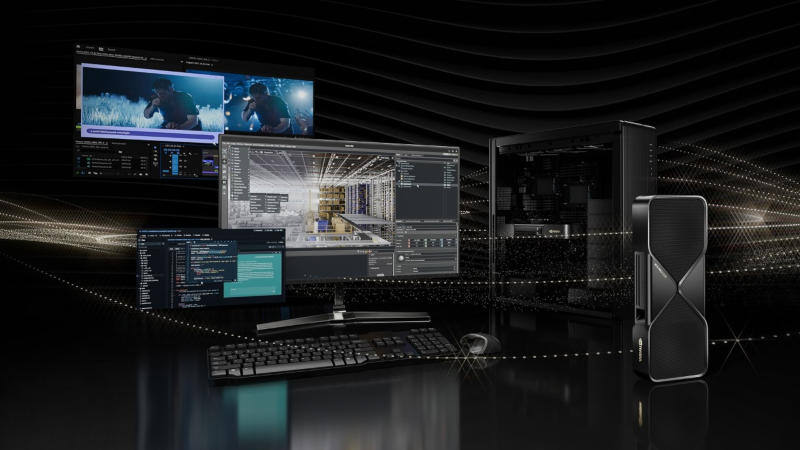
Nvidia has quietly pushed the recommended price of its RTX Pro 6000 Blackwell workstation GPU to $13,250, a sharp reminder that even ultra-premium hardware is not immune to memory shortages. The card launched at $8,565, so the new sticker is 55% higher before you even start shopping around.
The awkward part for buyers is that Nvidia’s own ecosystem is already messy. Different RTX Pro 6000 Blackwell versions are listed across workstation and server use cases, and prices vary enough to make one storefront look generous and the next one unhinged. That kind of spread is becoming more common in the professional GPU market, where supply constraints can distort pricing faster than product launches can reset expectations.
RTX Pro 6000 Blackwell prices across retailers
Nvidia’s listed PNY RTX Pro 6000 Blackwell comes in at $11,359.99, which is 14% below the recommended price. Newegg has the original Nvidia RTX Pro 6000 Blackwell at $12,099.99, or 9% under Nvidia’s own figure. The server version is absent from Nvidia’s site, but Newegg sells it for $14,999.
- RTX Pro 6000 Blackwell recommended price: $13,250
- Original launch price: $8,565
- PNY RTX Pro 6000 Blackwell: $11,359.99
- Newegg original Nvidia RTX Pro 6000 Blackwell: $12,099.99
- Newegg server edition: $14,999
Why workstation buyers are feeling the squeeze
The RTX Pro 6000 Blackwell lineup debuted in March 2025 as a flagship family aimed at professionals, with a standard Workstation Edition, a Max-Q variant, and a Server Edition for large enterprises. At launch, these were already expensive cards, but the latest increase shows how memory shortages are bleeding into the high end first, where buyers often have fewer substitutes and more urgent deadlines.
That leaves customers doing the least glamorous kind of shopping: comparing listings instead of chasing deals from a single source. Some Newegg offers are from third-party sellers, while others are labeled OEM products without retail packaging, which is a polite way of saying the market has become creatively inconsistent.
How long RTX Pro 6000 Blackwell prices can keep climbing
Unless memory supply improves, there is little reason to expect workstation and consumer GPUs to get cheaper soon. The more likely near-term play is exactly what buyers hate: price dispersion that rewards patience, alerts, and a willingness to check multiple stores before clicking ”buy”.