

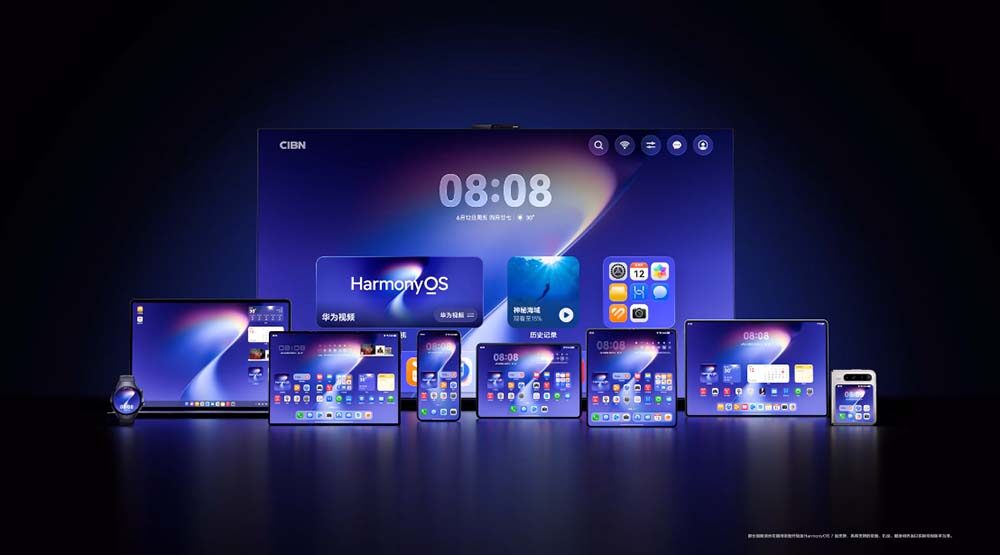
Huawei says its HarmonyOS ecosystem has crossed 1.3 billion connected devices, a milestone that underlines how far the company has pushed its own software stack across phones, tablets, PCs, cars, data center gear, and home appliances. The announcement came at HDC 2026, where Huawei also framed HarmonyOS as a response to U.S. export restrictions and a base for wider international expansion.
The scale is impressive, but so is the ambition behind it. Huawei is no longer talking about a phone operating system in the narrow sense; it is pitching HarmonyOS as connective tissue for a much broader device ecosystem, which is exactly the sort of vertical integration Chinese tech giants have leaned on after being squeezed out of key Western supply chains.
What Huawei counts inside HarmonyOS
The 1.3 billion figure includes smartphones, tablets, personal computers, in-car devices, data center components, and household appliances. In other words, Huawei is counting every place it can make the operating system matter, not just the consumer electronics aisle.
That approach is smart branding and solid business strategy. Once a platform is present in multiple product categories, it becomes harder for users and developers to treat it as optional, especially when rivals often stop at the phone and hope the rest works itself out.
Open source, code size and developer support
Huawei said HarmonyOS now has more than 13,000 developers working on it, with the codebase exceeding 140 million lines. The company also said its partner network includes more than 3,200 companies, a reminder that no operating system scales on slogans alone.
- Connected devices: 1.3 billion
- Developers: more than 13,000
- Codebase: over 140 million lines
- Partners: more than 3,200 companies
The open-source pitch matters here because ecosystems win when outside companies build around them instead of merely tolerating them. Google, Apple, and Microsoft have spent years proving that point; Huawei is trying to do the same while operating under more pressure than most rivals ever face.
Huawei’s next test is outside China
The harder part is not adding more devices inside a controlled home market. It is convincing developers, hardware makers, and consumers abroad that HarmonyOS is worth their time when Android and iOS already dominate most of the world’s attention.
If Huawei can turn this 1.3 billion-device claim into actual international traction, HarmonyOS becomes more than a workaround to sanctions. If it cannot, the number still sounds huge, but it will read more like a closed-loop success story than a global platform takeover.