

- Location: southern Ohio, on federal land
- Developer: SB Energy
- Lease term: 20 years
- Initial capacity: about 800 megawatts by 2028
- Target capacity: 10 gigawatts
Why Nvidia’s role stands out
Nvidia has spent the last few years becoming the default hardware supplier for the AI boom, but a guarantee tied to lease obligations is another level entirely. It also fits a broader pattern: the biggest AI players are no longer just buying servers, they are trying to lock down electricity, land, and financing before someone else does.
That matters because projects of this size are starting to resemble industrial megadevelopments more than ordinary cloud buildouts. The comparison to Stargate is unavoidable: OpenAI, Oracle, and SoftBank already floated that idea at the White House in 2025, though progress on that effort has reportedly been limited.
A former uranium site gets a new job
The site’s past is almost as striking as its future. It previously housed a uranium enrichment facility in Pike County and is now being recast as infrastructure for AI workloads that require huge amounts of power and compute. That kind of reuse says a lot about where the industry is heading: if you need 10 gigawatts, you stop thinking like a software company and start thinking like a utility.
OpenAI’s reported confidential filing for an initial public offering adds another layer of pressure. A company preparing to tap public markets while quietly lining up a half-trillion-dollar buildout is making a very explicit statement about scale, even if the financing still has to survive the usual reality check: electricity, timing, and who actually signs the guarantee.
What happens if the deal gets done
If this project moves ahead in its current form, it will be one of the clearest examples yet of AI becoming a capital-intensive industry in the old-fashioned sense. The winners are obvious: OpenAI gets compute, SoftBank gets another giant bet on infrastructure, and Nvidia gets even closer to the money flows surrounding AI. The harder question is whether the grid, the financing, and the timeline can keep up with the ambition.
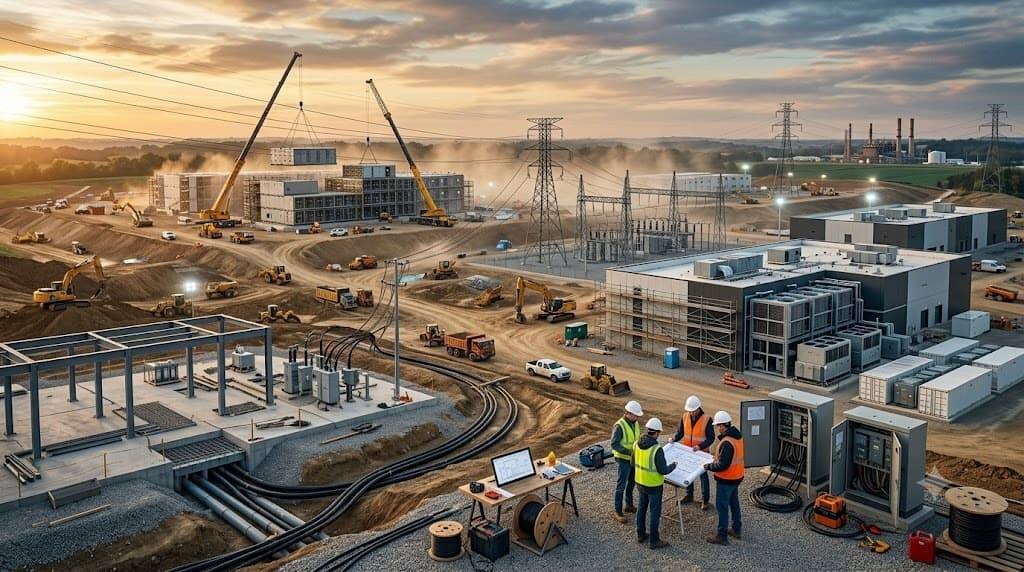
OpenAI is reportedly negotiating a 10-gigawatt data center in Ohio, and the bill could reach at least $500 billion. If the deal closes, it would be the company’s biggest infrastructure bet yet: a 20-year lease backed by Nvidia, built on federal land in southern Ohio, and tied to SB Energy, the SoftBank-controlled developer behind the project.
The scale is the real story here. Nvidia stepping in as a financial guarantor would push it far beyond its usual role as the company that sells chips; it would make it part of the funding machinery for AI infrastructure itself. That is a very different kind of leverage, and a sign that the race for compute is now pulling in balance sheets, not just supply chains.
How the Ohio data center is supposed to work
The first phase is expected to deliver about 800 megawatts and is slated to come online by 2028. After that, the site is meant to expand to the full 10 gigawatts, which would put it among the biggest energy and computing hubs on the planet.
- Location: southern Ohio, on federal land
- Developer: SB Energy
- Lease term: 20 years
- Initial capacity: about 800 megawatts by 2028
- Target capacity: 10 gigawatts
Why Nvidia’s role stands out
Nvidia has spent the last few years becoming the default hardware supplier for the AI boom, but a guarantee tied to lease obligations is another level entirely. It also fits a broader pattern: the biggest AI players are no longer just buying servers, they are trying to lock down electricity, land, and financing before someone else does.
That matters because projects of this size are starting to resemble industrial megadevelopments more than ordinary cloud buildouts. The comparison to Stargate is unavoidable: OpenAI, Oracle, and SoftBank already floated that idea at the White House in 2025, though progress on that effort has reportedly been limited.
A former uranium site gets a new job
The site’s past is almost as striking as its future. It previously housed a uranium enrichment facility in Pike County and is now being recast as infrastructure for AI workloads that require huge amounts of power and compute. That kind of reuse says a lot about where the industry is heading: if you need 10 gigawatts, you stop thinking like a software company and start thinking like a utility.
OpenAI’s reported confidential filing for an initial public offering adds another layer of pressure. A company preparing to tap public markets while quietly lining up a half-trillion-dollar buildout is making a very explicit statement about scale, even if the financing still has to survive the usual reality check: electricity, timing, and who actually signs the guarantee.
What happens if the deal gets done
If this project moves ahead in its current form, it will be one of the clearest examples yet of AI becoming a capital-intensive industry in the old-fashioned sense. The winners are obvious: OpenAI gets compute, SoftBank gets another giant bet on infrastructure, and Nvidia gets even closer to the money flows surrounding AI. The harder question is whether the grid, the financing, and the timeline can keep up with the ambition.