

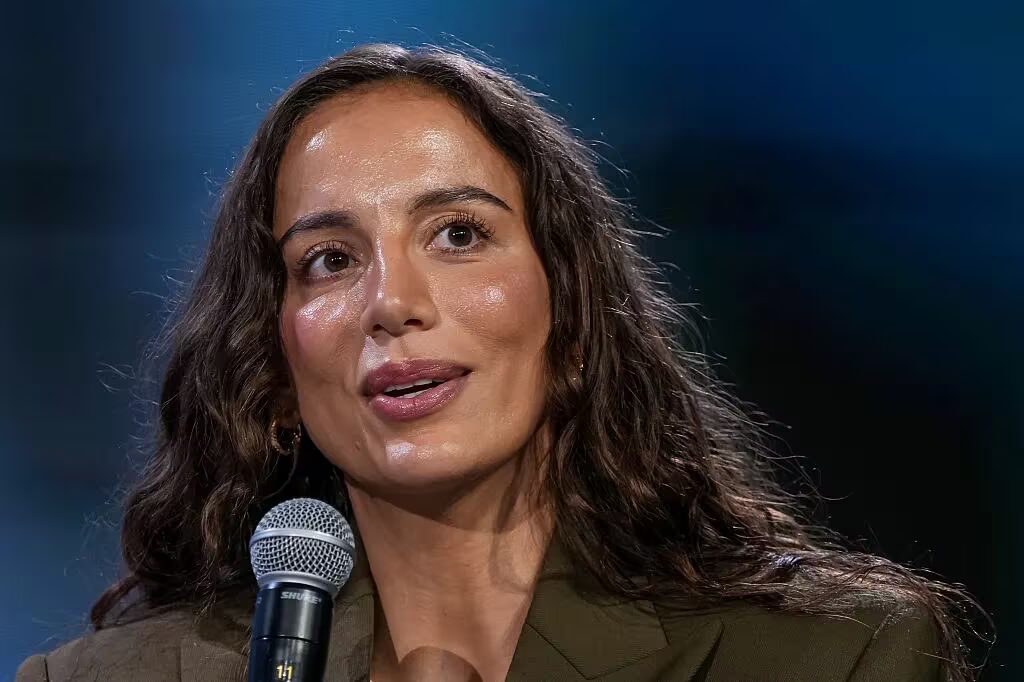
Mira Murati, the former CTO of OpenAI, made her first major public statement in 18 months during an interview with Bloomberg, revealing the next phase for her startup Thinking Machines Lab. The company is developing ”interaction models” designed to process continuous streams of audio, text, and video with just a 200-millisecond delay. While Murati didn’t provide a launch timeline, she positioned her company distinctly in the evolving debate over the future of AI interfaces.
Since its inception, Thinking Machines Lab has maintained a low profile, focusing on building its research team and launching Tinker-an API for fine-tuning open-source models. Meanwhile, competitors like OpenAI, Anthropic, and Elon Musk’s xAI have dominated investor attention and market share, making silence a risky strategy.
Thinking Machines Lab’s vision for continuous AI interaction
Mira Murati’s core pitch is a shift away from the familiar ”query-response” model dominating today’s AI products. Instead, Thinking Machines Lab aims to create a system enabling a more fluid, ongoing exchange-accounting for interruptions, pauses, self-corrections, and other real-time nuances of human conversation. This goes beyond voice assistants, attempting to make AI interactions feel more lifelike and dynamic.
This is no shot in the dark. Companies like OpenAI have previewed multimodal AI with near-instant voice responses-such as GPT-4o-and Google’s Gemini Live and Project Astra pursue similar ideas. The key difference Murati highlights is that Thinking Machines Lab treats these interaction models as a new architectural category rather than a chatbot add-on.
The competitive landscape puts Murati’s wager into perspective. Anthropic has solidified its foothold in the enterprise sector with multi-billion-dollar backing from Amazon and Google. Meta continues to push its open-source Llama models, which Thinking Machines Lab’s Tinker relies on for customization. Given this setup, it’s tough for a newcomer to lead the charge on universal AI assistants. Instead, carving out a niche for ”living,” real-time interaction interfaces could be a smarter bet.
Mira Murati and the fallout from Sam Altman’s firing
The interview also delved into Murati’s personal journey, recalling November 2023 when she briefly stepped in as OpenAI’s interim CEO after the board ousted Sam Altman. Though internally that upheaval was termed ”the blip,” it tested how much these AI labs depend on a handful of key leaders.
Murati framed her role as a stabilizer, striving to preserve the team and mission and prevent the company from falling apart. She admitted, in hindsight, she would have demanded clearer plans and greater transparency in the leadership transition. When pressed about her trust in Altman, she sidestepped, shifting to broader governance challenges.
That perspective resonates more widely in the AI industry, which has grappled with the risks of decision-making concentrated among a few individuals or boards. Given that a single AI model release can impact jobs, education, cybersecurity, and defense supply chains, Murati’s critique highlights governance as a core issue-not just a managerial one.
Team challenges and competition for AI talent
Thinking Machines Lab has seen notable researchers depart in recent months, a topic Bloomberg raised explicitly. Murati attributed this to the accelerated churn common to ”frontier” labs assembling from scratch-a multi-year process compressed into months. She also pointed out that massive compensation packages alone don’t fully explain personnel changes.
In the broader AI hiring battlefield, total compensation for top researchers in 2025-2026 reportedly reaches nine-figure sums including stocks and bonuses. The race for talent has become its own market, where startups compete as fiercely for team cohesion as for product innovation.
Notably, Murati avoided painting an overly optimistic or pessimistic AI future in the interview. Her takeaway was pragmatically simple: the outcome depends on how long humans retain meaningful control over AI systems. For a company that aims to foster deeper human-AI interaction, this stance acts as both a security pledge and a product vision.
Thinking Machines Lab’s next moves hinge less on PR noise and more on whether it can deliver a working interaction model before larger players enshrine these features behind closed doors. The generative AI market in 2026 favors scale-supported by competitors with massive compute power, distribution channels, and commercial contracts. Murati faces a narrow window to transform her subtle teaser into a tangible product and build an independent business from her OpenAI legacy.
Note: Meta, the parent company of Llama models, is classified as an extremist organization and banned in Russia.