

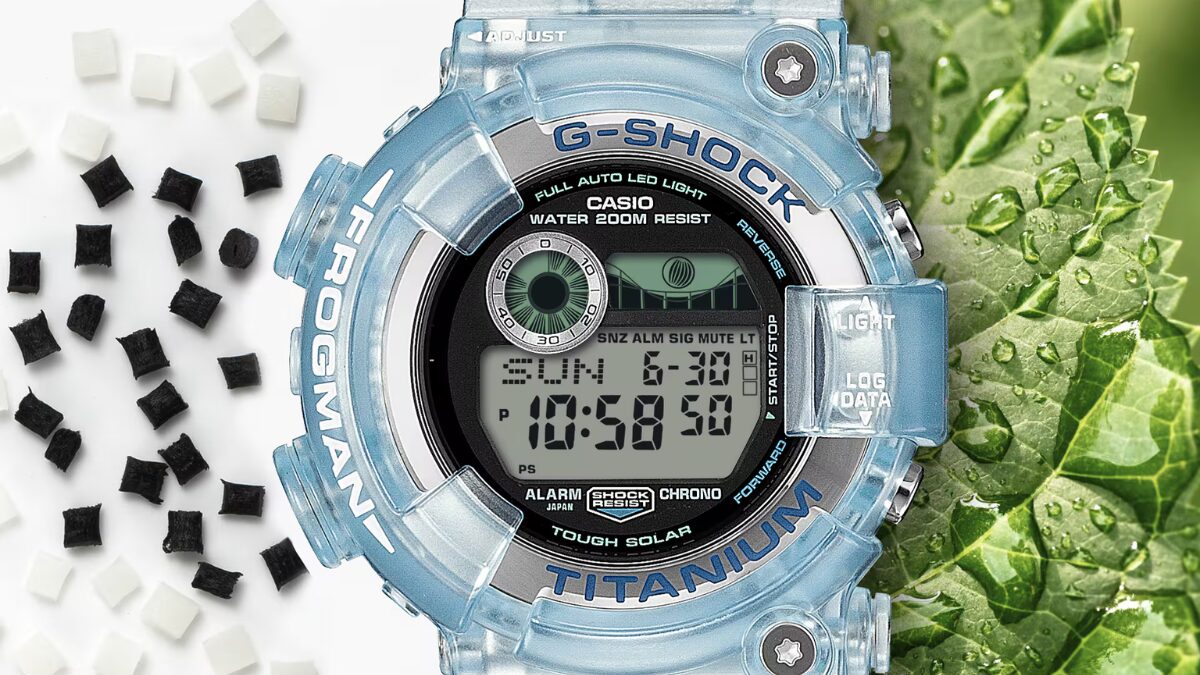
Casio has rolled out three blue, ocean-themed solar watches in Japan, each tied to its long-running ICERC Japan partnership and timed to the group’s 35th anniversary in 2026. The lineup covers the brand’s usual bases – G-Shock, Frogman, and Baby-G – and adds biomass plastics, Tough Solar charging, and recycled packaging.
All three models share a translucent blue look meant to evoke seawater, and all three use renewable organic resources for the main resin parts in their bezels and bands. That may not sound flashy, but it is exactly the kind of supply-chain change watch brands are leaning on as consumers ask for greener materials without giving up the usual rugged, battery-free convenience.
G-Shock GA-B2100KB-2A leads with Bluetooth and Tough Solar
The GA-B2100KB-2A is the most connected of the trio, built on the familiar octagonal 2100 design. It pairs with the Casio Watches smartphone app for automatic time adjustments, world time settings, and a phone finder, while Tough Solar is rated for about seven months of battery life on a full charge under standard use.
Casio has also slipped in a whale-shaped indicator hand at the 9 o’clock subdial, which is exactly the sort of branding flourish that works on a limited collaboration. The price is ¥29,150 ($182).
Frogman GW-8202K-2 keeps the dive-watch hardware serious
The Frogman GW-8202K-2 is the heavy hitter here, and the ¥85,800 ($536) price reflects that. It comes with a titanium screw-back case, ISO-certified 200-meter water resistance, and a dedicated dive mode that tracks dive times up to 24 hours, surface intervals, and up to 10 dive logs.
- Moon phase and tide graph data
- Tough Solar power
- No Bluetooth
That lack of Bluetooth may sound old-school, but on a dive watch it is hardly a deal-breaker. Casio is clearly keeping the Frogman focused on endurance and tool-watch credibility rather than app-driven extras, and the whale silhouette that appears with the LED backlight is just frosting.
Baby-G BGD-5650K-2 brings the lowest price
The smallest and cheapest model is the Baby-G BGD-5650K-2 at ¥24,200 ($151). Based on the square 5600-series shape, it adds Multi Band 6 radio-controlled timekeeping, which pulls standard radio signals from six transmitters around the world to keep the time aligned automatically.
Like the others, it runs on solar power, and a swimming dolphin silhouette shows up when the backlight is activated. It is the least ambitious watch in the set, but it is also the easiest entry point for buyers who want the theme without paying Frogman money.
All three ICERC Japan collaboration models go on sale in Japan this June. Casio has been doing this kind of environmental tie-in for years, but the formula is getting sharper: familiar cases, limited-edition visuals, and materials that let the company claim progress without messing with the core watch formula. The bigger question is whether Casio keeps this approach Japan-only, or starts treating these eco-collabs as a broader global play.