

Unified memory is the real pitch
The memory setup may end up being the most important part of the whole platform. RTX Spark uses up to 128GB of unified LPDDR5X memory shared across the system, rather than splitting RAM and VRAM into separate pools. For AI workloads, that can be a bigger deal than peak compute, because it changes how much data the machine can keep close at hand without awkward handoffs.
It also gives NVIDIA a cleaner story against rivals that have to explain several layers of software and memory plumbing before the demo even starts. Apple has already made unified memory a familiar selling point, and NVIDIA is clearly betting that PC buyers will understand the advantage too, especially if the machine is meant to juggle local AI models, graphics work, and everyday Windows tasks at once.
First RTX Spark systems are due later this year
NVIDIA says the first RTX Spark devices will come from ASUS, Dell, HP, Lenovo, MSI, and Microsoft’s Surface division later this year. Pricing is still under wraps, and so is the boring but important stuff like battery life under real workloads. That is the gap between keynote theater and actual product, and it is usually where the hype gets stress-tested.
Still, the direction is obvious. NVIDIA is no longer content to be the company inside somebody else’s PC design; it wants to define the platform itself. If RTX Spark delivers decent battery life, strong compatibility, and the kind of AI performance NVIDIA is promising, the bigger question may not be whether the platform works, but how quickly Windows PC makers start copying the formula.
Unified memory is the real pitch
The memory setup may end up being the most important part of the whole platform. RTX Spark uses up to 128GB of unified LPDDR5X memory shared across the system, rather than splitting RAM and VRAM into separate pools. For AI workloads, that can be a bigger deal than peak compute, because it changes how much data the machine can keep close at hand without awkward handoffs.
It also gives NVIDIA a cleaner story against rivals that have to explain several layers of software and memory plumbing before the demo even starts. Apple has already made unified memory a familiar selling point, and NVIDIA is clearly betting that PC buyers will understand the advantage too, especially if the machine is meant to juggle local AI models, graphics work, and everyday Windows tasks at once.
First RTX Spark systems are due later this year
NVIDIA says the first RTX Spark devices will come from ASUS, Dell, HP, Lenovo, MSI, and Microsoft’s Surface division later this year. Pricing is still under wraps, and so is the boring but important stuff like battery life under real workloads. That is the gap between keynote theater and actual product, and it is usually where the hype gets stress-tested.
Still, the direction is obvious. NVIDIA is no longer content to be the company inside somebody else’s PC design; it wants to define the platform itself. If RTX Spark delivers decent battery life, strong compatibility, and the kind of AI performance NVIDIA is promising, the bigger question may not be whether the platform works, but how quickly Windows PC makers start copying the formula.
- 20-core Grace CPU with ten Cortex-X925 and ten Cortex-A725 cores
- Blackwell GPU with 6,144 CUDA cores and fifth-generation Tensor Cores
- Up to 128GB of unified LPDDR5X memory
- Up to 1 PFLOP of AI performance
Unified memory is the real pitch
The memory setup may end up being the most important part of the whole platform. RTX Spark uses up to 128GB of unified LPDDR5X memory shared across the system, rather than splitting RAM and VRAM into separate pools. For AI workloads, that can be a bigger deal than peak compute, because it changes how much data the machine can keep close at hand without awkward handoffs.
It also gives NVIDIA a cleaner story against rivals that have to explain several layers of software and memory plumbing before the demo even starts. Apple has already made unified memory a familiar selling point, and NVIDIA is clearly betting that PC buyers will understand the advantage too, especially if the machine is meant to juggle local AI models, graphics work, and everyday Windows tasks at once.
First RTX Spark systems are due later this year
NVIDIA says the first RTX Spark devices will come from ASUS, Dell, HP, Lenovo, MSI, and Microsoft’s Surface division later this year. Pricing is still under wraps, and so is the boring but important stuff like battery life under real workloads. That is the gap between keynote theater and actual product, and it is usually where the hype gets stress-tested.
Still, the direction is obvious. NVIDIA is no longer content to be the company inside somebody else’s PC design; it wants to define the platform itself. If RTX Spark delivers decent battery life, strong compatibility, and the kind of AI performance NVIDIA is promising, the bigger question may not be whether the platform works, but how quickly Windows PC makers start copying the formula.
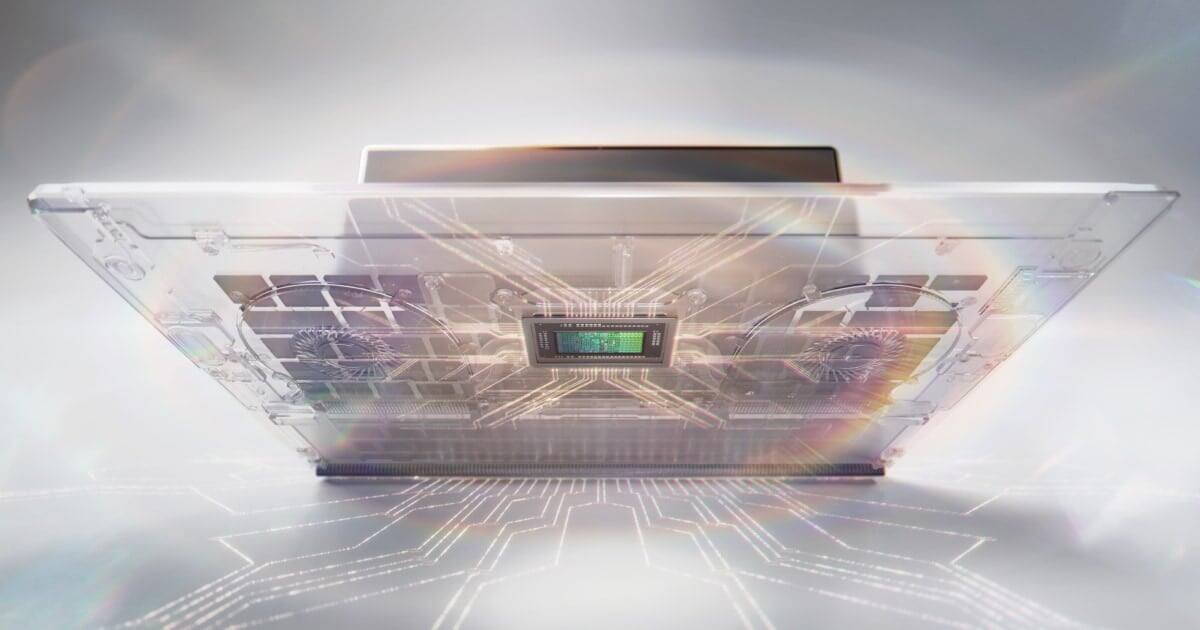
NVIDIA has turned RTX Spark into something bigger than a GPU story: it is pushing a full Arm-based PC platform into laptops and compact desktops, with a custom 20-core Grace CPU, a Blackwell graphics chip, and up to 128GB of unified memory. That combination is aimed straight at AI-heavy Windows PCs, but it also puts NVIDIA in a very different lane from the usual ”discrete GPU supplier” role.
That shift matters because Windows on Arm has spent years getting praised for potential and criticized for compatibility. NVIDIA is trying to sidestep some of that old pain by bringing its own software stack along for the ride, from CUDA and TensorRT to DLSS, Reflex, and ray tracing. In other words, it is not just selling silicon; it is selling a controlled ecosystem, which is usually how the company likes to win.
A 20-core Grace CPU built with MediaTek
The CPU inside RTX Spark is a 20-core Arm design developed with MediaTek. NVIDIA says it pairs ten Cortex-X925 performance cores with ten Cortex-A725 efficiency cores, a layout that will look very familiar to anyone who has followed high-end smartphone chips. The interesting part is not the inspiration, but the scaling: NVIDIA is taking a mobile-style big.LITTLE approach and stretching it into PC territory.
That is a smart move on paper. Arm-based systems already have momentum in ultrathin laptops, and combining that efficiency-first logic with NVIDIA’s own hardware stack could make RTX Spark harder to dismiss than earlier Windows-on-Arm efforts. Qualcomm will not love that, and neither will anyone hoping for a clean binary choice between ”PC chip” and ”AI accelerator.”
Blackwell graphics and 1 PFLOP of AI performance
On the graphics side, RTX Spark uses a Blackwell GPU with 6,144 CUDA cores and fifth-generation Tensor Cores. NVIDIA claims up to 1 PFLOP of AI performance, a number that feels absurdly large for a system thin enough to measure just 14mm in some configurations. Specs like that do not guarantee real-world speed, but they do show where NVIDIA wants the conversation to go.
- 20-core Grace CPU with ten Cortex-X925 and ten Cortex-A725 cores
- Blackwell GPU with 6,144 CUDA cores and fifth-generation Tensor Cores
- Up to 128GB of unified LPDDR5X memory
- Up to 1 PFLOP of AI performance
Unified memory is the real pitch
The memory setup may end up being the most important part of the whole platform. RTX Spark uses up to 128GB of unified LPDDR5X memory shared across the system, rather than splitting RAM and VRAM into separate pools. For AI workloads, that can be a bigger deal than peak compute, because it changes how much data the machine can keep close at hand without awkward handoffs.
It also gives NVIDIA a cleaner story against rivals that have to explain several layers of software and memory plumbing before the demo even starts. Apple has already made unified memory a familiar selling point, and NVIDIA is clearly betting that PC buyers will understand the advantage too, especially if the machine is meant to juggle local AI models, graphics work, and everyday Windows tasks at once.
First RTX Spark systems are due later this year
NVIDIA says the first RTX Spark devices will come from ASUS, Dell, HP, Lenovo, MSI, and Microsoft’s Surface division later this year. Pricing is still under wraps, and so is the boring but important stuff like battery life under real workloads. That is the gap between keynote theater and actual product, and it is usually where the hype gets stress-tested.
Still, the direction is obvious. NVIDIA is no longer content to be the company inside somebody else’s PC design; it wants to define the platform itself. If RTX Spark delivers decent battery life, strong compatibility, and the kind of AI performance NVIDIA is promising, the bigger question may not be whether the platform works, but how quickly Windows PC makers start copying the formula.