

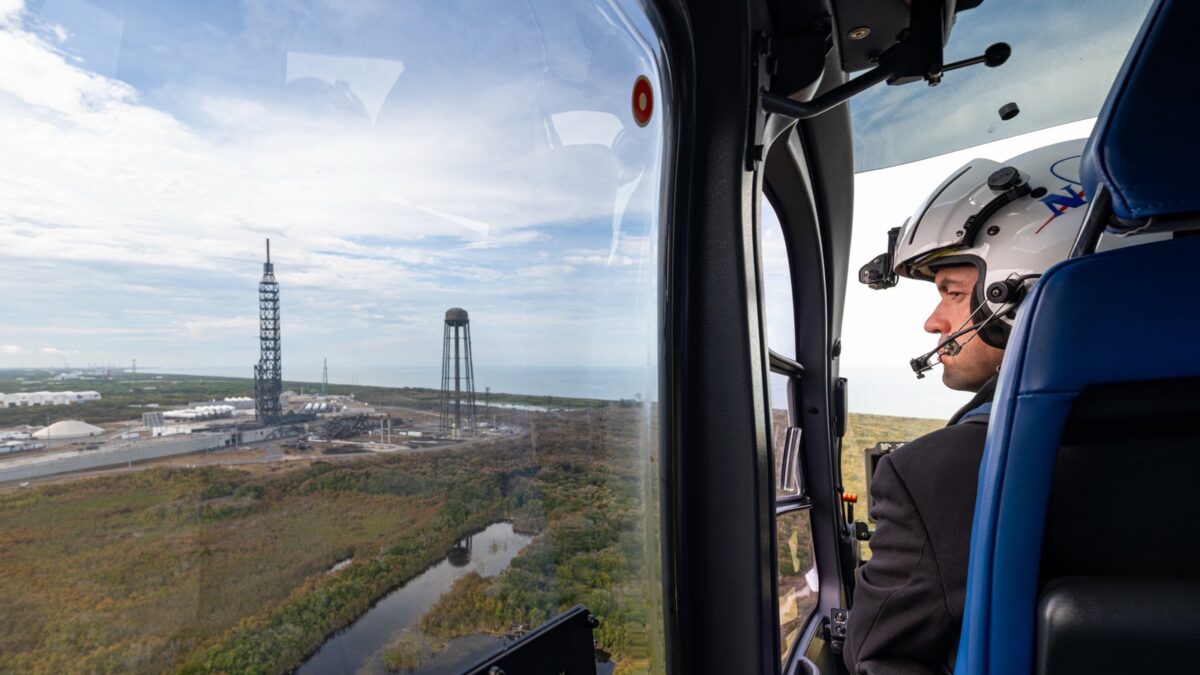
NASA chief Jared Isaacman has visited Cape Canaveral after the New Glenn explosion, taking in the damage from a helicopter and making clear that Blue Origin is not being left to clean up the mess alone. The agency is already investigating the blast, while also pushing ahead with Blue Origin on a separate lunar lander effort, a reminder that space partnerships rarely get the luxury of one-track thinking.
Isaacman said he and senior NASA engineers spent time at Blue Origin, spoke with staff, and looked closely at the destruction around launch complex LC-36. His message was part sympathy, part pressure: there is a lot of work ahead, but in aerospace, the hard problems are the job description. That is standard NASA rhetoric, sure, but it also telegraphs what comes next – scrutiny, repair work, and a race to restore confidence before the launch rhythm slips.
What NASA says about Blue Origin recovery
Isaacman said NASA is ”determined to help the Blue team recover” and wants Blue Origin to keep developing the lunar lander while getting New Glenn back to safe launches as quickly as possible. He also framed failure as part of American space history, arguing that the country’s biggest achievements came from overcoming setbacks rather than avoiding them. That line lands because the commercial space race now has less room for heroic mythology and more need for reliable hardware.
- Site affected: LC-36 at Cape Canaveral
- Vehicle involved: New Glenn
- NASA status: investigation underway
Blue Origin still has two jobs to do
The awkward truth for Blue Origin is that it now has to repair a launch site and keep a lunar program moving at the same time. That is not unusual in the space business, but it does sharpen the stakes: delays on New Glenn can spill into confidence around the broader partnership, even if NASA keeps the two efforts formally separate. Competitors have learned the same lesson the hard way – launch reliability is not just about rockets, it is about momentum, contracts, and who gets trusted with the next big mission.
NASA’s own posture is telling. Rather than waiting for perfect conditions, the agency is signaling that it wants to stay active with its partners, echoing the more hands-on approach that defined the early space race. The next question is whether that cooperation speeds recovery, or whether the investigation turns into a longer pause that forces Blue Origin to prove, once again, that setbacks can be absorbed without derailing the program.