

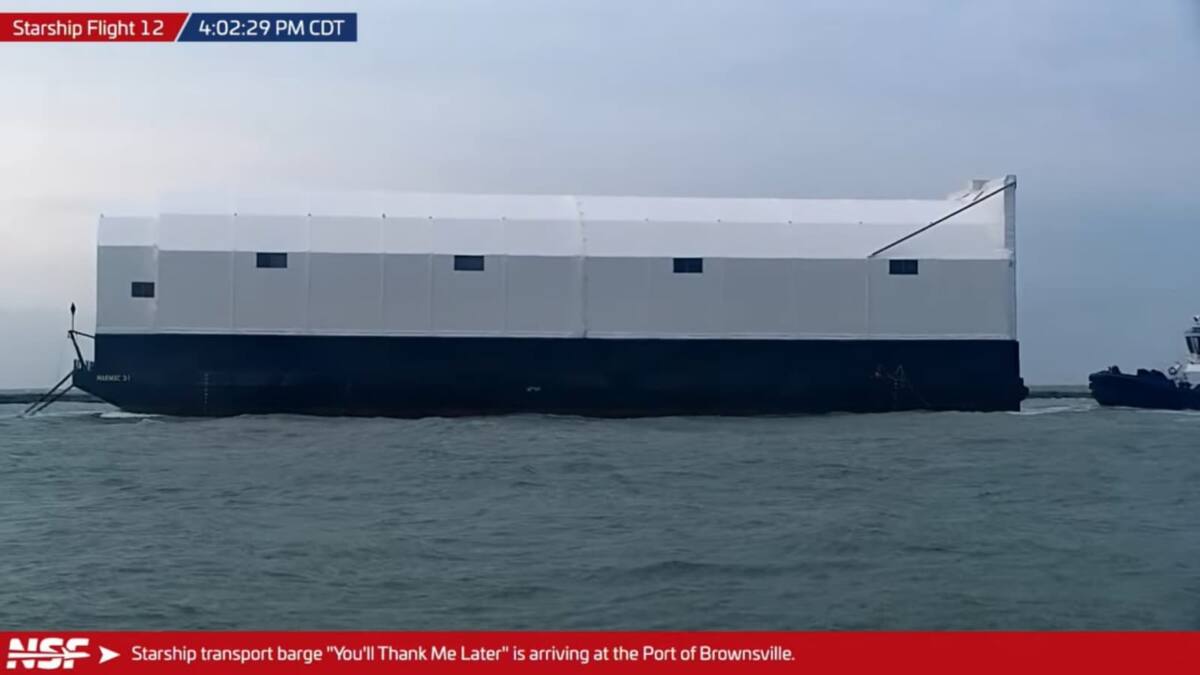
A Starship transport barge with a very SpaceX name has arrived near Starbase, and it is there for a practical reason: moving Starship hardware that is too large to haul efficiently by road. The vessel, ”You’ll Thank Me Later,” is meant to support Super Heavy transport, and the latest upgrade adds a full protective cover to make those trips safer and less exposed to the sea.
The arrival was reported by NASASpaceflight on X. SpaceX has been building a logistics chain around Starship that looks increasingly like a small maritime operation, which makes sense once you remember the booster is not exactly a suitcase. As the program scales, moving giant stages by water is less flashy than launches, but probably far more important to getting rockets on the pad on time.
How the Starship transport barge will be used
The barge is designed to carry the large first stages of the rocket between Starbase and SpaceX’s launch site at Cape Canaveral. SpaceX had already finished upgrading the vessel before this latest sighting, and the protective shell is supposed to reduce wear from saltwater and weather during longer voyages.
That matters because Starship is not just one rocket, but a whole production and transport puzzle. Companies that run reusable heavy-lift systems usually discover that the boring parts – loading, shipping, protecting hardware – can be as decisive as the launches themselves. Blue Origin and other heavy-lift players have been building similar ground and sea logistics around large vehicles, because physics is rude about road transport.
Why SpaceX wants a covered transport vessel
The protective dome is the obvious upgrade here. It should improve safety during transport and help shield equipment from the marine environment, especially on long crossings where corrosion and impact protection become real issues rather than footnotes.
Elon Musk had already said a similar vessel named ”You’ll Thank Me Later” would appear at Cape Canaveral for Starship work. In other words, SpaceX is quietly turning maritime logistics into a core part of the program, which is a sign the company expects more hardware to move more often. That is not exactly a glamorous milestone, but it is the kind that keeps a rocket factory from becoming an expensive museum.
What happens next for Super Heavy logistics
The open question is how fast SpaceX can turn this into a routine pipeline between production and launch sites. If the covered barge works as intended, expect more of these specialized moves and fewer improvised solutions; if it doesn’t, well, saltwater has a way of teaching engineering lessons with bad manners.