

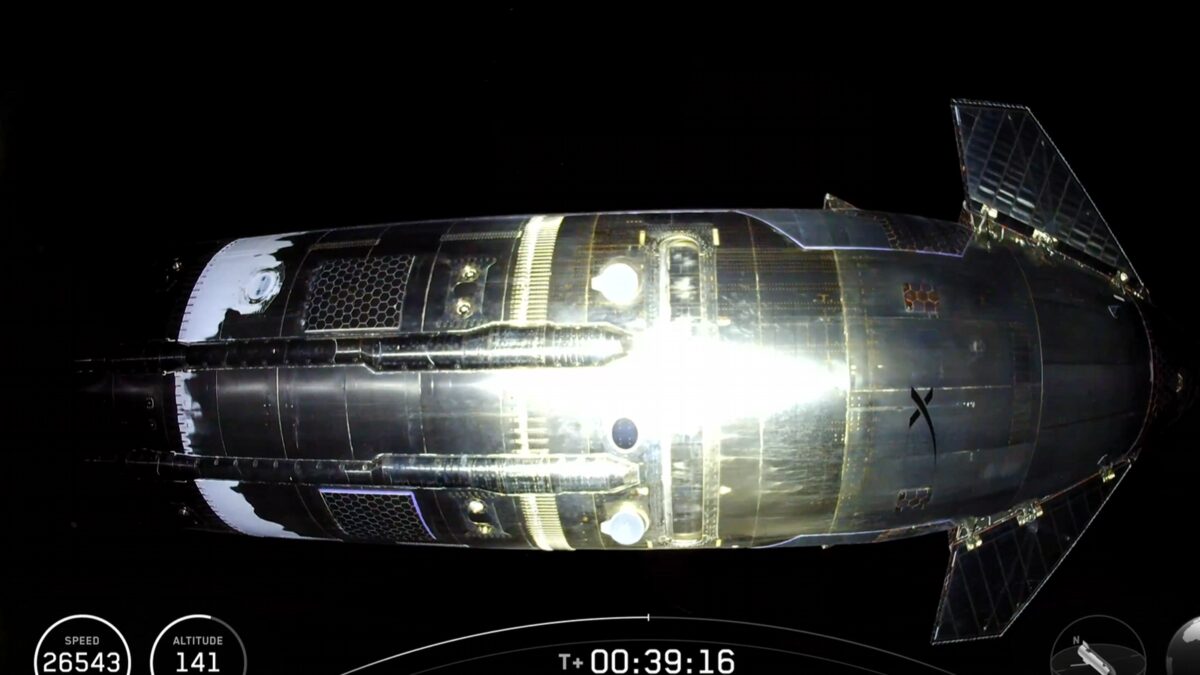
SpaceX has turned a routine deployment test into something more memorable: during Starship’s 12th flight, the spacecraft not only released its payload, but was also photographed in space by modified Starlink satellites on the same suborbital trajectory. The company published the images, which show Starship against Earth in weightlessness, and that makes this one of those rare engineering milestones that also happens to look great on a slide deck.
The flight deployed 20 Starlink simulator satellites, plus two specially adapted Starlink spacecraft designed to capture the shots. That combination gave SpaceX something it has not had before – usable in-space imagery of Starship itself – while also proving out a key part of the vehicle’s deployment workflow ahead of future operational missions.
What Starship released on flight 12
The payload was released at an altitude of 144 km, with Starship traveling at more than 26,000 km/h. In practical terms, that is exactly the kind of harsh environment a reusable heavy-lift system must handle before anyone starts talking seriously about mass Starlink launches.
- 20 Starlink simulator satellites
- 2 modified Starlink satellites for imaging
- Altitude: 144 km
- Speed: more than 26,000 km/h
Why the Starship images matter for SpaceX
SpaceX has long used test flights to compress several jobs into one launch, and this one fits the pattern neatly: validate deployment, gather data, and generate evidence that looks far less abstract than telemetry graphs. Competitors pursuing reusable launch systems can match the rhetoric, but not many can also show their rocket floating over Earth in crisp orbital photos the same day.
The company says the data from this flight will feed future operational missions, including launches of hundreds of real next-generation Starlink satellites. That is the bigger story underneath the pretty pictures: Starship is still in the proving phase, but each successful test makes the next one less theoretical and a lot more commercial.
What comes after the successful deployment
The latest flight was described as successful overall, though not without issues, which is exactly how large launch programs usually mature. Expect SpaceX to keep leaning on these mixed-but-productive tests until Starship can move from ”impressive demo” to ”boring infrastructure,” the point at which launch companies stop posting victory laps and start posting schedules.