

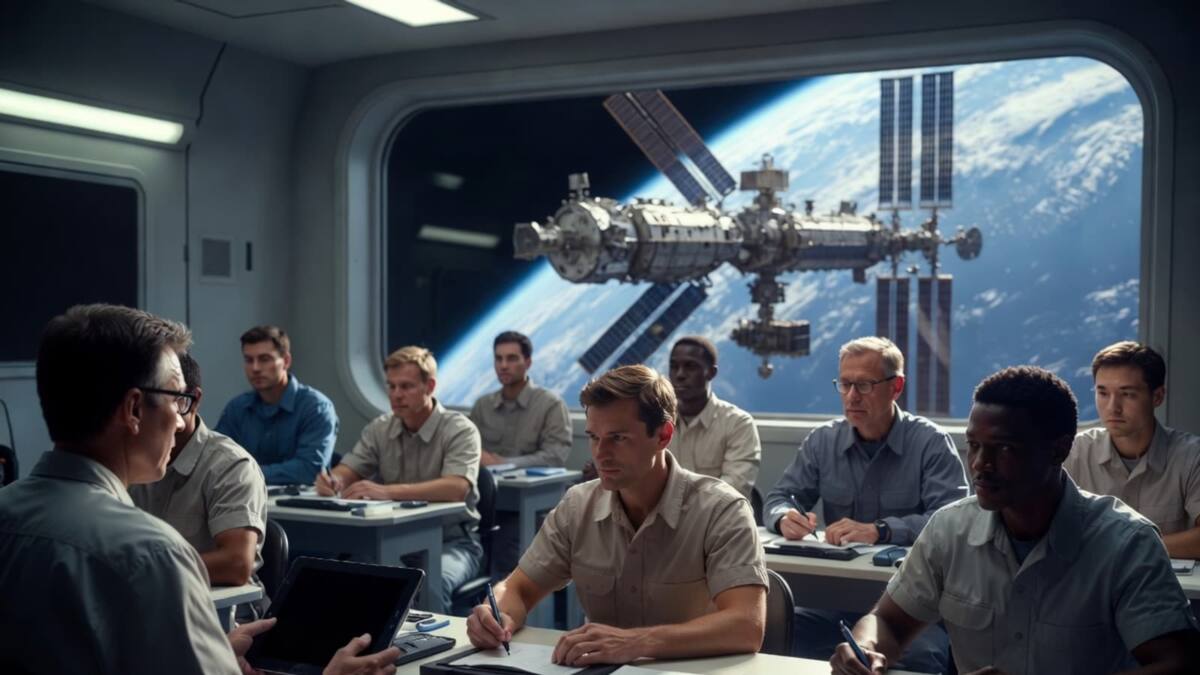
China is making a quiet but unmistakable statement about who sets the rules on its space station: foreign astronauts will learn Chinese first. That shift puts Chinese language training at the center of international crewed missions, and the first test case is expected to come from Pakistan.
The move is not just symbolic. On orbital missions, the difference between a smooth operation and a very bad day can come down to whether everyone understands a command instantly, under pressure, and without room for translation gymnastics. China is turning that reality into policy.
Pakistan’s astronauts are first in line
Two Pakistani astronauts have already arrived at the China Astronaut Research and Training Center and will train alongside Chinese astronauts for future station missions. Under the previously agreed China-Pakistan space cooperation plan, one of them will serve as a payload specialist on a short-duration mission.
That role is narrower than a full station commander or pilot job, but it still demands tight coordination with the rest of the crew. In practice, that means technical training, mission rehearsals, and enough language fluency to make sure nobody is guessing what comes next.
Chinese language training becomes part of mission prep
Officials said foreign astronauts will go through intensive, systematic Chinese-language training during the early phase of preparation after joining the team. The requirement is broader than basic conversation: astronauts will need to understand routine communication, mission commands, and the technical vocabulary used during flight operations.
That is a notable reversal from the era when Chinese astronauts had to study English to coordinate with the International Space Station. As China expands its own orbital infrastructure, it is no longer adapting to someone else’s language standard. The station, the procedures, and now the language all orbit Beijing’s framework.
What future foreign crews can expect
For future partners, the bar is clear: training will not start with a translator and a prayer. It will start with Chinese, then technical drills, then the kind of repetition that keeps crews aligned when schedules are tight and the stakes are high.
If the Pakistan mission goes smoothly, expect China to treat the model as proof that its station can absorb international crews on its own terms. The more interesting question is whether other space agencies will accept that language requirement as the price of access, or look for another orbital ride.