

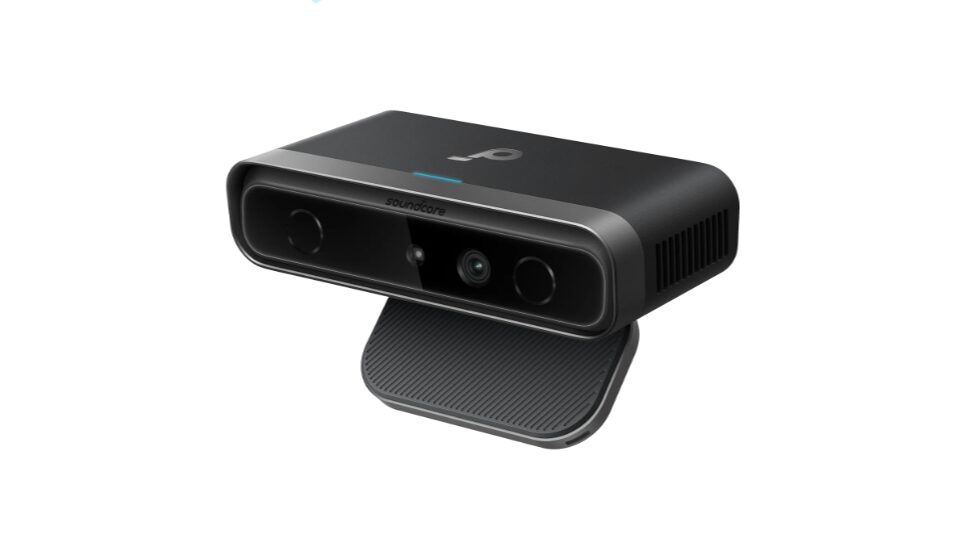
Anker is trying to turn 3D projection mapping from a specialist party trick into something a regular person might actually use. Its new Nebula SpaceFlow accessory, announced on May 21, is built for the Nebula X1 and X1 Pro projectors and promises AI-assisted 3D projection mapping with far less manual setup than the usual software-heavy route.
The pitch is straightforward: let the hardware scan a room, identify the walls, furniture, doors, and windows, then reshape the projected image so it fits the space instead of fighting it. If it works as advertised, that would put a once-fiddly process into the same category as modern smart-home tech: ambitious, occasionally magical, and very dependent on how messy your living room is.
How Nebula SpaceFlow reads a room
SpaceFlow uses a dual-camera system, a ToF depth sensor, and a structured light emitter to build a rough 3D model of the environment. In practice, that should help the projector understand where it can safely place visuals and where it needs to avoid spillover onto obstacles. The comparison to older sensing systems like Microsoft’s Kinect is hard to miss, even if the goal here is less gaming and more living-room theatrics.
Once connected, the accessory automatically scans the room and adjusts the projection layout. Through the Nebula Connect app, users can also describe a scene they want, and the system will generate visuals to match the room. Anker says that could mean jungle effects, themed decorations, or animated wall treatments without manual map editing.
Templates, modes, and the AI pitch
For people who do not want to prompt their way through a party setup, Anker is also offering more than 100 ready-made templates for holidays and events. There are two main custom options as well: AI Fusion and Free Mode. That combination suggests Anker is aiming at both casual buyers and hobbyists who want a bit more control without the usual calibration headache.
- Compatible projectors: Nebula X1 and X1 Pro
- Room sensing: dual cameras, ToF depth sensor, structured light emitter
- Templates: over 100 ready-to-use scenes
- Modes: AI Fusion and Free Mode
Nebula SpaceFlow price and launch offer
Anker says Nebula SpaceFlow will normally cost $799, but early buyers can get it for $399 at launch. That is still a chunky add-on, especially for an accessory, though it is less absurd than the standard price suggests. The bigger question is whether the convenience premium will look justified once people try it in real homes with uneven walls, awkward furniture, and the usual chaos of cables, pets, and bad lighting.
The accessory is being sold alongside the Nebula X1 series, which are high-end 4K triple-laser home theater projectors rated up to 3500 ANSI lumens. That puts SpaceFlow in an interesting spot: not a mass-market gadget, but a sign that projector makers are pushing beyond brightness and resolution into software-driven experiences. If reviewers find the setup genuinely painless, expect rivals to start talking up their own ”easy” mapping tools very quickly.