

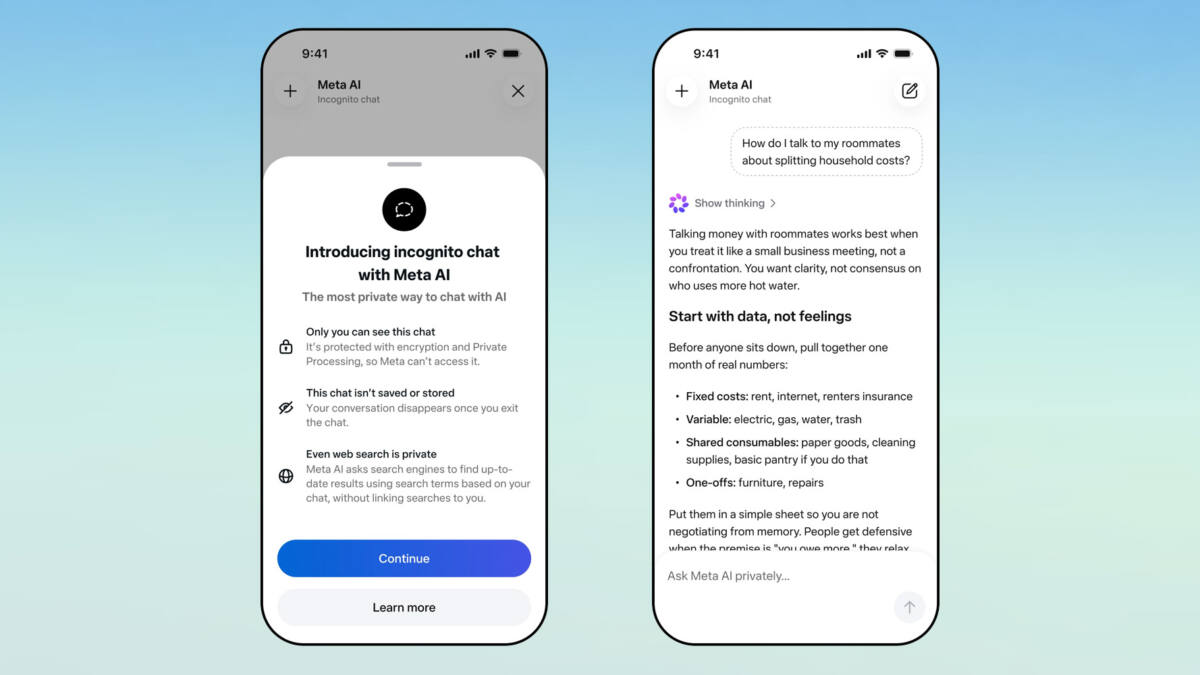
WhatsApp is adding Incognito Chat for Meta AI, giving users a way to ask sensitive questions without leaving a lasting trail in the app or on Meta’s side. The new mode is also coming to the Meta AI app, and it arrives with a familiar pitch: temporary conversations, private searches, and fewer awkward digital receipts.
That puts Meta in line with rivals such as ChatGPT, Gemini, and Claude, which already offer some form of temporary or private chat. The difference here is that Meta is trying to bolt privacy onto a product it has to defend on trust grounds, which makes the ”we can’t see it” message do a lot of heavy lifting.
How WhatsApp Incognito Chat works
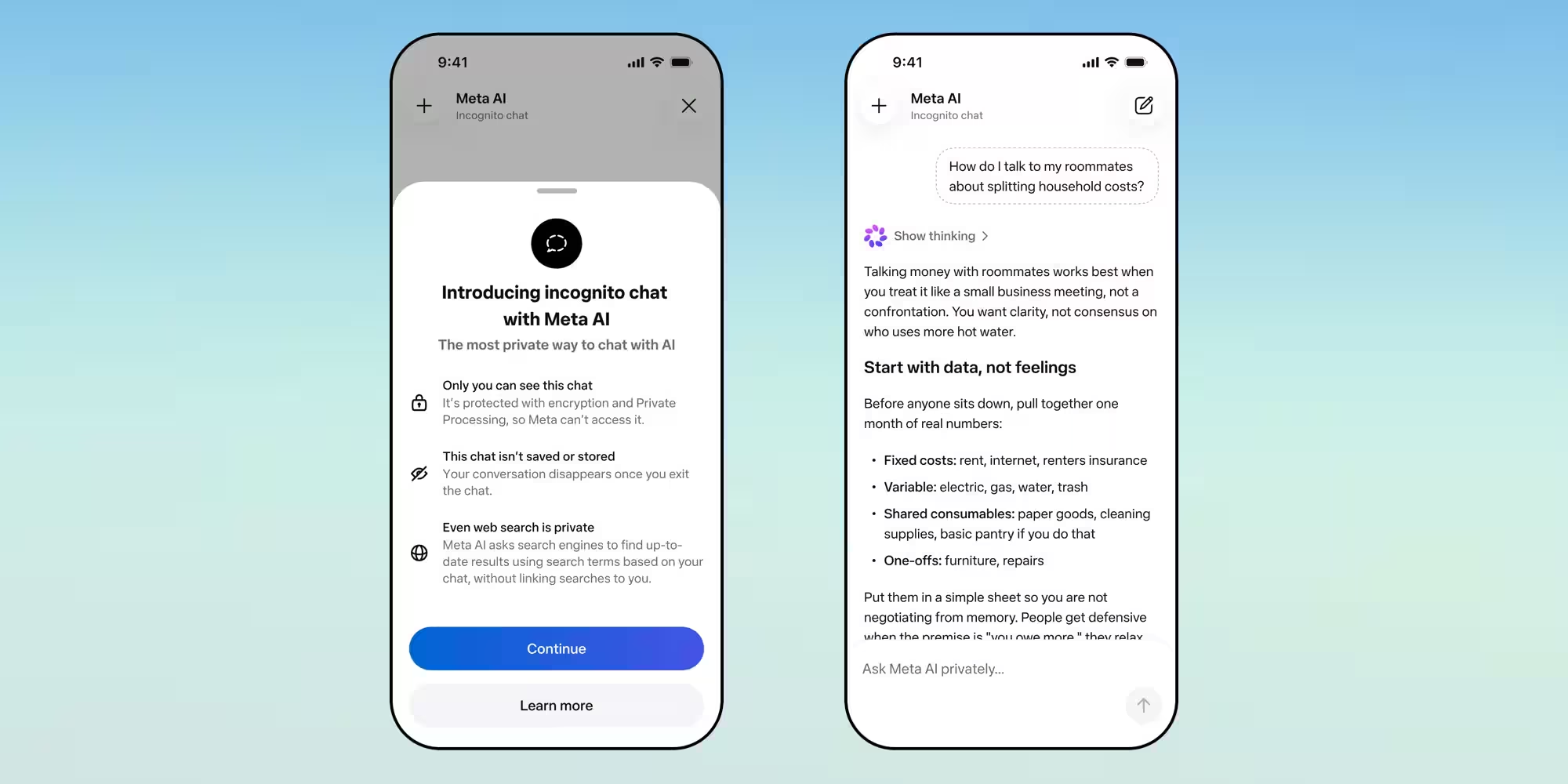
Meta says the chat disappears when you leave the session, and the content is protected by Private Processing. In practical terms, that means the request is handled in a Trusted Execution Environment, where Meta says the messages are not accessible to the company.
The company launched Private Processing last year so it could add AI features to WhatsApp without opening the door to private message access. That’s the right architectural move, because anything less would make ”private AI” sound a bit like marketing copy wearing a trench coat.
Private searches are covered too
Meta says Incognito Chat also extends to web searches made during the conversation. The AI can pull up-to-date results using search terms based on the chat, but those searches are not linked to the user.
- Available on WhatsApp and the Meta AI app
- Disappears when you exit the session
- Protected by Private Processing
- Web searches are handled without tying them to you
Why this rollout matters for Meta
Meta is clearly trying to make AI feel safer inside the world’s most widely used messaging app, where people are far more likely to ask embarrassing, personal, or half-formed questions than they are in a work document. The real test is whether users believe the promise, because privacy features only matter if people trust them enough to use them.
Incognito Chat is rolling out today, which means WhatsApp users do not have to wait long to try it. The bigger question is whether this becomes the default expectation for AI inside chat apps: temporary by default, searchable only when needed, and a lot less eager to keep a permanent memory than the old cloud-first playbook.