

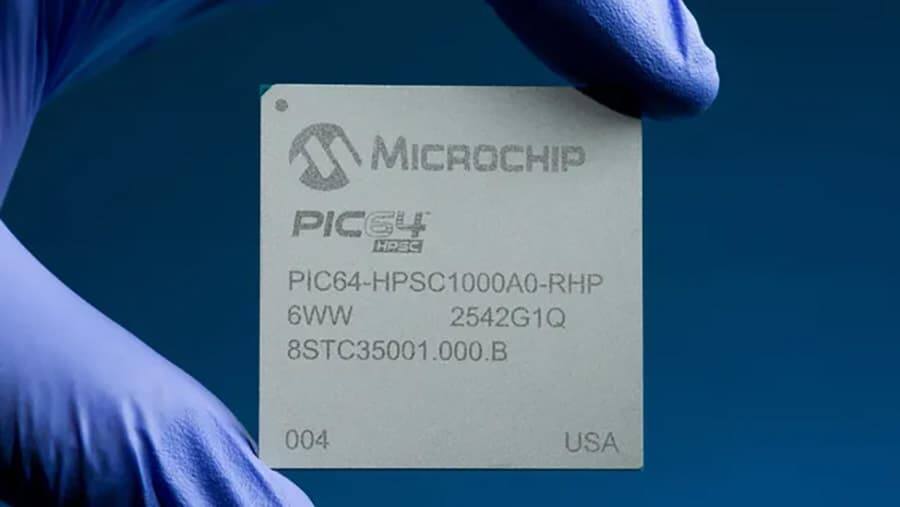
NASA and Microchip Technology are teaming up on a new space computing platform called High-Performance Spaceflight Computing, or HPSC, and the pitch is bold: up to 100 times the computing power of the SoCs used in current spacecraft. The target is obvious enough – future lunar missions, Mars expeditions, and satellites that can do more on their own instead of waiting for Earth for instructions every few minutes.
The project is really two chips in one family. One version is fully radiation-hardened for deep-space duty, including geostationary orbit, lunar programs, and trips toward Mars. The other is aimed at low Earth orbit and commercial satellites, where price and power efficiency matter more than surviving the nastiest radiation environments. That split is smart: space hardware is expensive enough without forcing every mission to buy the nuclear-proof model.
What HPSC is designed to do
HPSC is meant to combine computing and networking functions in a single chip, which should simplify spacecraft design, cut power use, and reduce electronics costs. The SoC also uses a modular architecture, so unused blocks can be switched off to save energy – a small detail that becomes a very big deal when every watt counts during long autonomous missions.
NASA also wants multiple HPSC chips to be linked with high-speed Advanced Ethernet, turning the platform into something closer to a spaceborne supercomputer than a traditional flight processor. That could give future rovers and orbital stations more freedom to analyze images, change operating modes, and make decisions without constantly waiting for a radio link back to Earth.
Why autonomy is the real prize
The headline number is flashy, but the more interesting goal is autonomy. Spacecraft that can process data locally are faster, less dependent on ground control, and better suited to places where communication delays are baked into the mission profile. That is exactly the direction the industry is heading, from planetary rovers to smarter satellites that can filter useful data before sending it home.
- Up to 100 times the computing power of current space SoCs
- Two versions: radiation-hardened deep-space and lower-cost low Earth orbit
- Modular blocks that can be powered down to save energy
- Advanced Ethernet support for linking multiple chips
Beyond space hardware
NASA says the technology could also spill into drones, energy systems, telecom gear, medical equipment, and AI systems. That is the usual path for expensive aerospace work: build it for orbit, then let the rest of the world adopt the pieces that are useful and ignore the parts that cost a fortune. If HPSC works as promised, it could become one of those rare space projects that starts with lunar ambitions and ends up inside ordinary industrial hardware.
The open question is how quickly that promise turns into a real flight part. Space processors have a nasty habit of sounding futuristic long before they are ready to survive actual missions, and this one will be judged on reliability, power efficiency, and whether the modular design really delivers the flexibility NASA wants.