

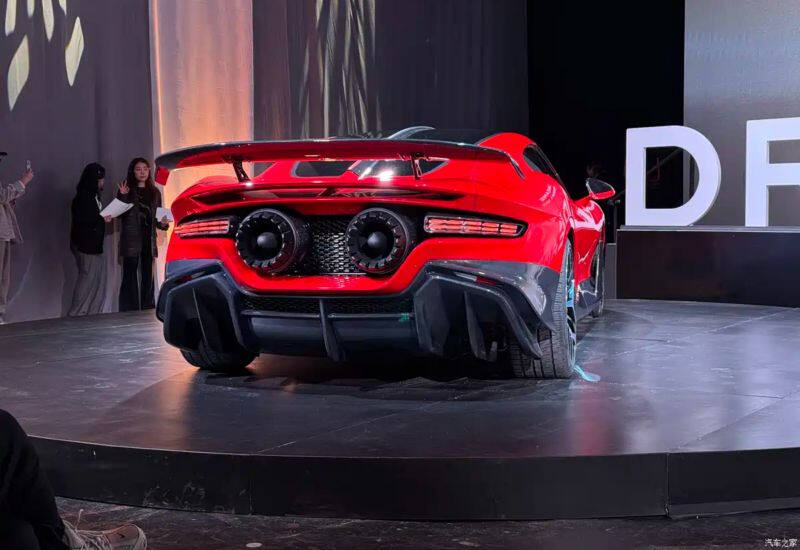
Dreame is pushing its hypercar project even further into sci-fi territory with a new Nebula Next 01 Jet Edition concept that pairs two rear-mounted jet nozzles with a solid-state traction battery. The headline claim is the kind of thing that makes engineers raise an eyebrow and investors reach for a calculator: 0 to 100 km/h in 0.9 seconds, if the company’s numbers hold up.
The move builds on the earlier Nebula Next 01 concept shown at CES 2026 in Las Vegas, which was already quoted at 1,903 hp and 0 to 100 km/h in no more than 1.8 seconds. Dreame, best known for robot vacuums, is now trying to turn its hardware ambitions into something far more expensive, and far more difficult to ship.
Jet thrust for a road car
According to Dreame’s preliminary figures, the jet system can deliver up to 100 kilonewtons of thrust and reacts in no more than 150 ms. That is outrageous by normal car standards, but the underlying idea is not new: jet-assisted vehicles have been used for land-speed records for decades. What is new is the company’s attempt to push the concept toward a consumer-facing hypercar, which is where physics, regulation, and common sense usually enter the chat.
The presentation took place in California, continuing Dreame’s habit of showing its most ambitious automotive ideas outside China. That is a smart bit of stagecraft: a global audience, maximum attention, and fewer reminders that turning a prototype into a road-legal product is a very different business from unveiling glossy renders.
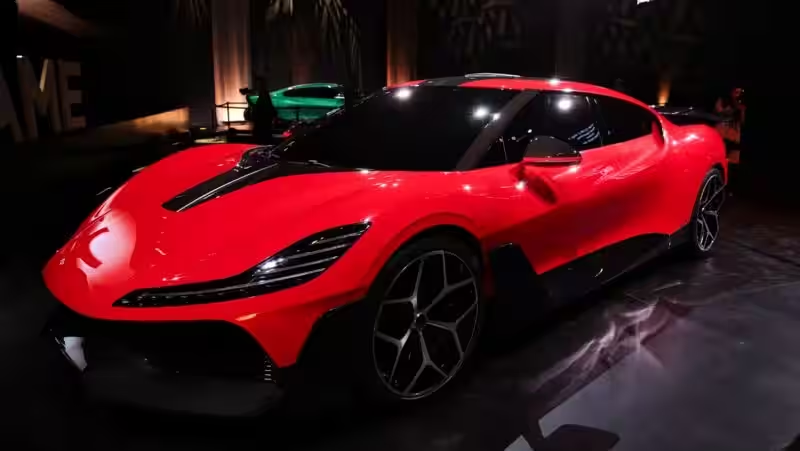
Solid-state battery and steer-by-wire setup
Under the theatrics, there are more grounded technical claims. Dreame says the Jet Edition will use a sulfide-type solid-state traction battery with an energy density of more than 450 Wh/kg, enough for a range of over 550 km while keeping mass down. The company says the battery tech is still being prepared for mass production, which is usually the part where many futuristic car plans quietly hit a wall.
- Power: 1,903 hp in the earlier Nebula Next 01 concept
- 0 to 100 km/h: no more than 1.8 seconds previously, 0.9 seconds for the Jet Edition
- Jet system: up to 100 kilonewtons of thrust, 150 ms response time
- Battery: sulfide-type solid-state pack, more than 450 Wh/kg
- Range: over 550 km
The car is also expected to use steer-by-wire, with no direct mechanical link between the steering wheel and the front wheels. Dreame claims 14 degrees of freedom and a reaction time of no more than 1 ms, plus the ability to keep the car stable if one tire suddenly fails. That is the sort of feature set that sounds ridiculous until you remember how much automotive marketing now depends on software doing the heavy lifting.
Dreame Jet Edition lidar setup
Autonomy hardware is part of the package too. Dreame says the onboard system will use a DHX1 lidar with 4,320 lines of resolution and full-color 4K perception, capable of identifying objects at up to 600 meters. It can reportedly detect objects with just 10% reflectivity at 400 meters and spot small animals at roughly 280 to 300 meters. The likely supplier appears to be Hesai, which has become a familiar name in the Chinese lidar race.
The bigger question is whether Dreame is building a real car program or a spectacular demo reel with wheels. The company has already shown more than sketches, which puts it ahead of pure vaporware. But jet thrust, solid-state batteries, and steer-by-wire all have to survive the ugly middle stage between concept and production, and that is where most ambitious hypercar stories stop being fun.