

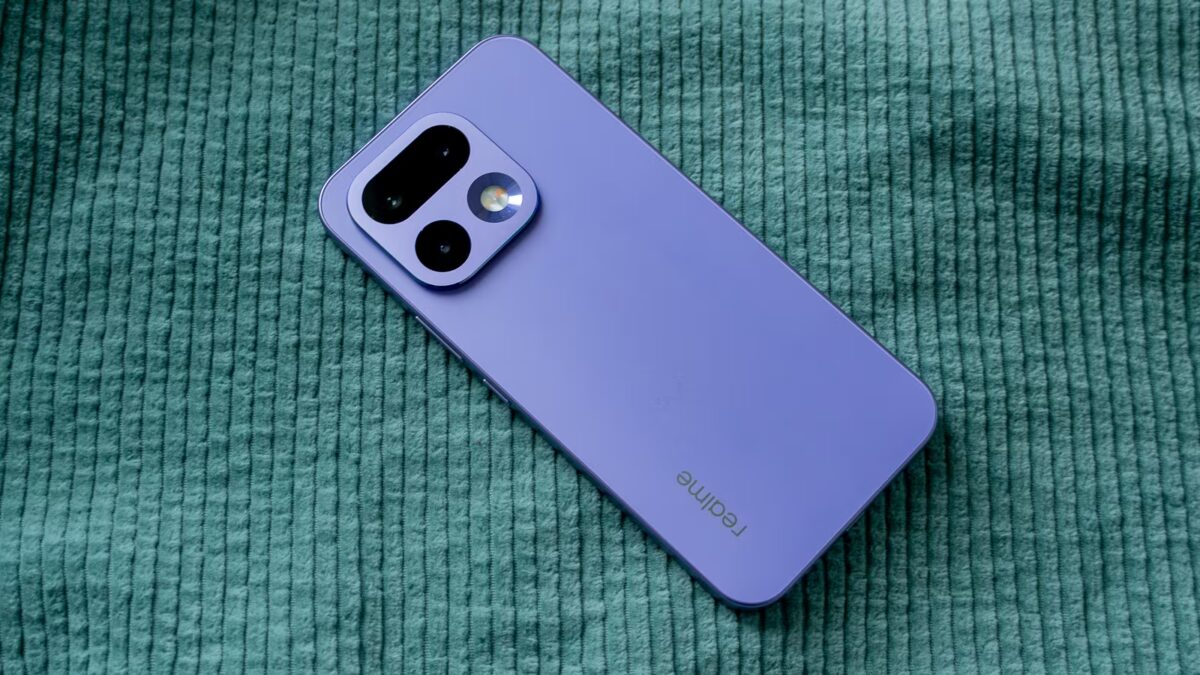
Realme’s 16 Pro 5G stands out with its massive 7000mAh battery, a sleek Japanese-designed chassis, and a headline-grabbing 200MP camera sensor. Powered by the MediaTek Dimensity 7300-Max chipset and boasting a sharp 1.5K AMOLED display with a 144Hz refresh rate, this mid-range handset aims to deliver solid performance, great battery life, and premium design without pretending to be a flagship. Available in Russia since March 2026, it starts at 38,990 rubles (~$530) for the 8GB/256GB model, with the 12GB/512GB variant priced at 44,990 rubles (~$610).
In the 35,000-45,000 ruble (~$500-$600) price bracket, smartphones usually fall into two categories: either a collection of compromises marketed to spotlight strengths while glossing over weaknesses, or devices with a clear, honest rationale behind each design choice. The realme 16 Pro clearly belongs to the latter, deliberately avoiding flagship pretensions and instead offering a balanced package focused on value and comfort. Let’s dig into what sets it apart.
Unboxing, design, and ergonomics of realme 16 Pro
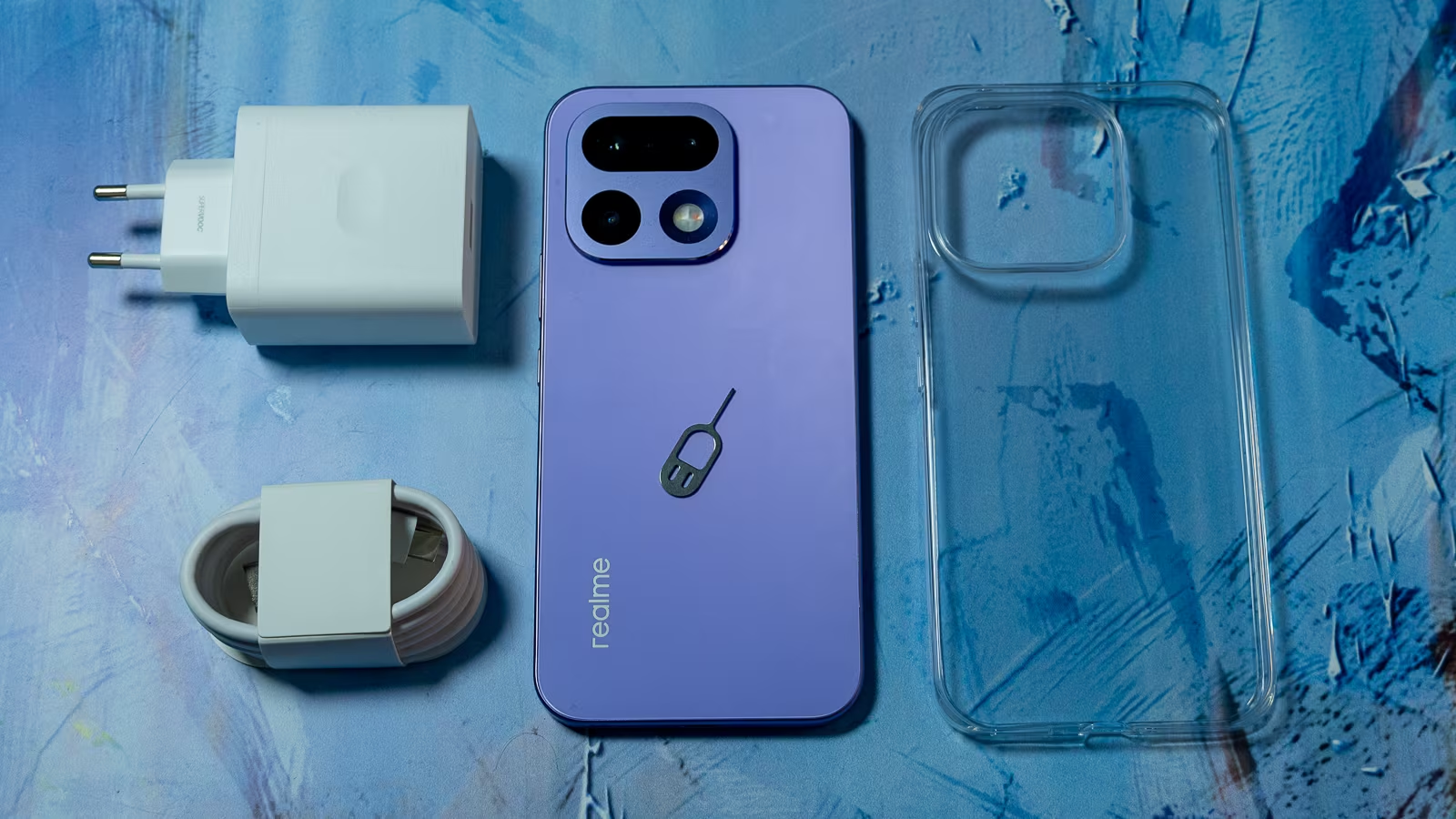
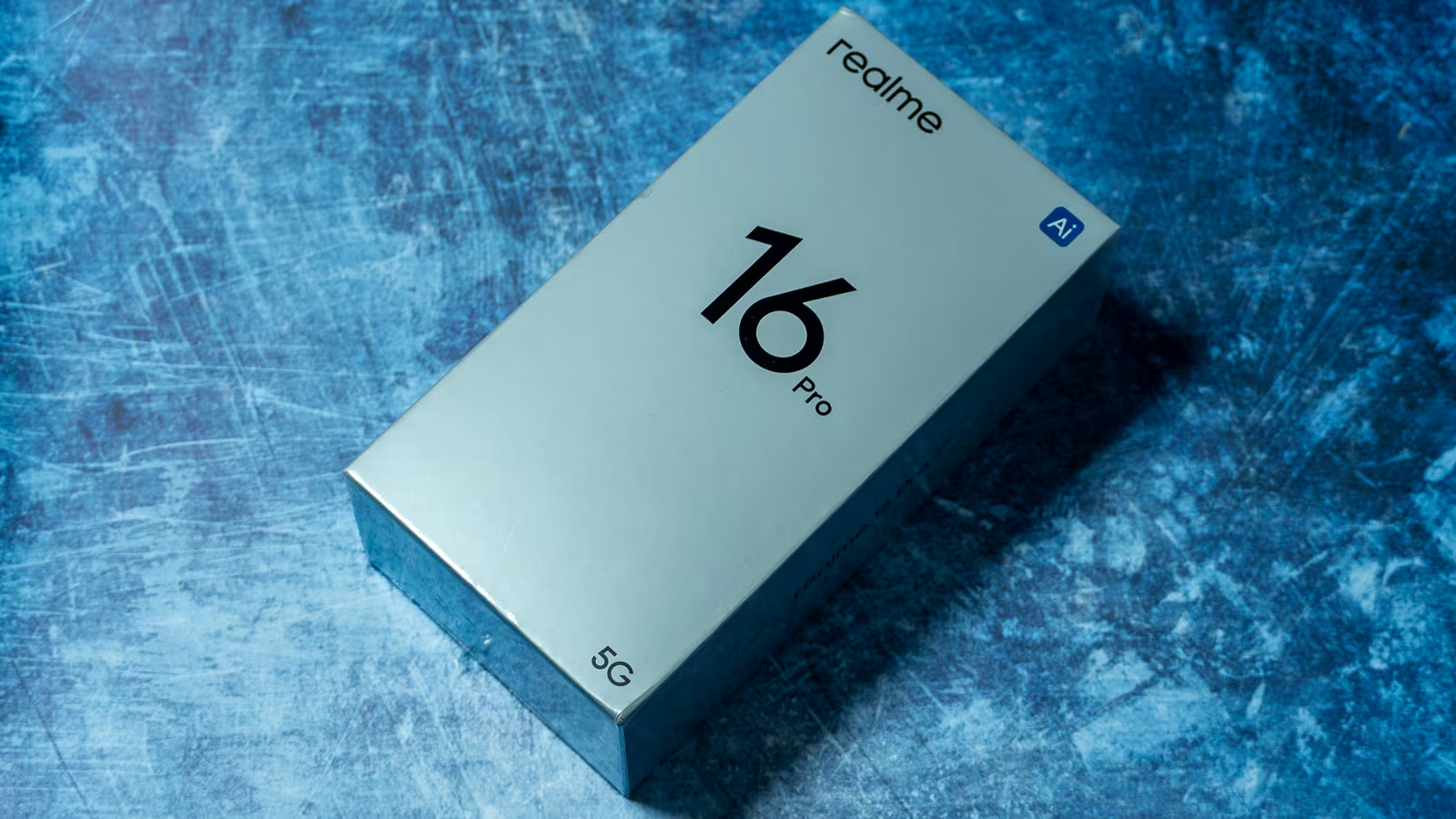
The box includes the essentials: an 80W SuperVOOC charger, USB-C cable, SIM ejector tool, a basic silicone case, and minimal paperwork. While the inclusion of a charger beats brands like Apple and Samsung, it’s frustrating that the cable and adapter still feature USB-A connectors instead of USB-C to USB-C, an upgrade many expect in 2026.
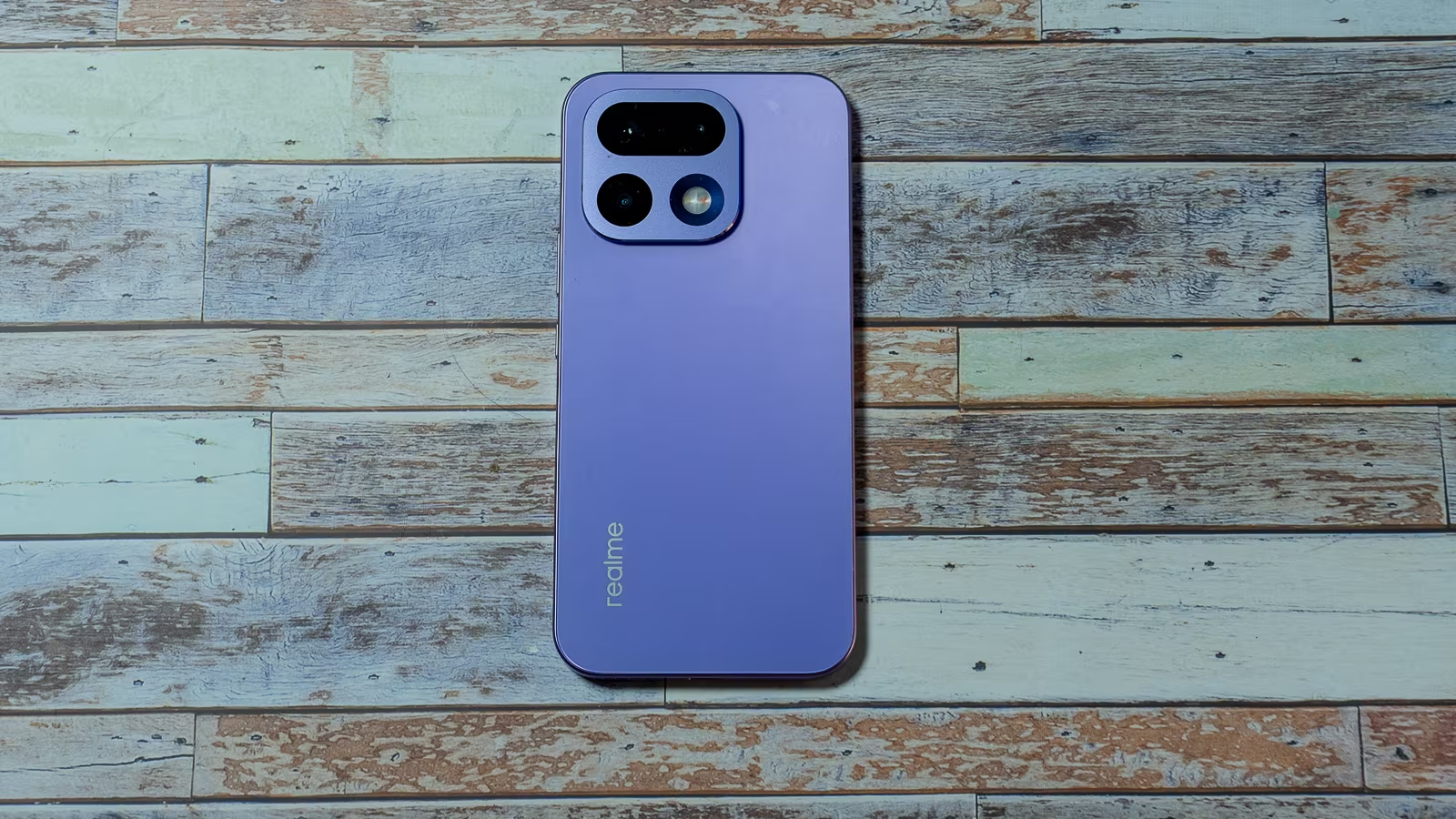
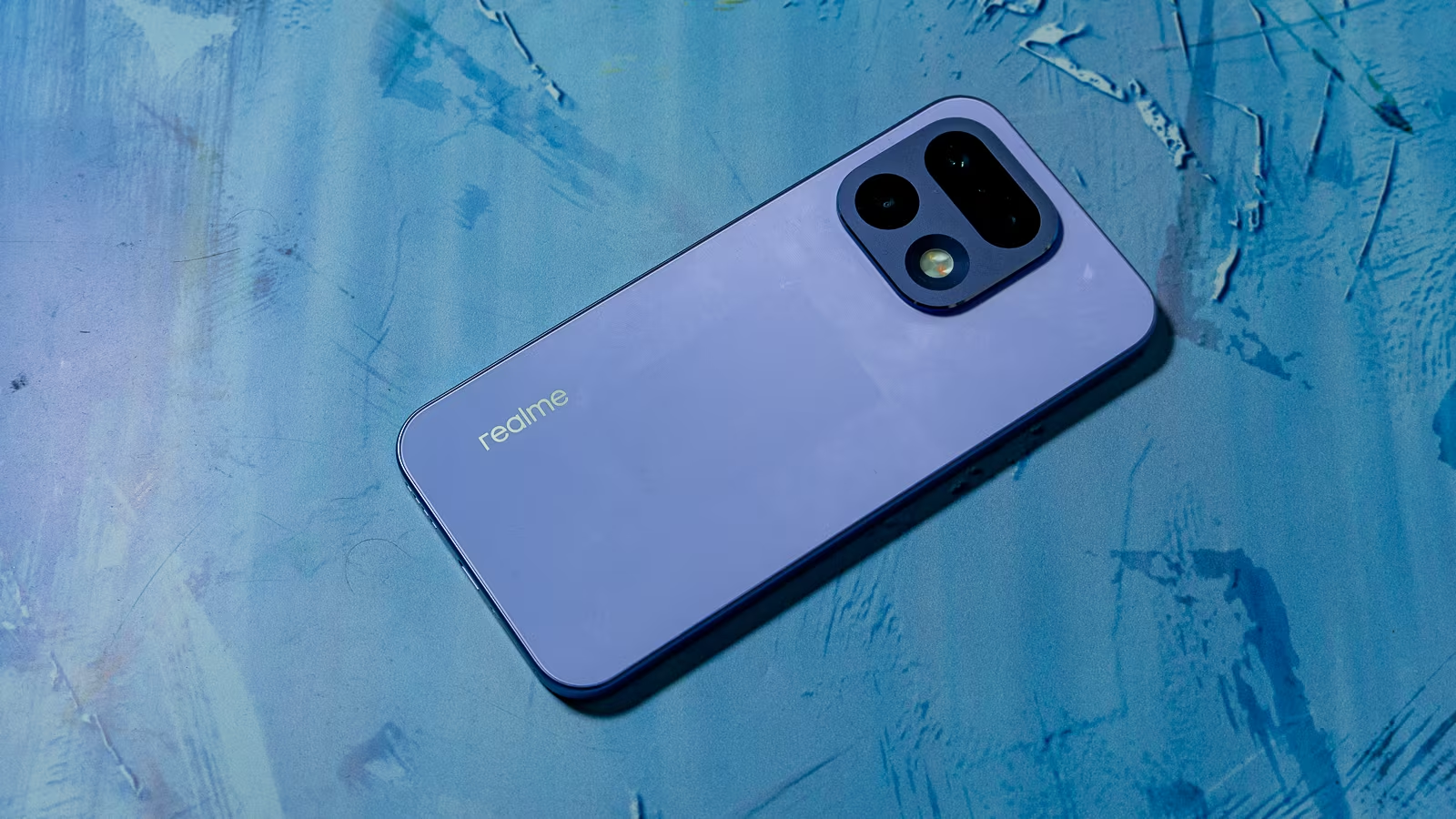
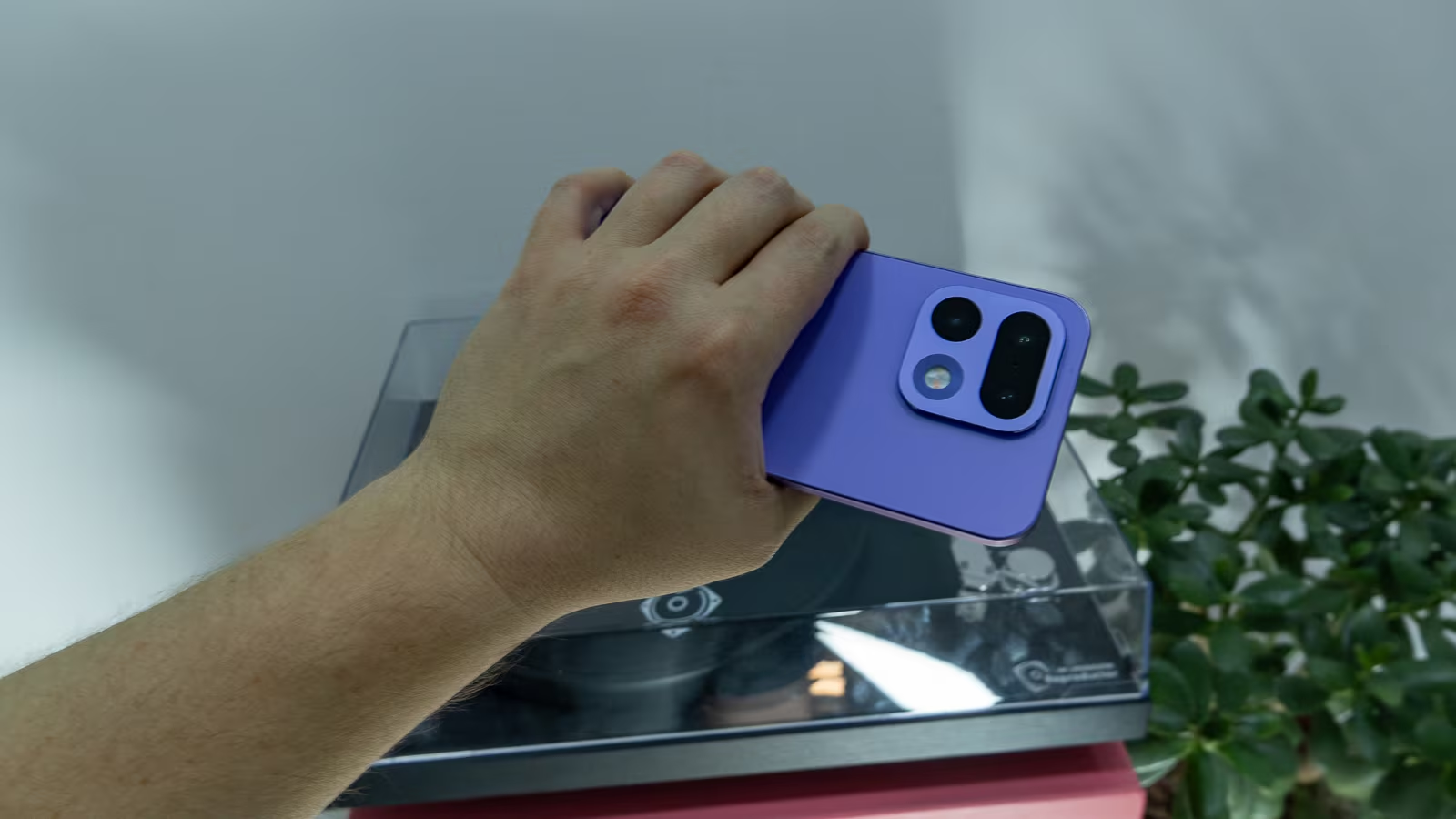
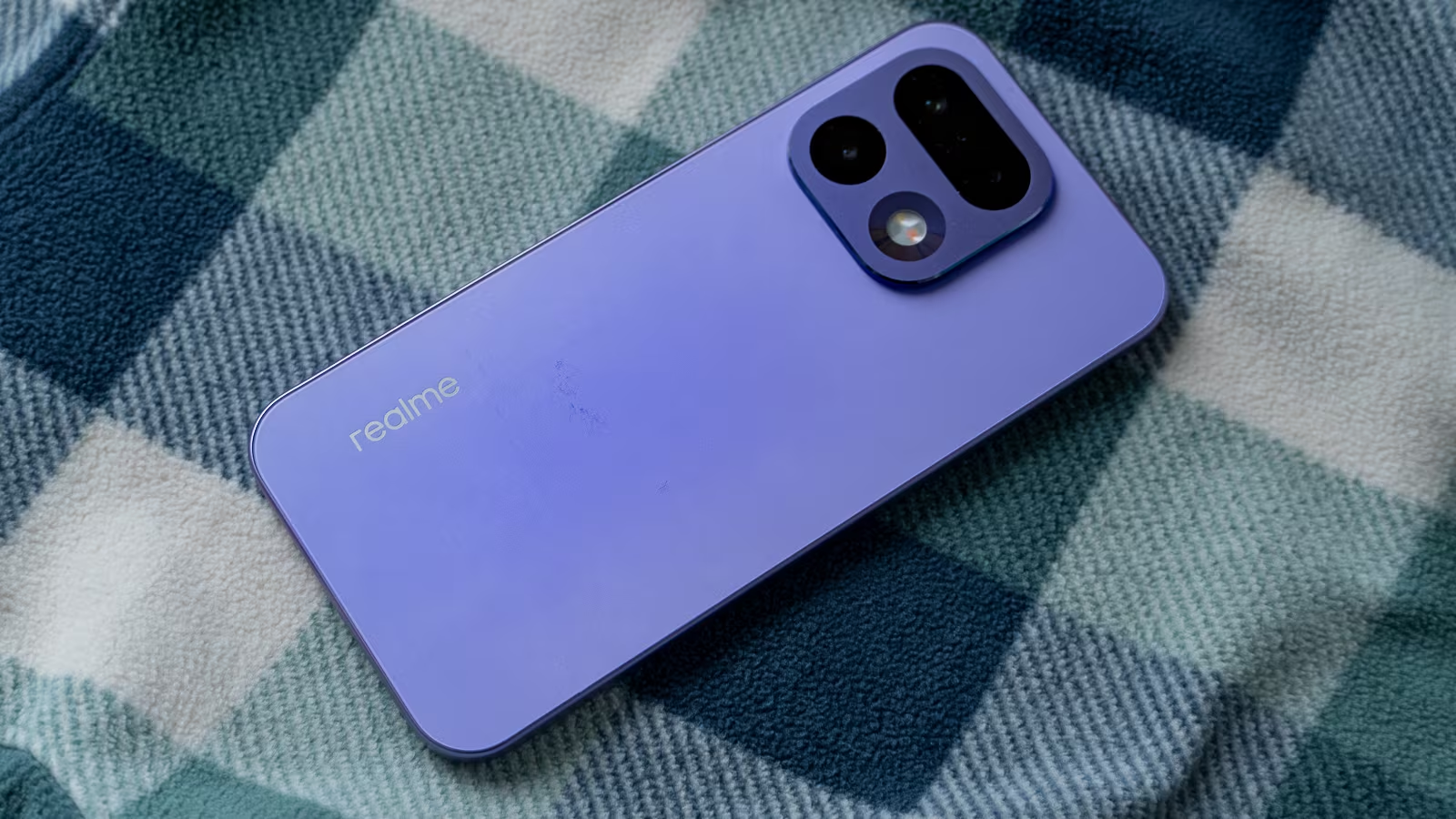
The rear shell is crafted from a unique polymer realme calls ”bio-based organic silicone,” claimed to be an industry first. It feels matte, soft, and almost suede-like to the touch, with subtle texture differences between color options but all delivering a smooth, non-slip grip. It’s a tactile experience inspired by the delicate softness of orchid petals – no mere marketing fluff. Fingerprints rarely cling, though some light smudging appears over time.
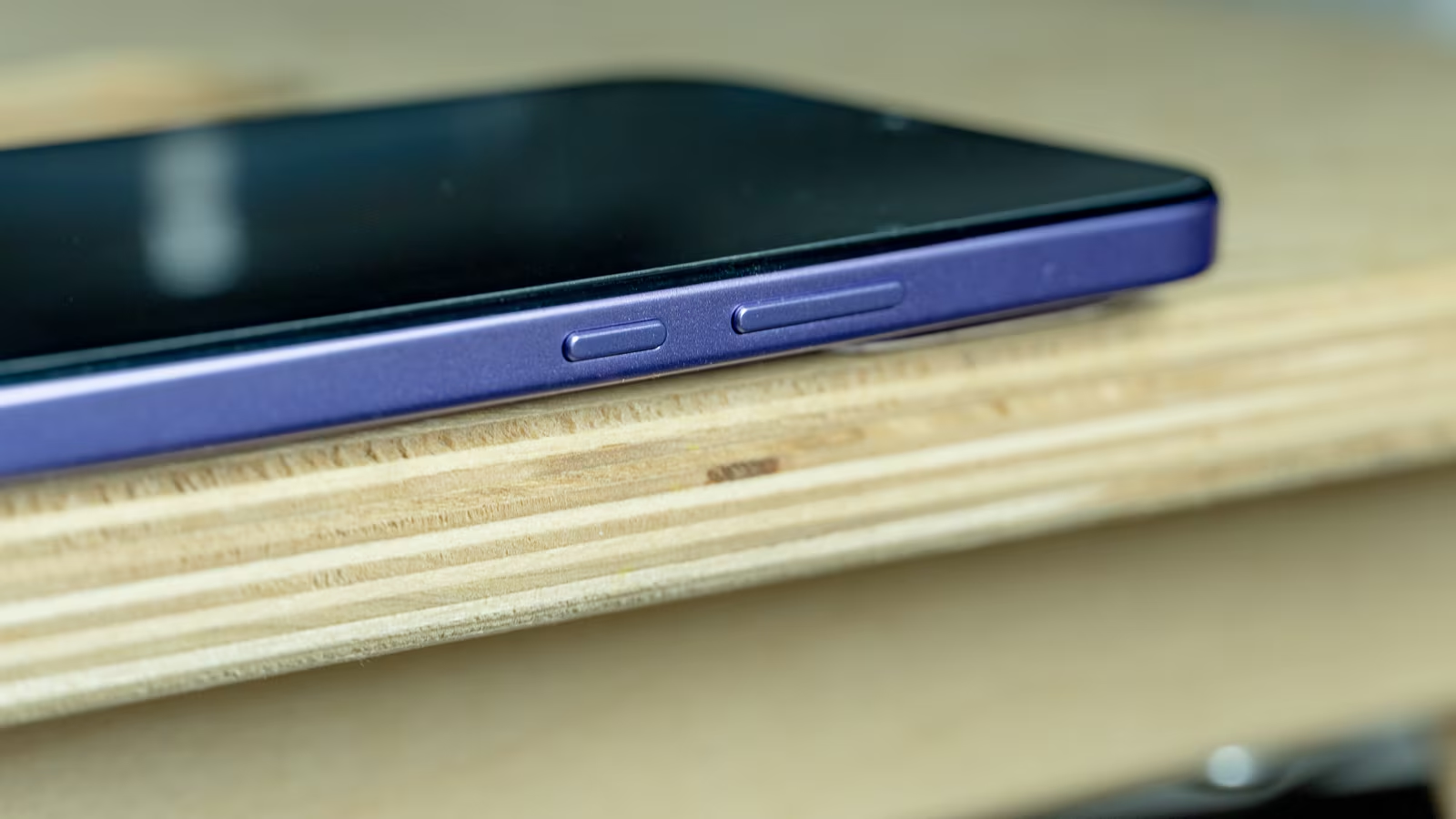
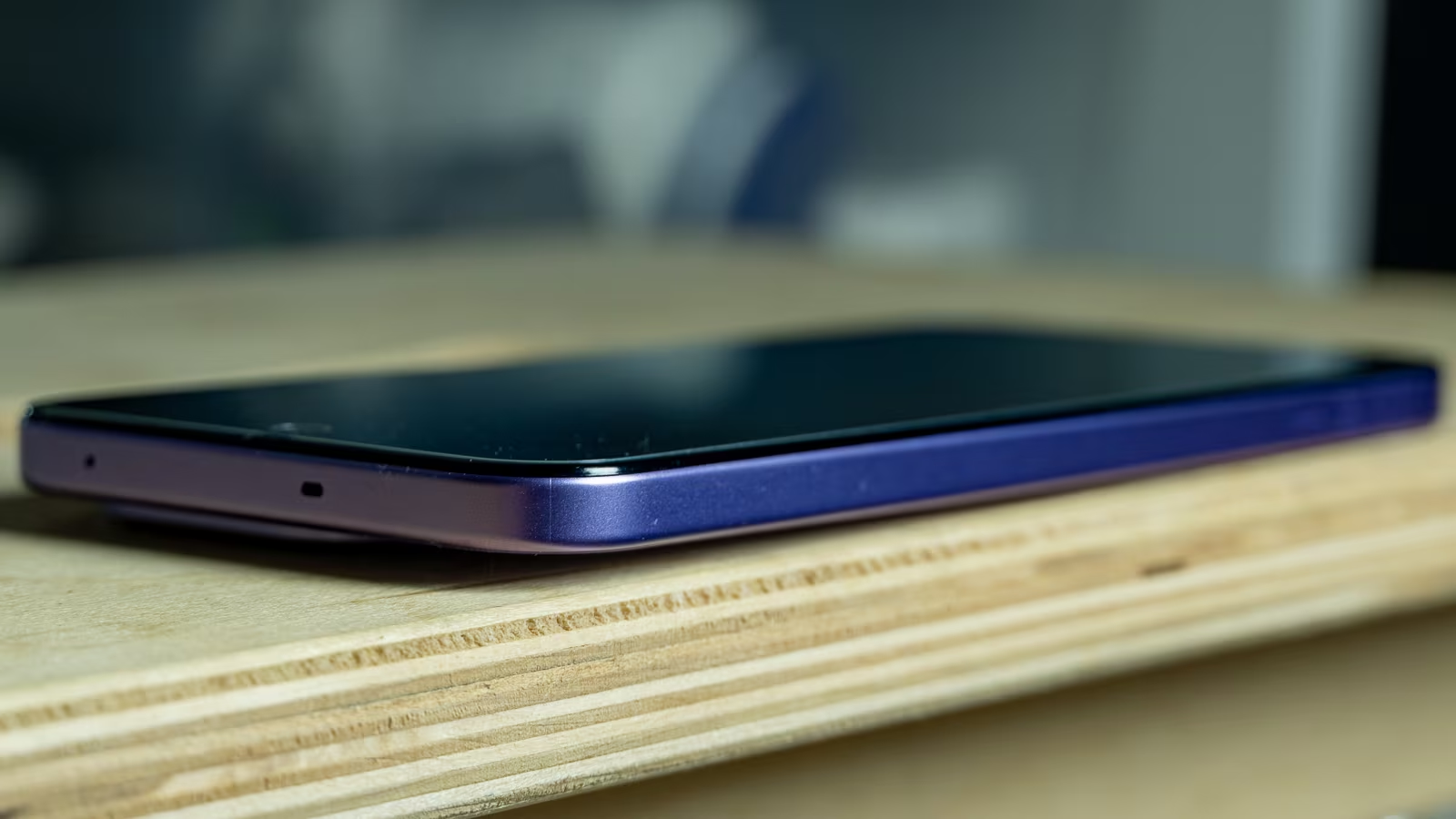
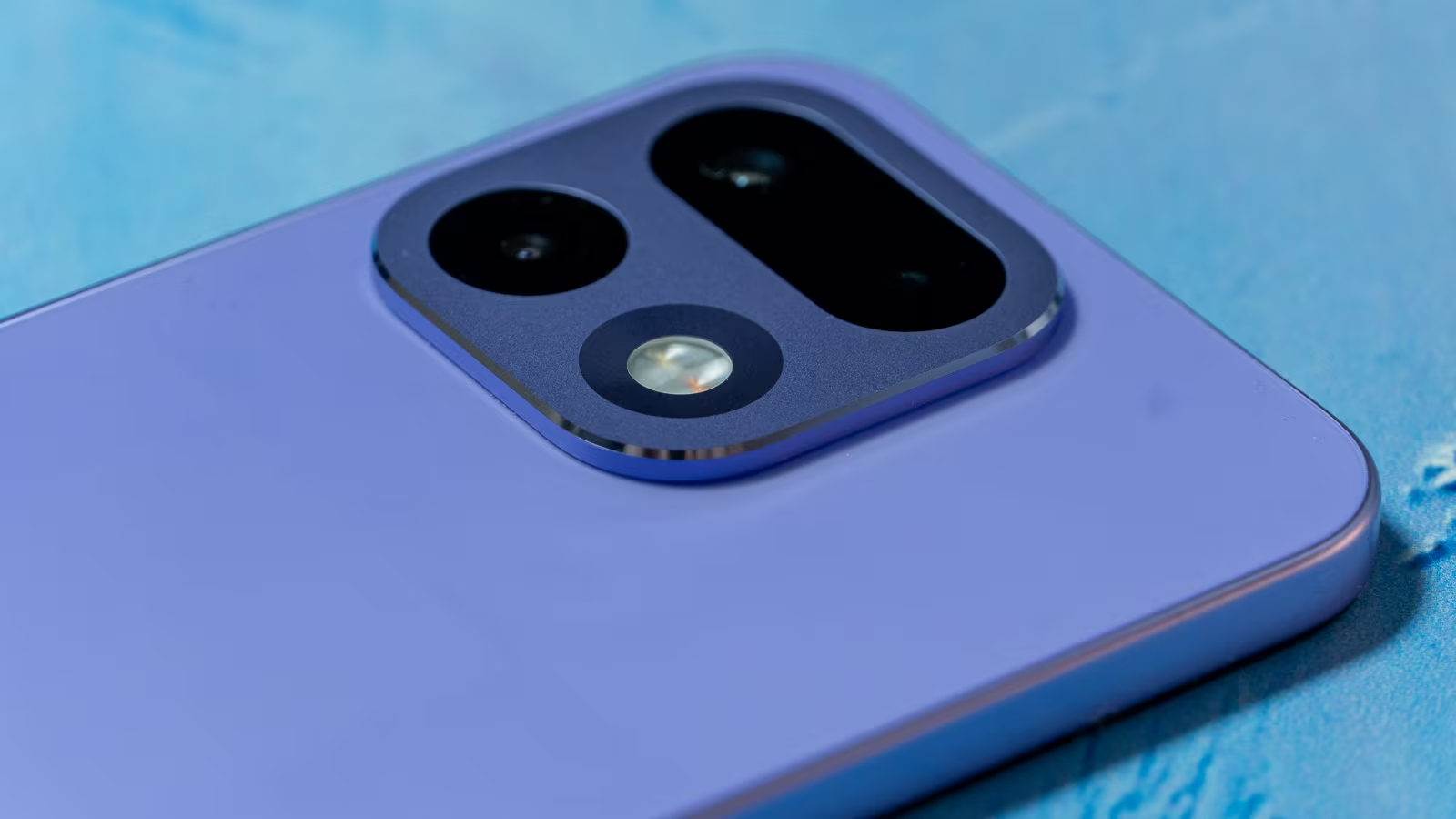
The design was crafted by Japanese industrial designer Naoto Fukasawa, known for collaborations with Muji and Bang & Olufsen, and realme since the GT Master Edition. His philosophy focuses on creating objects that feel beautiful and intuitive before you even think about it. The reflective metal frame around the camera block contrasts sharply with the matte polymer back, a signature Fukasawa move that balances textures to elevate the overall premium feel. Side-by-side with plastic competitors in this price range, the difference is immediately clear.
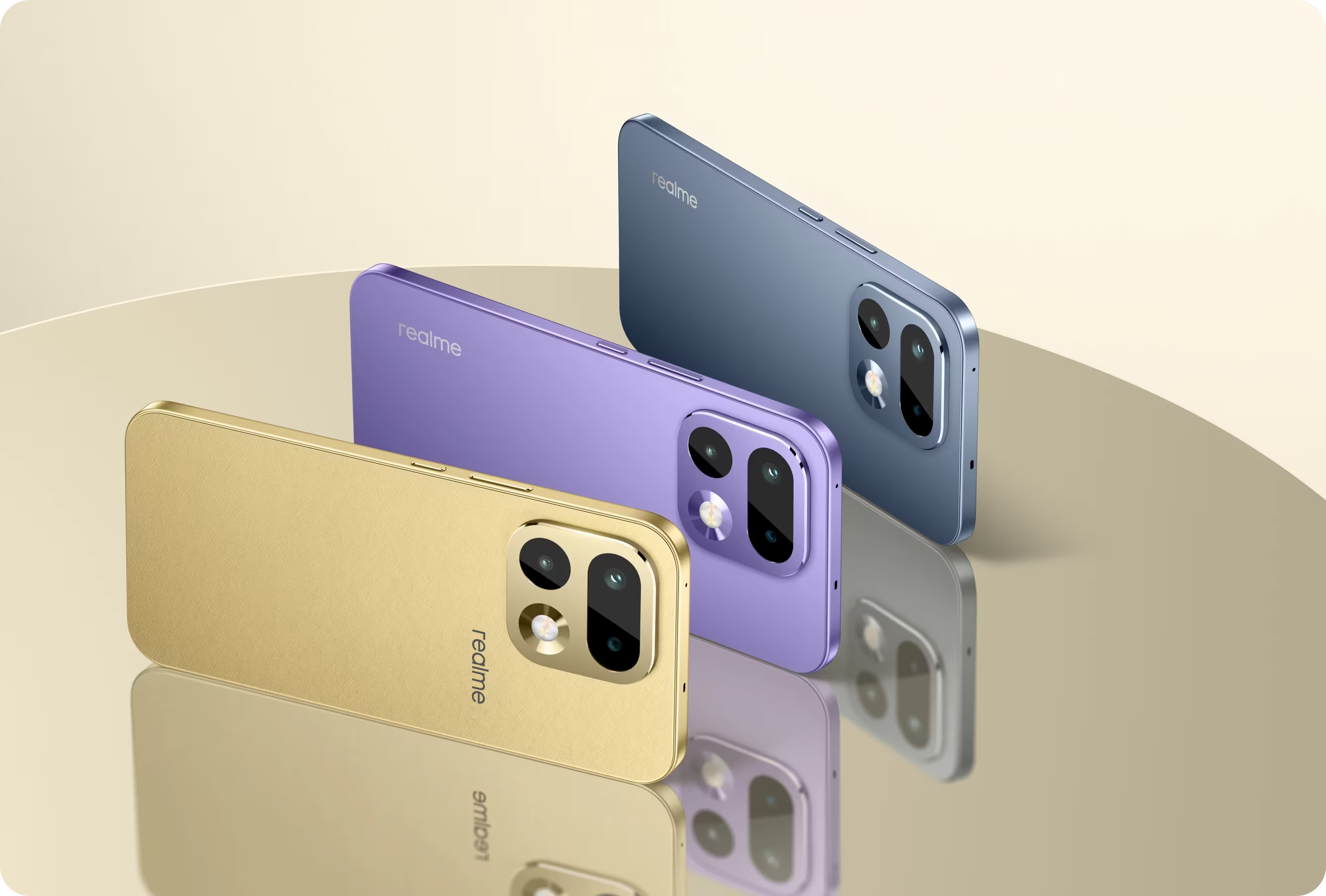
Available colors are Master Gold (beige), Pebble Grey, and Orchid Purple. Impressively, the chassis carries simultaneous certifications for IP66, IP68, IP69, and IP69K – the last providing water resistance against high-pressure, high-temperature jet sprays up to 80°C. Such protection is rare in this price range, where most phones cap out at IP68.
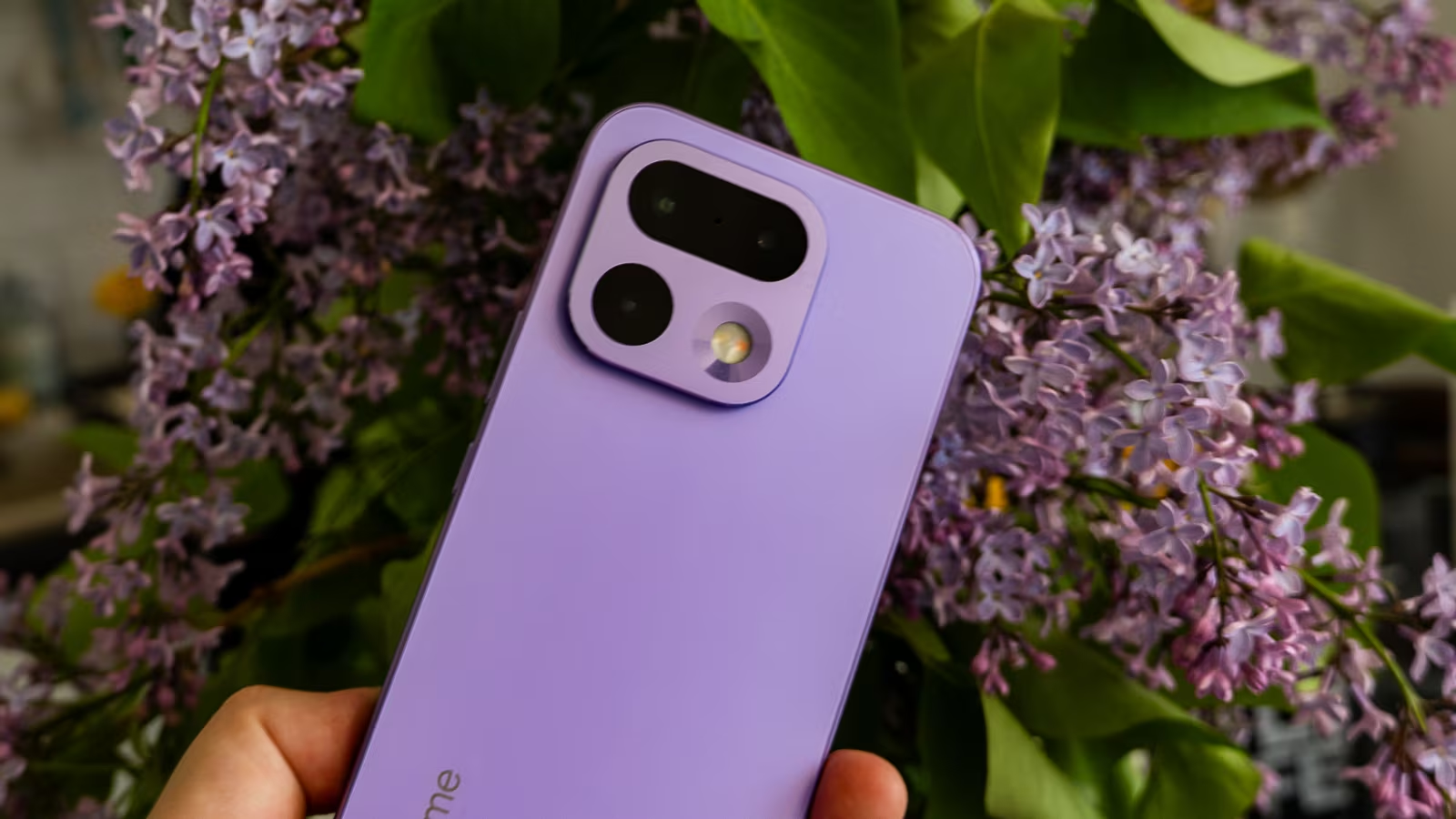
The body is entirely flat, with no curved edges on the screen. Dimensions measure 162.6 x 77.6 mm, thickness at 7.75 mm, and weight 192 grams. For comparison, the realme 16 Pro+ with the same battery bulks up slightly to 8.1 mm thick and 198 grams.
Realme 16 Pro display details
The 6.78-inch AMOLED panel delivers a 1272 x 2772 resolution (1.5K), packing about 447 pixels per inch. With a 144Hz refresh rate, purported peak brightness of 6500 nits, 10-bit color support, 100% DCI-P3 coverage, a super-high 4608Hz PWM frequency for flicker reduction, and HDR10+, it ranks as one of the best screens in its class-and it truly shows in daily use.
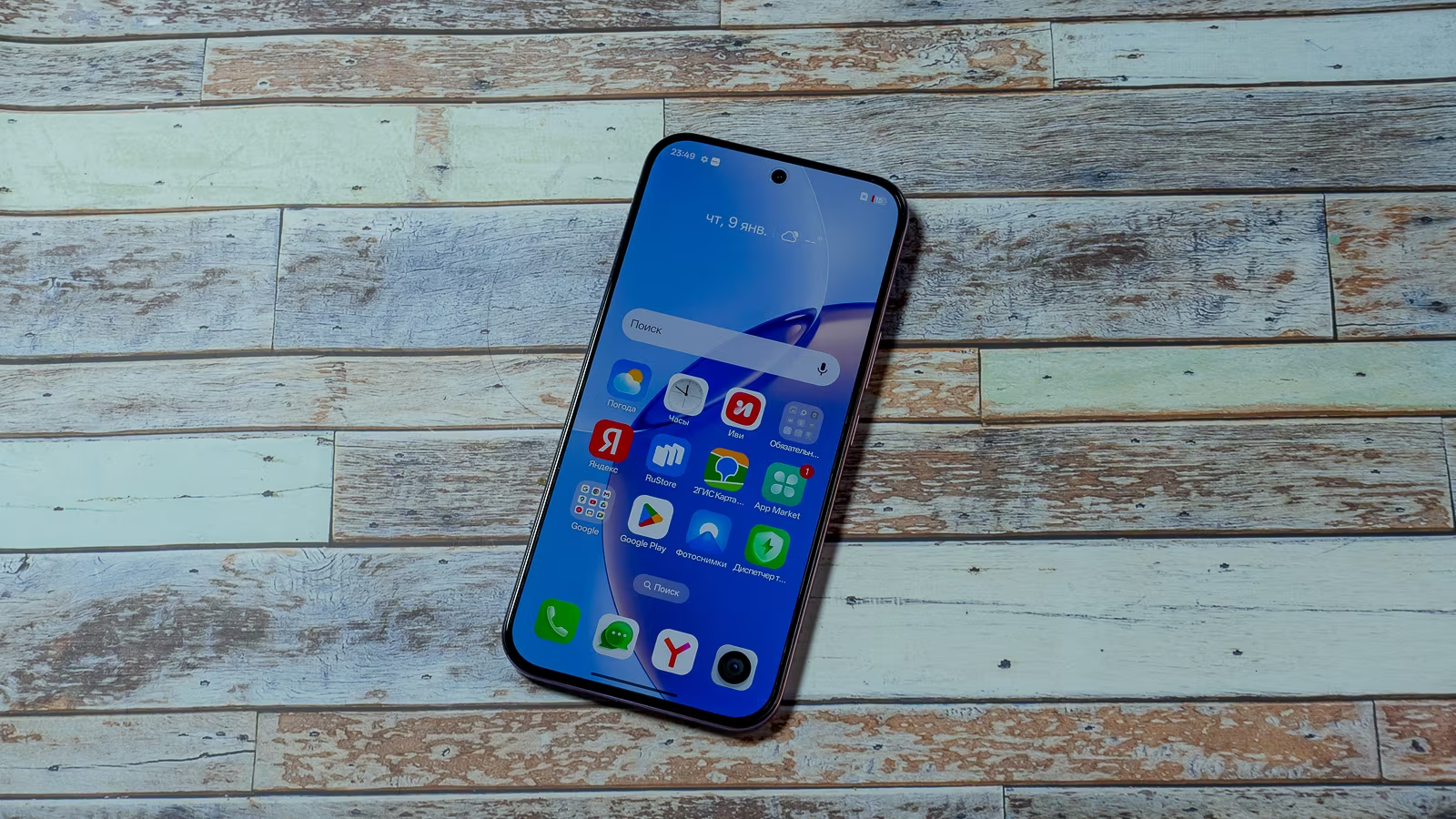
Brightness impresses outdoors, easily readable in strong sunlight, although the claimed 6500 nits peak likely stretches marketing truth. Minimum brightness hits 1.7 nits (measured by GSMArena), making nighttime viewing comfortable without eye strain. The 144Hz refresh rate is mostly a theoretical ceiling-the vast majority of apps run at 120Hz, with only a few genuine 144Hz use cases in realme’s own apps. The difference is subtle enough to be negligible, but it’s good to know the limitation upfront.
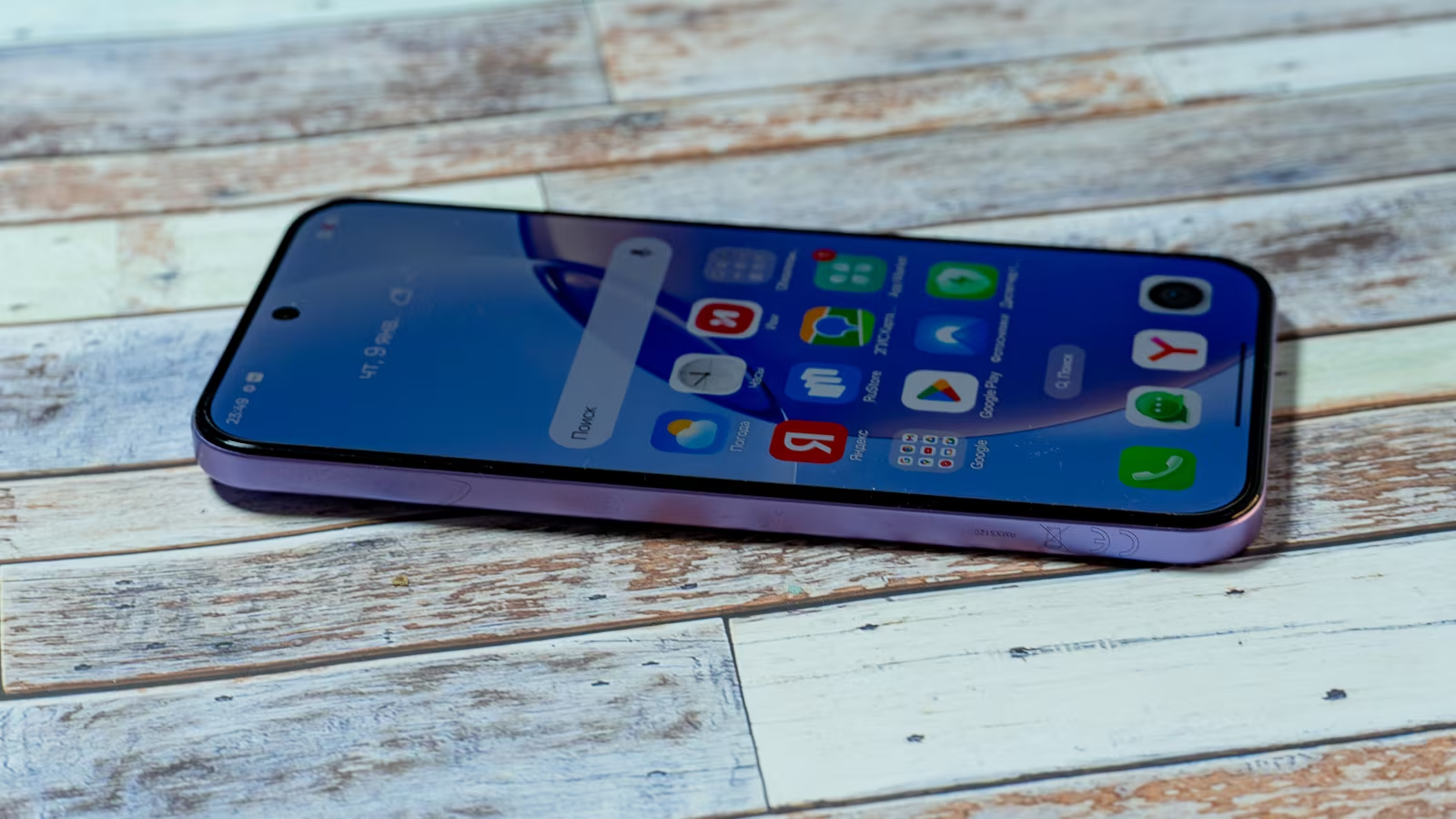
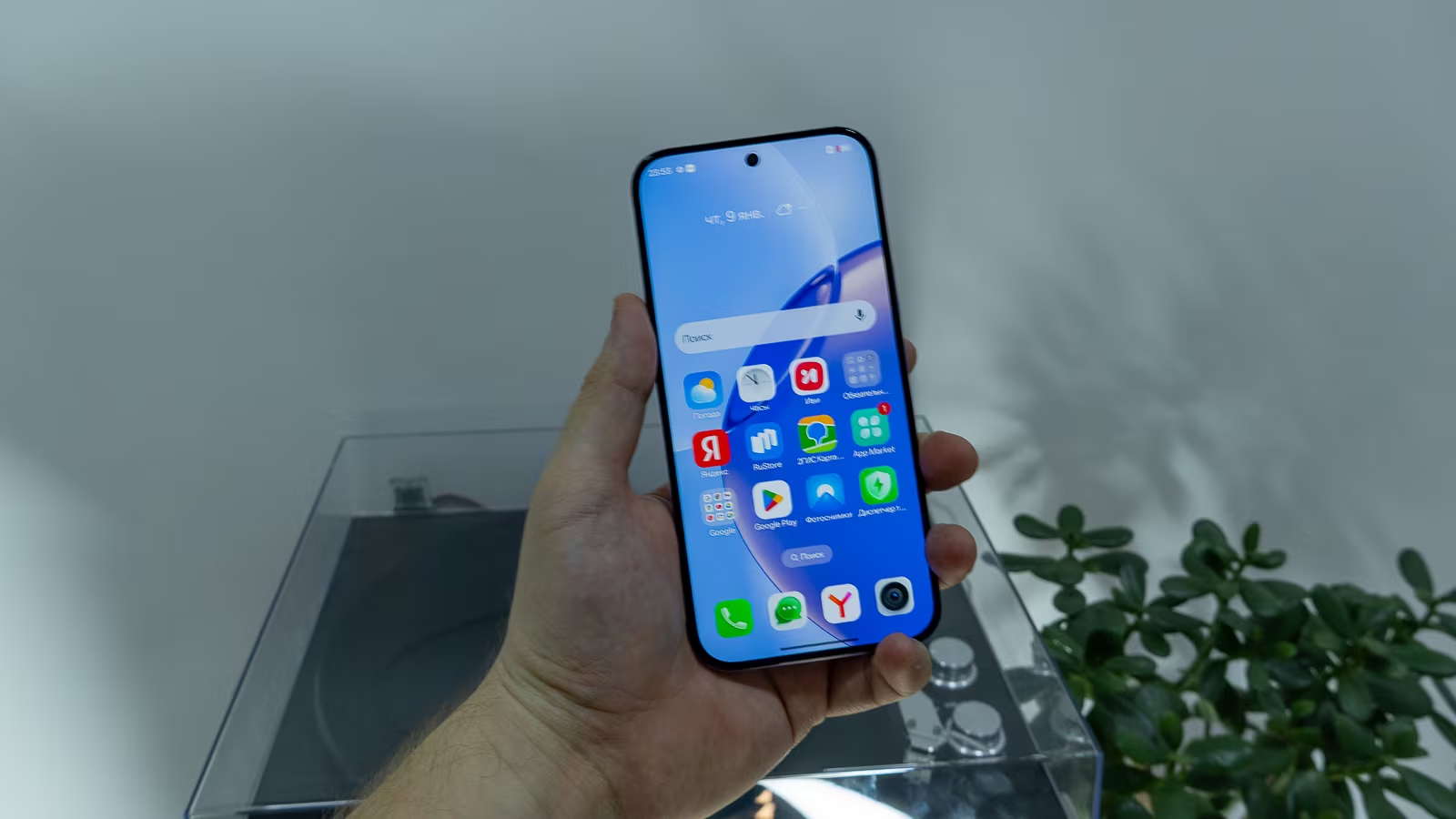
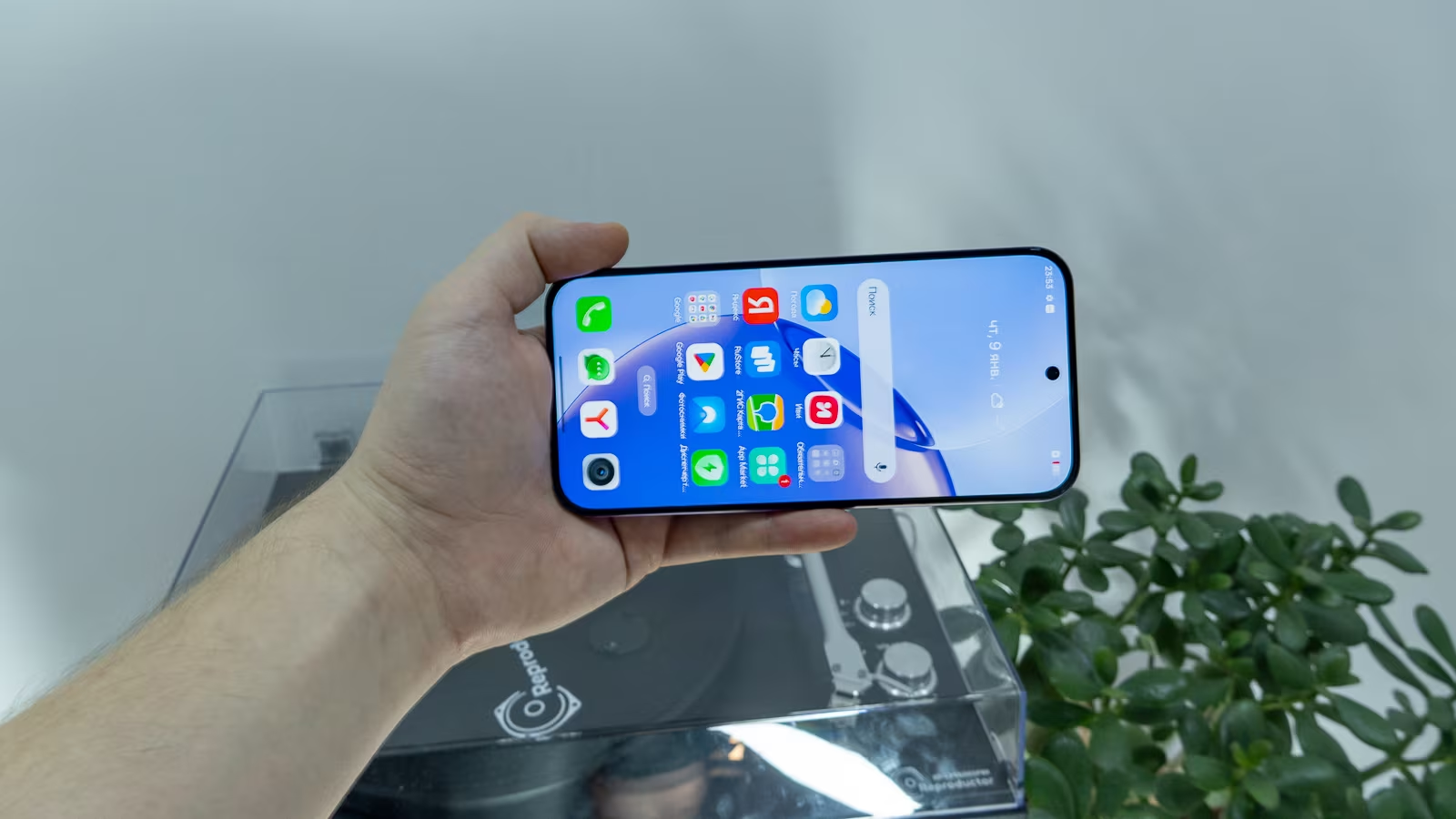
The ultra-high 4608Hz PWM flicker frequency is a smart inclusion for users sensitive to screen flicker, reducing eye strain compared to typical 240-480Hz PWM rates found in many OLED screens. While flicker issues are less common in modern panels, the high PWM rate shows realme didn’t cut corners here.
Realme 16 Pro performance benchmarks
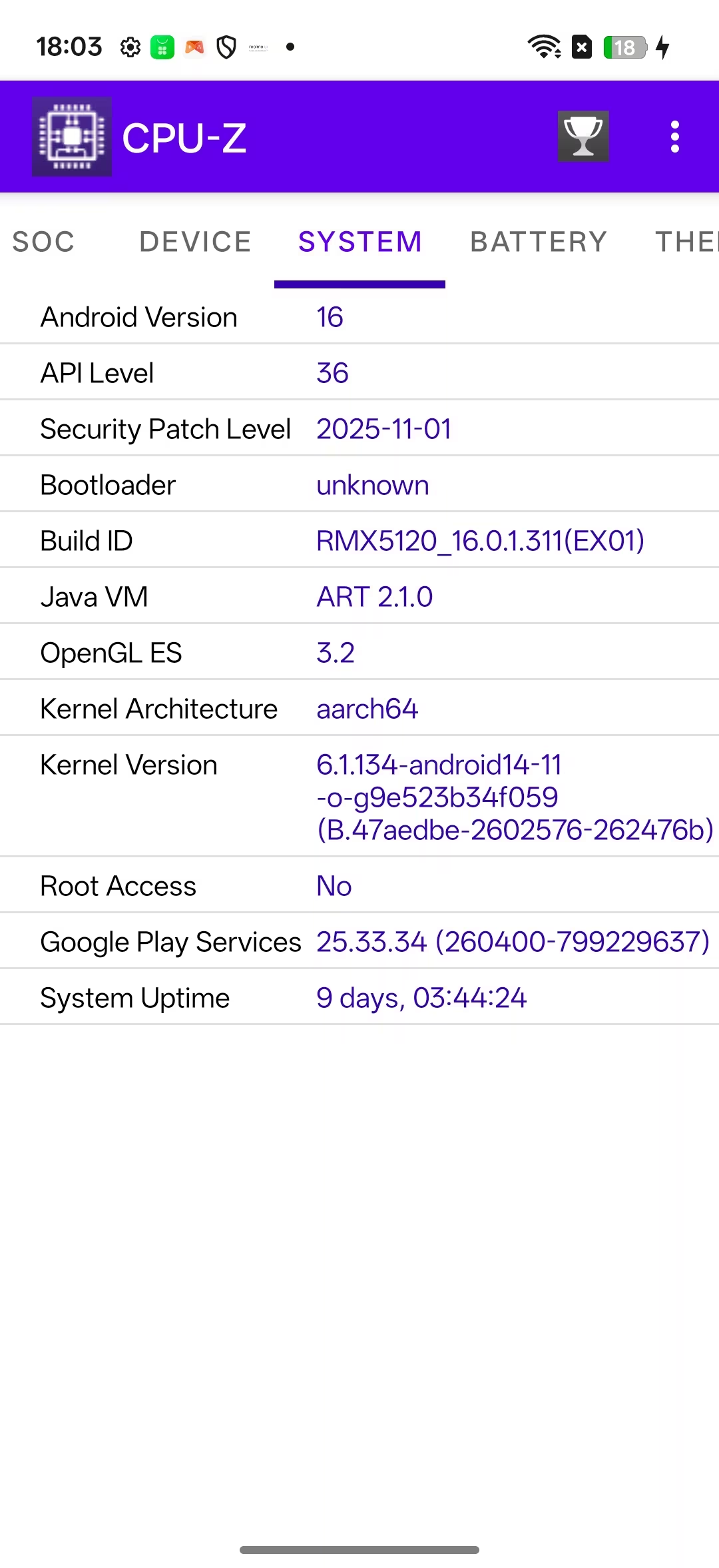
Under the hood is the MediaTek Dimensity 7300-Max, built on a 4nm process with four Cortex-A78 cores up to 2.5GHz plus four Cortex-A55 efficiency cores, and a neural processing unit (NPU) numbered 655. It’s a solid mid-tier chip optimized for power efficiency rather than raw power, so don’t expect flagship-level benchmark domination.
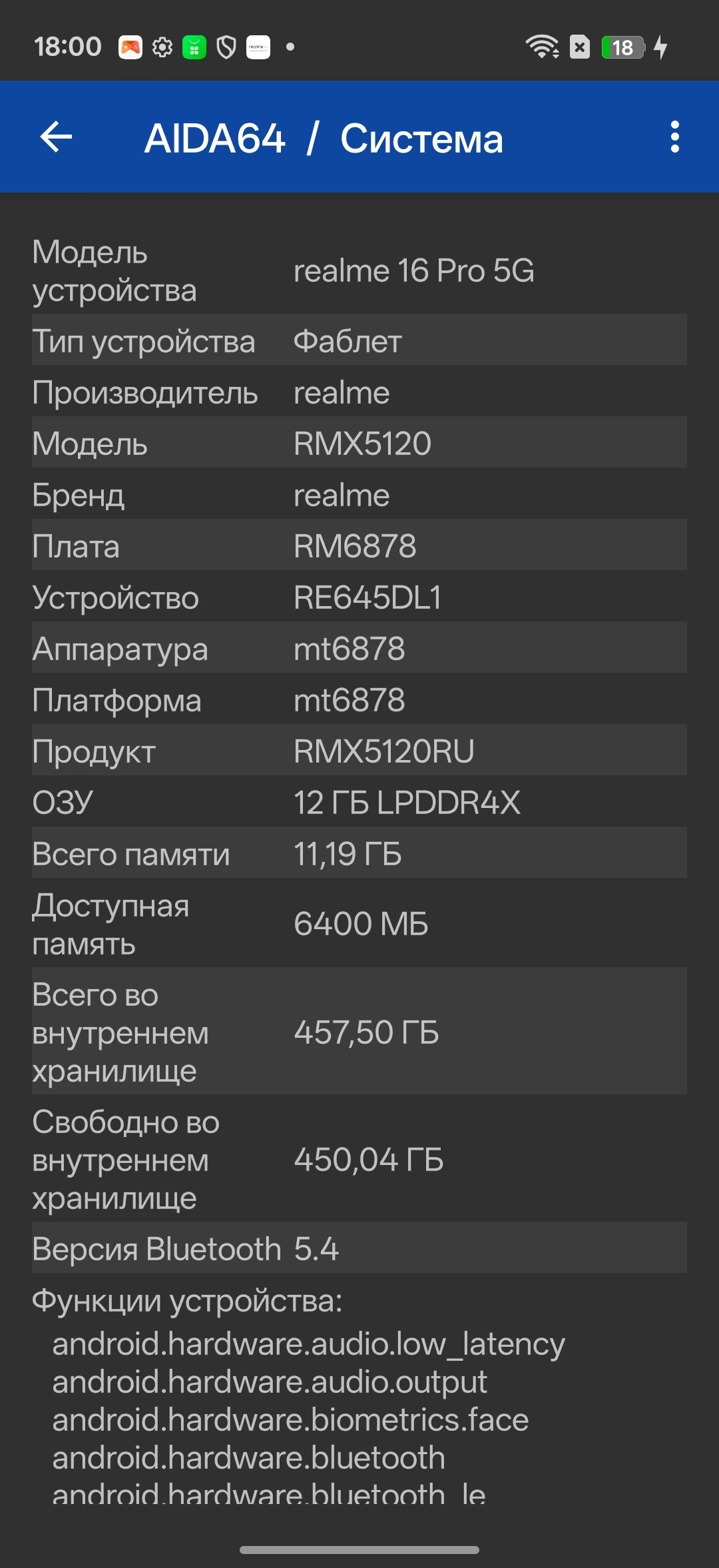
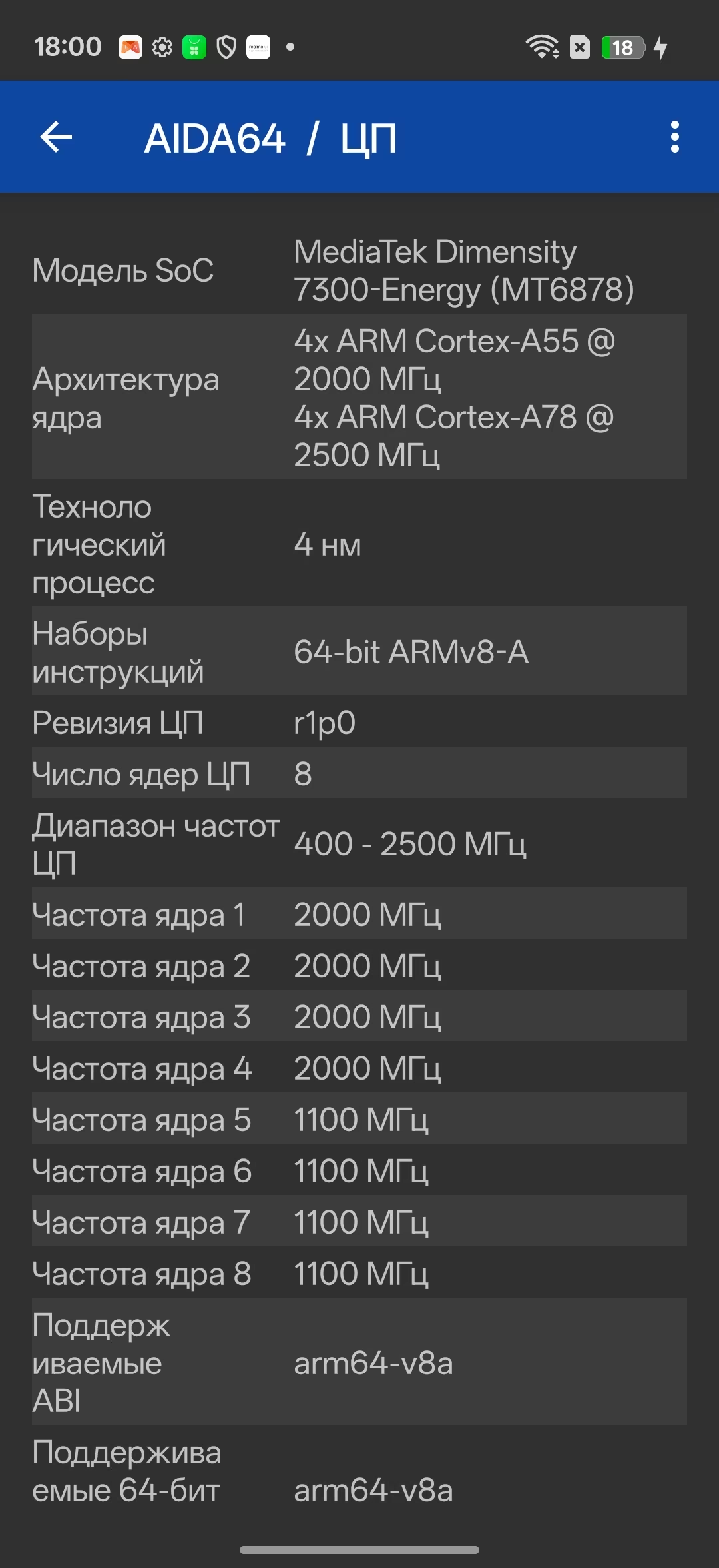
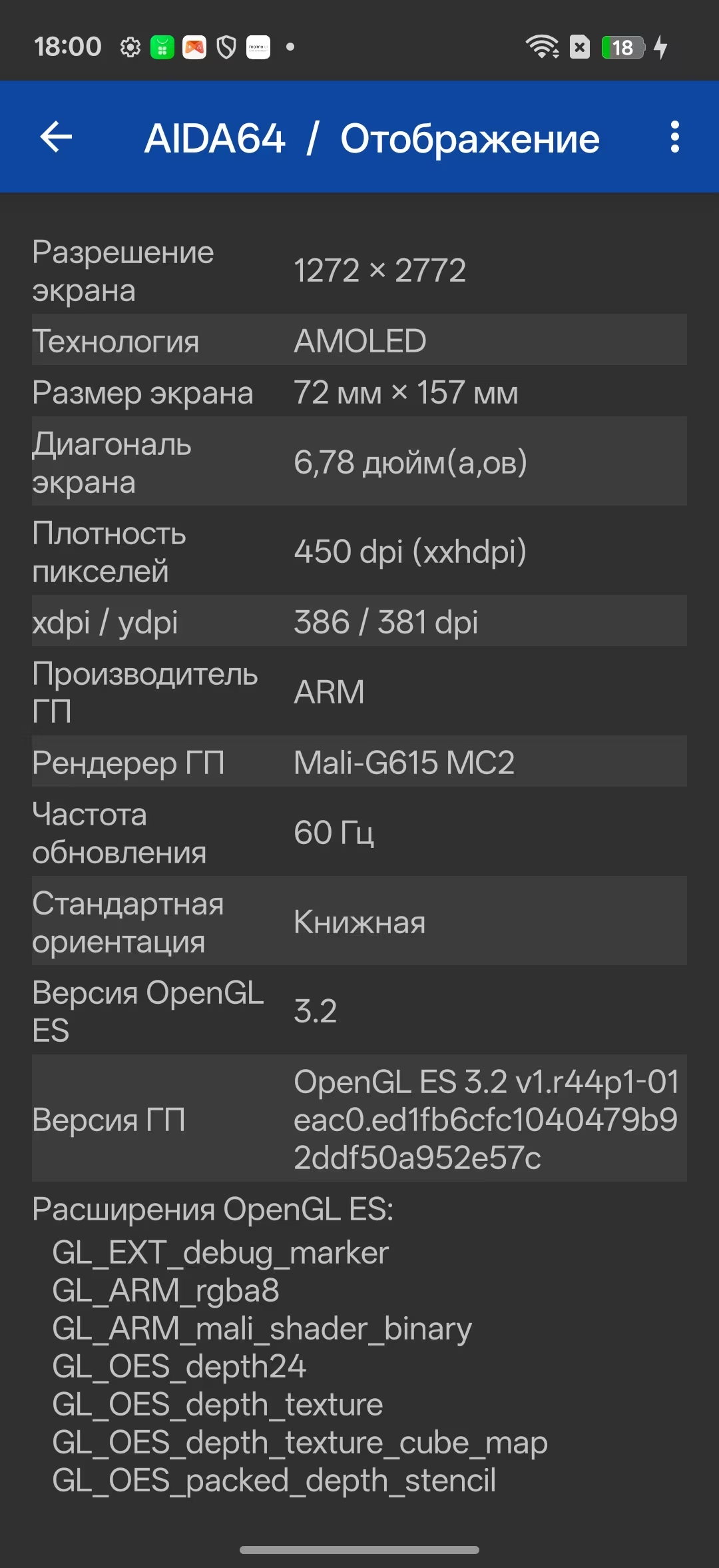
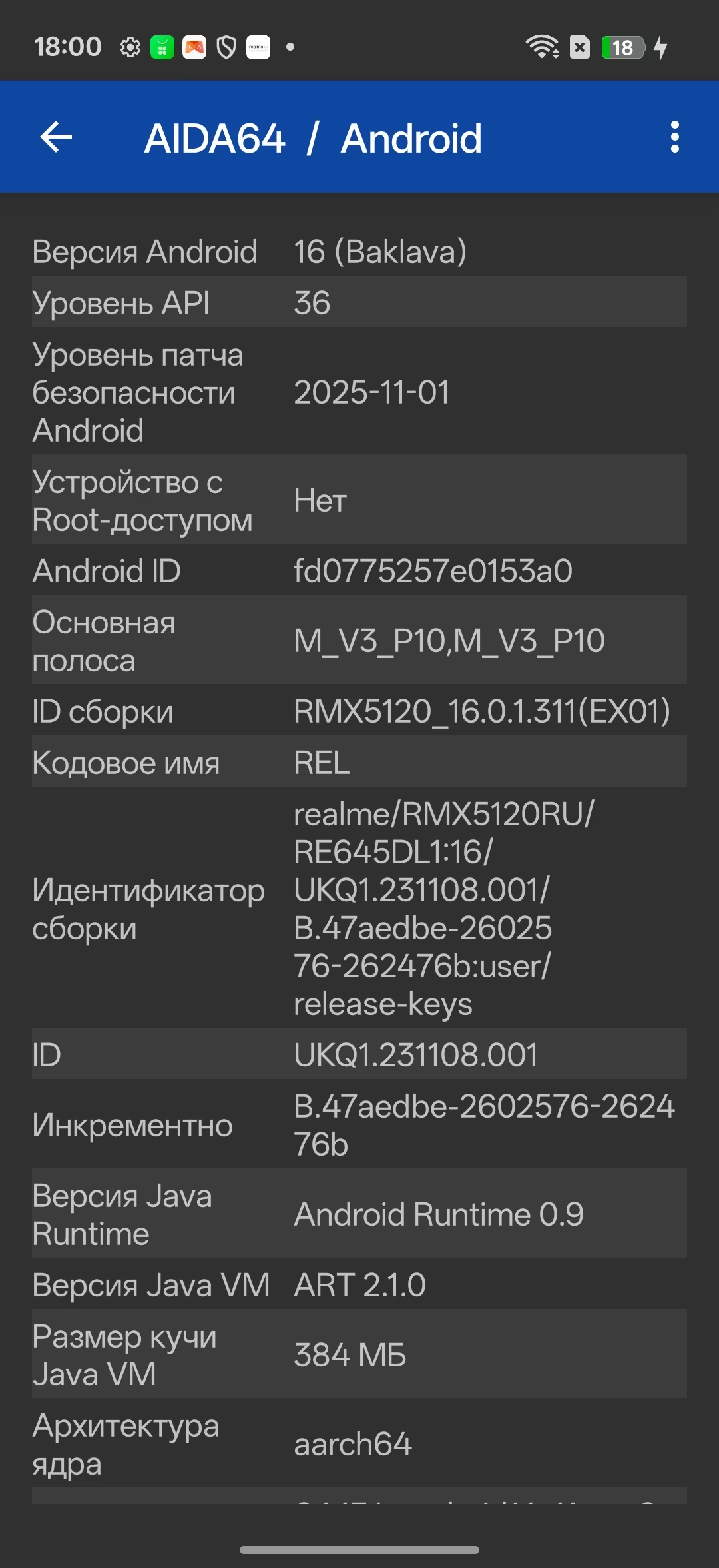
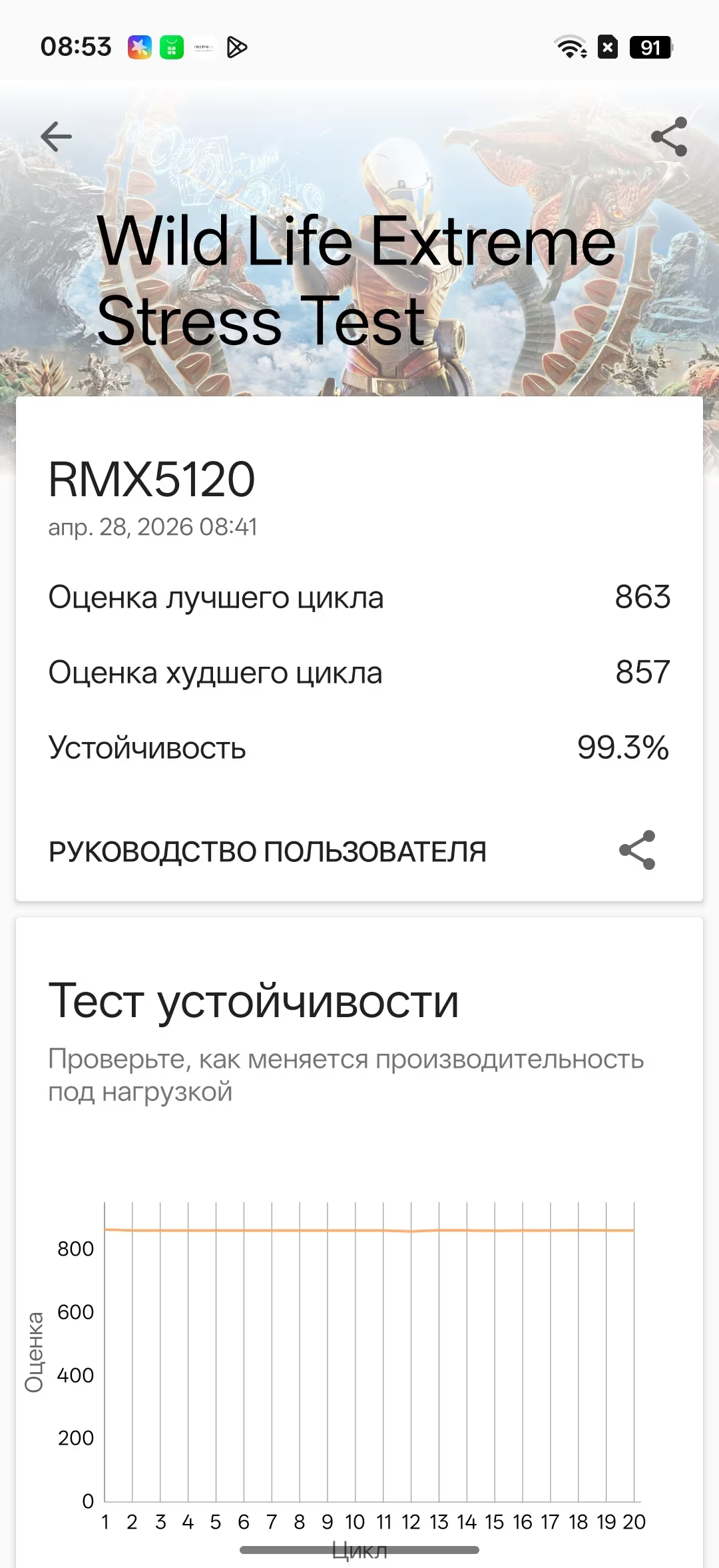
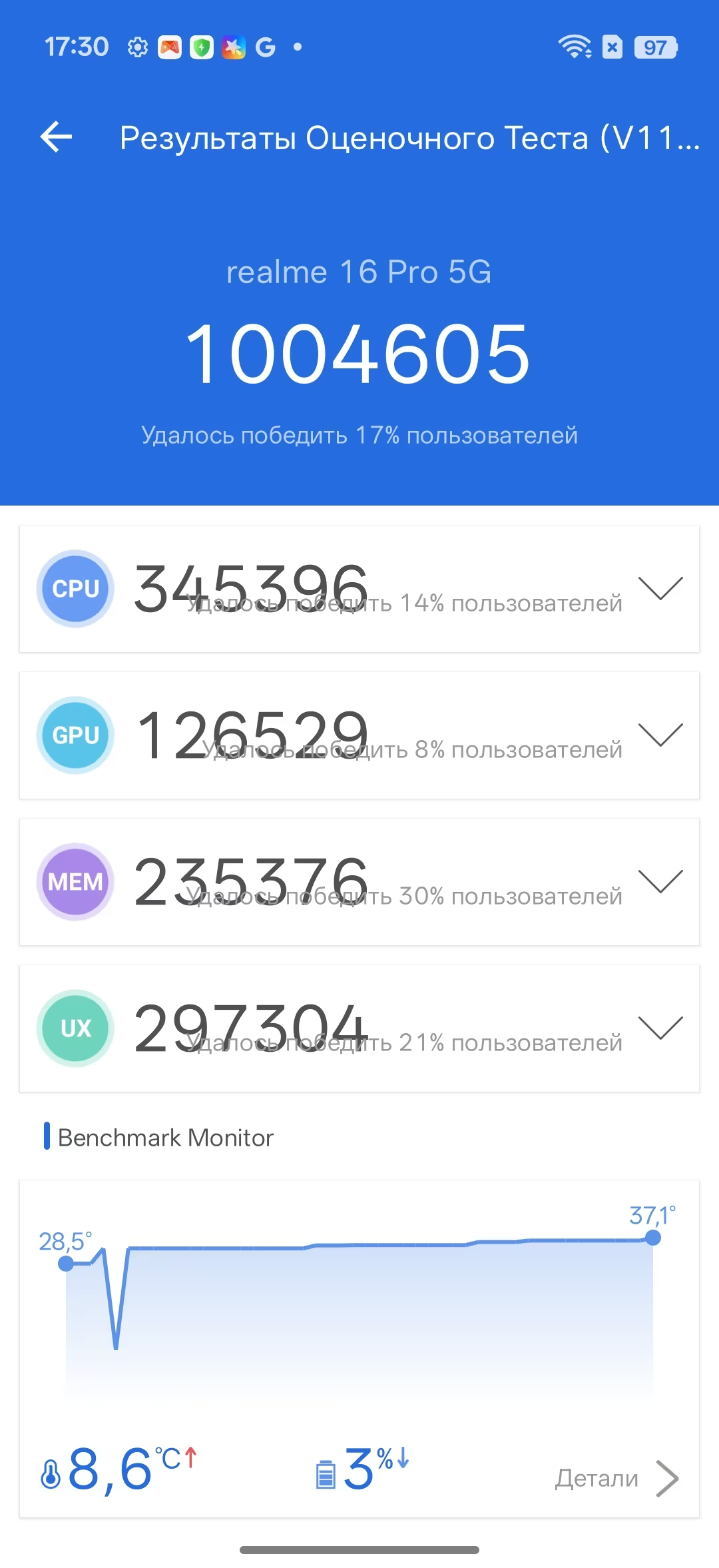
Performance testing (April 2026 build RMX5120 with Android 16) reveals solid stability. In 3DMark Wild Life Extreme Stress Test, the score hovered consistently around 860 with 99.3% performance stability across 20 cycles-indicating zero thermal throttling. Surface temps peaked at just 37.1°C, with an 8.6°C rise during the test, a modest heat signature for a stress test.
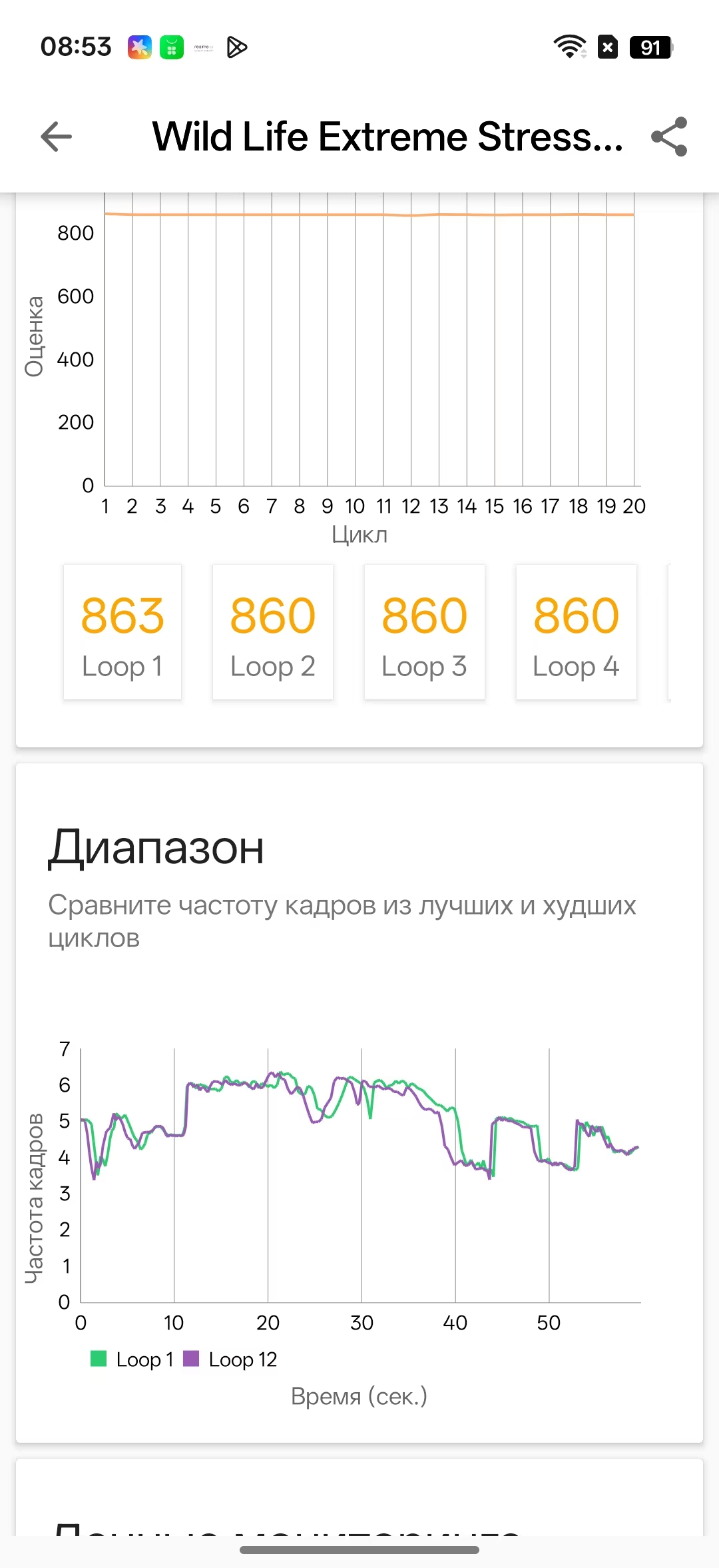
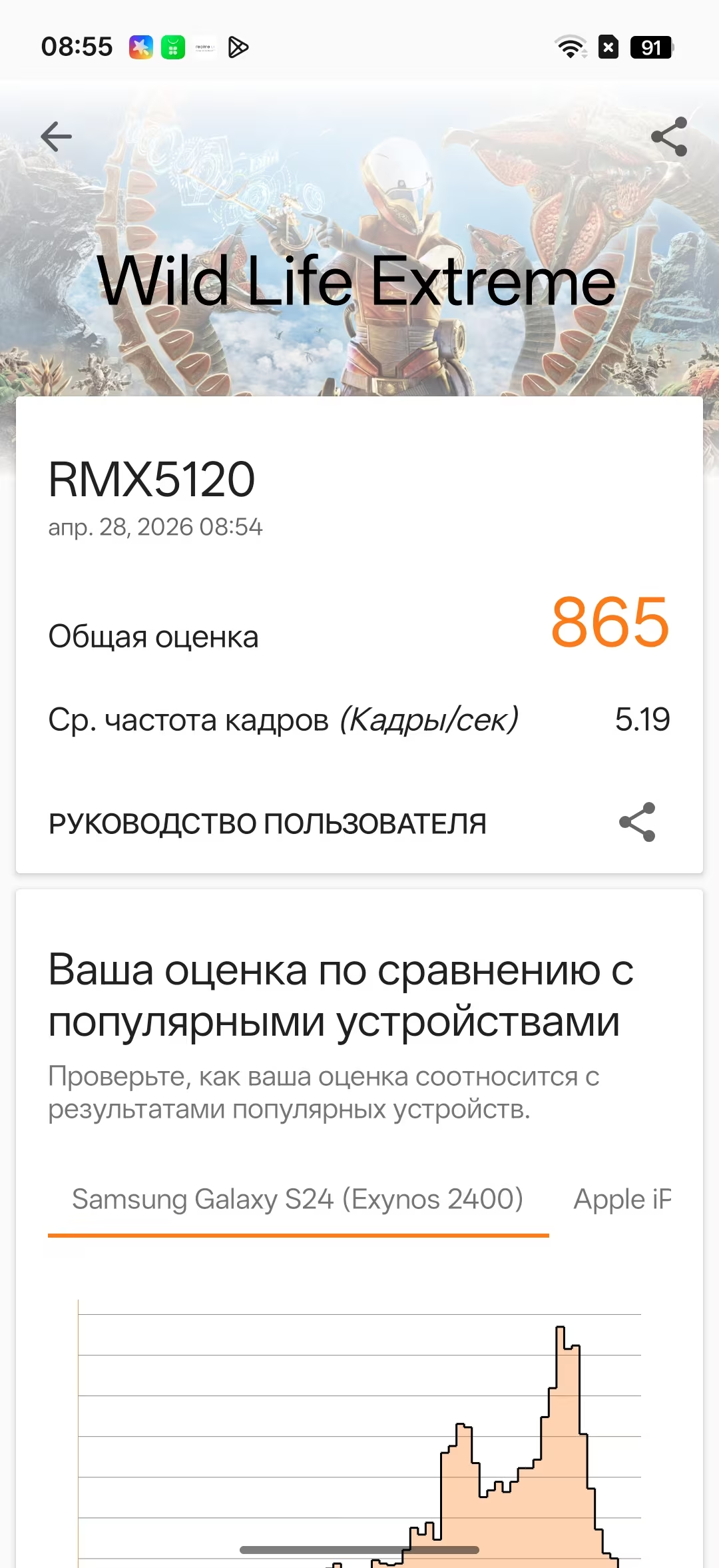
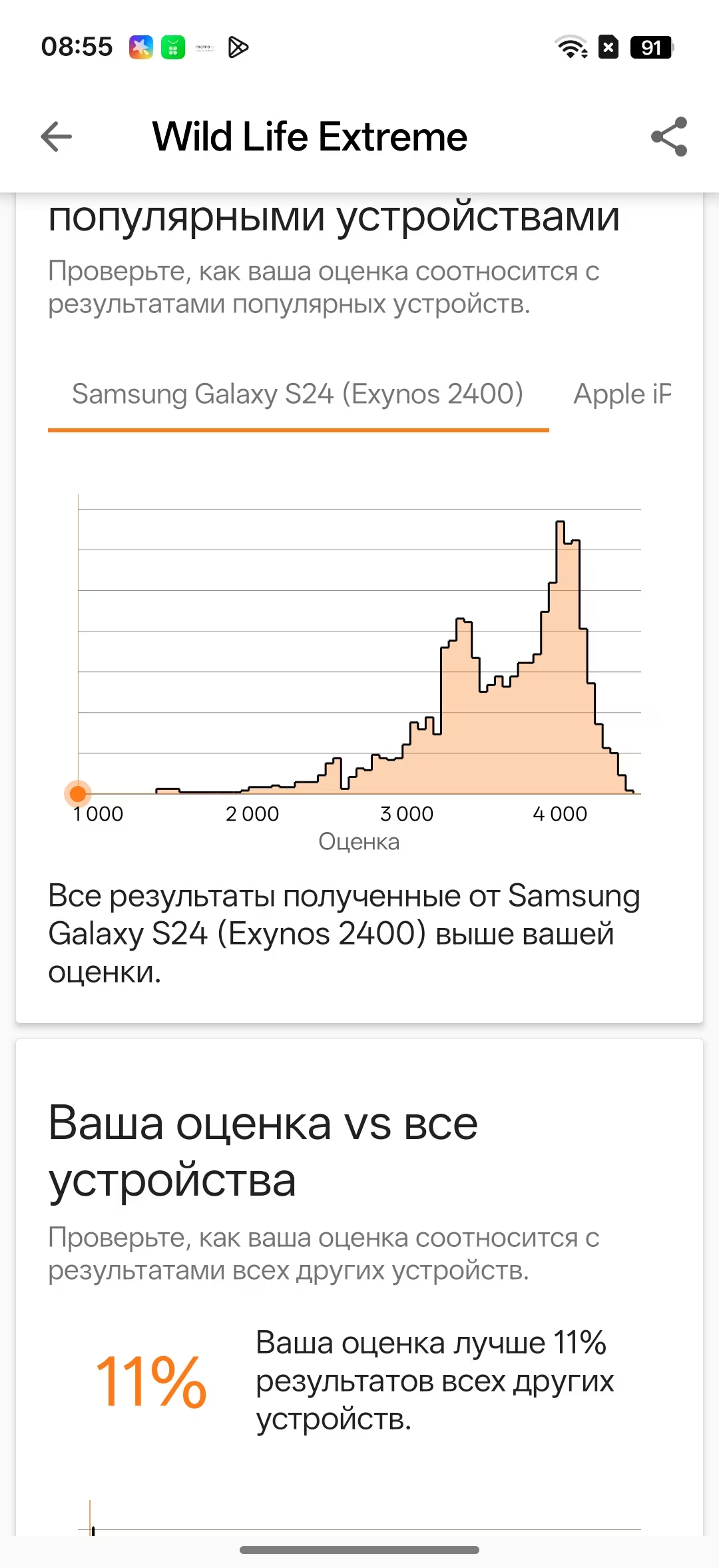
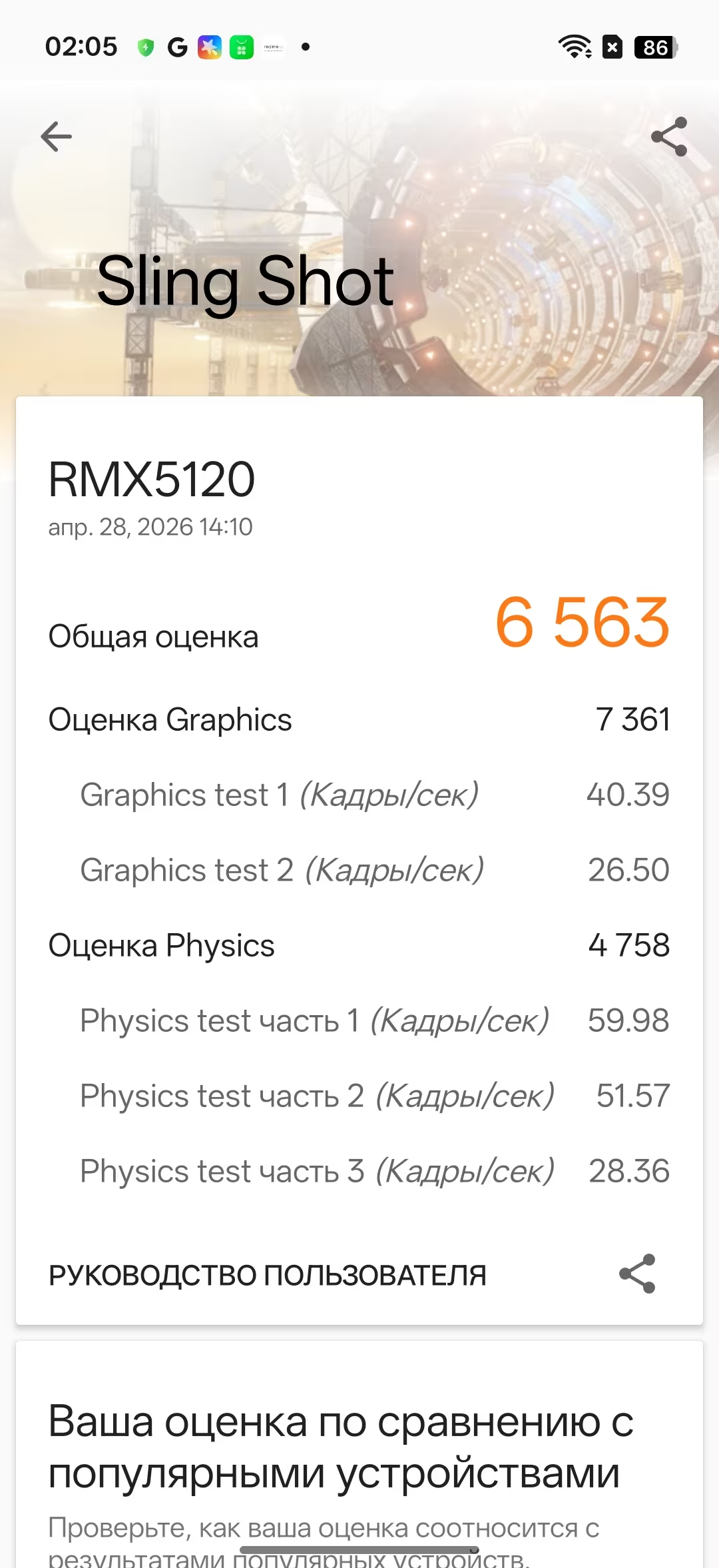
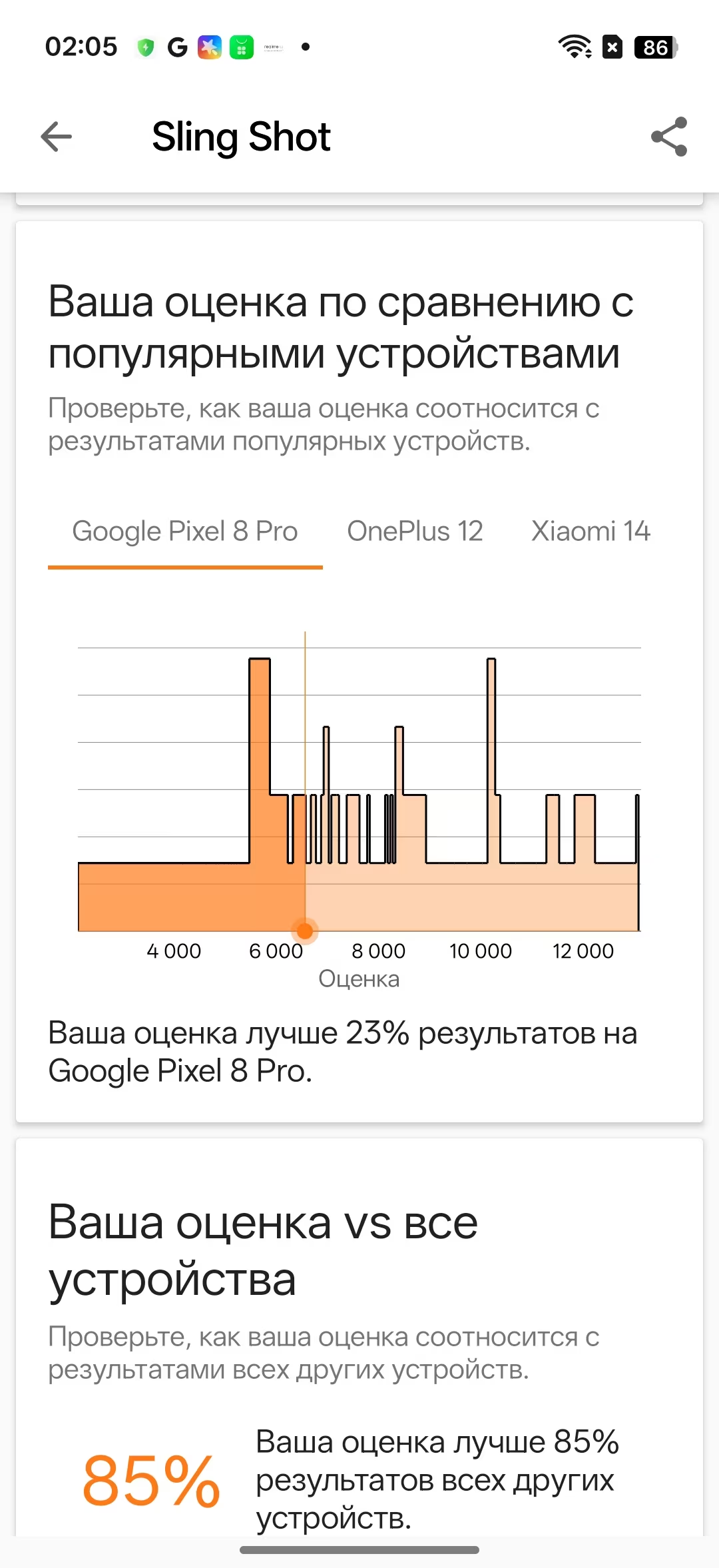
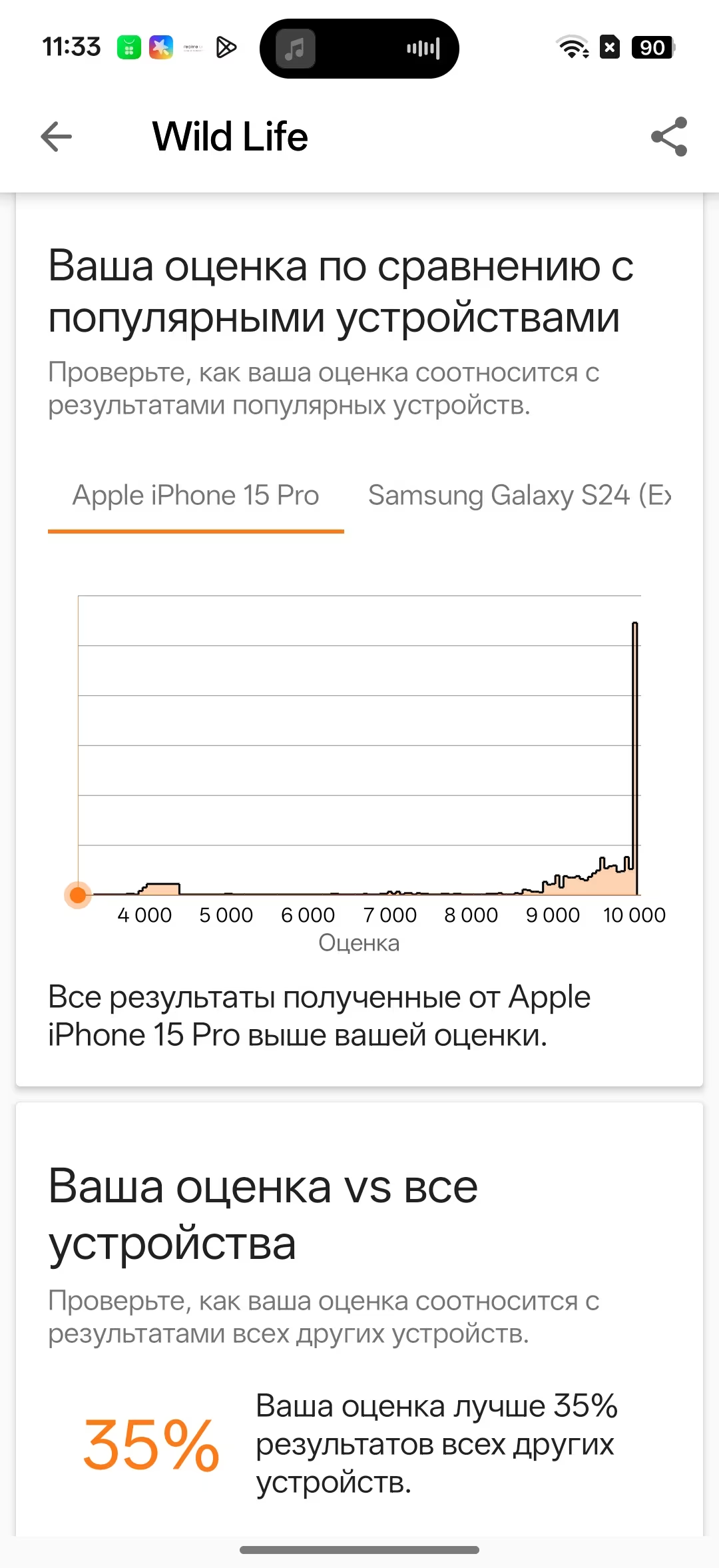
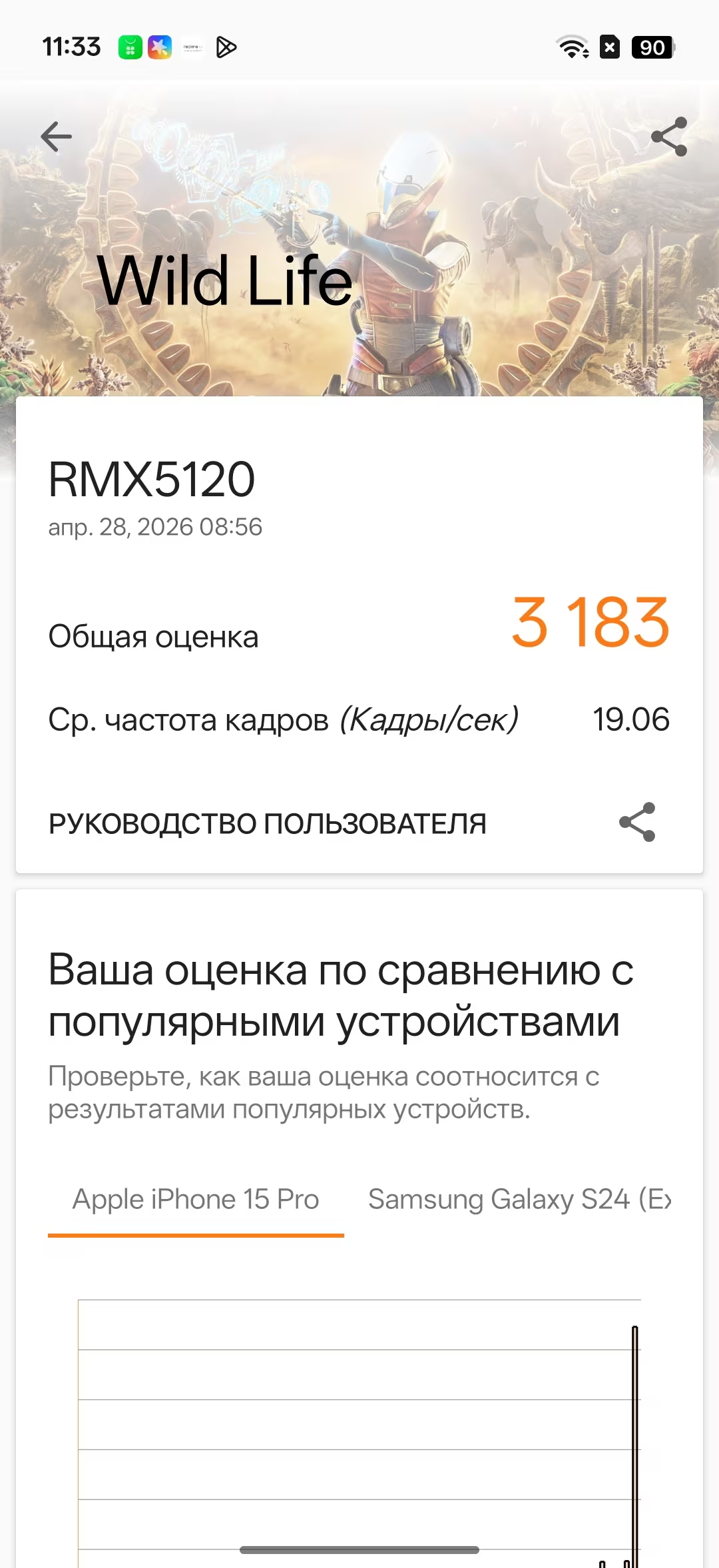
Single-run 3DMark Wild Life Extreme scores 865 points at 5.19 FPS, placing it in the bottom 11% of devices in the 3DMark database. That’s expected given the chip isn’t tailored for heavy GPU workloads. Standard Wild Life scoring is healthier at 3,183 points (19 FPS), better than 35% of devices. Sling Shot scores soar to 6,563, beating 85% of the field, reflecting decent mid-tier OpenGL ES 3.1 graphics performance with smooth 40-60 FPS gameplay for many titles.
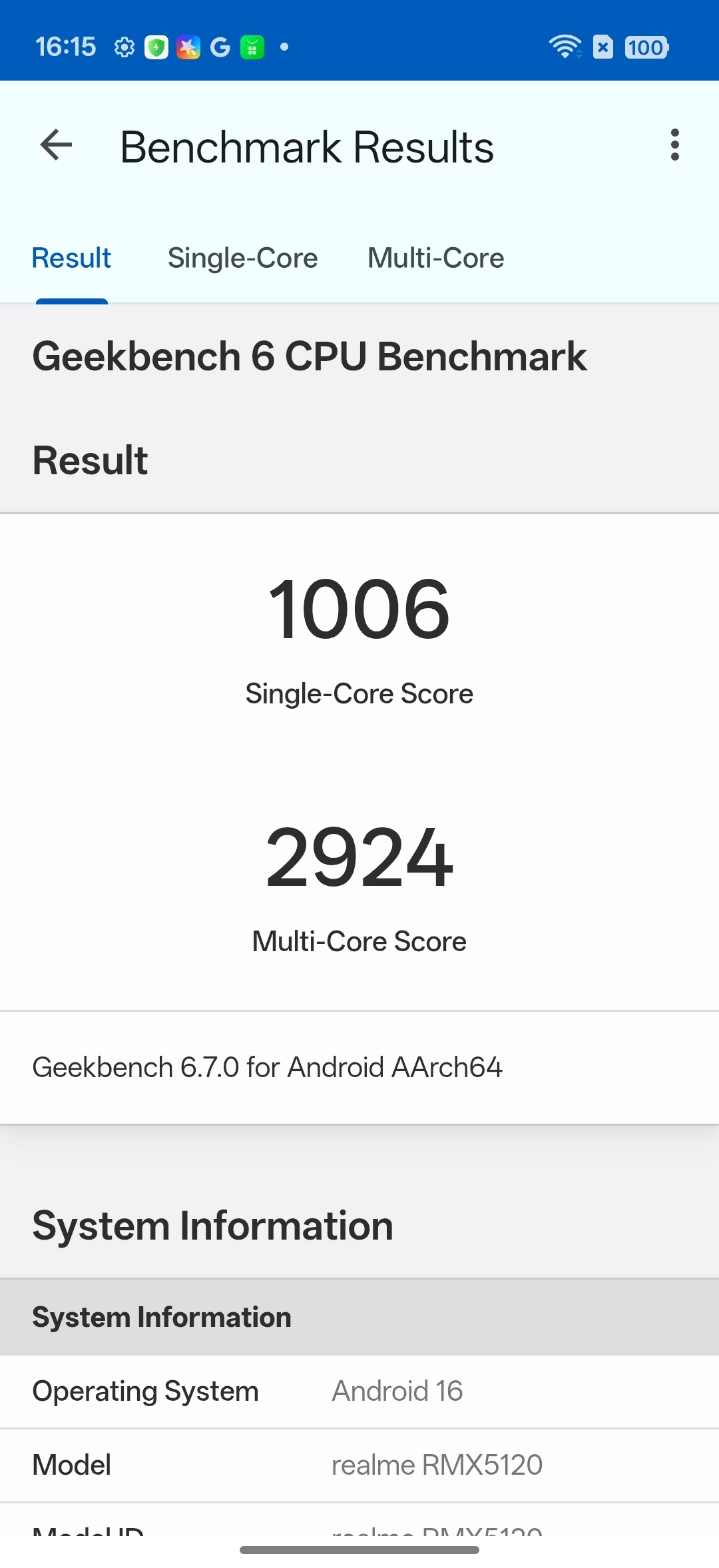
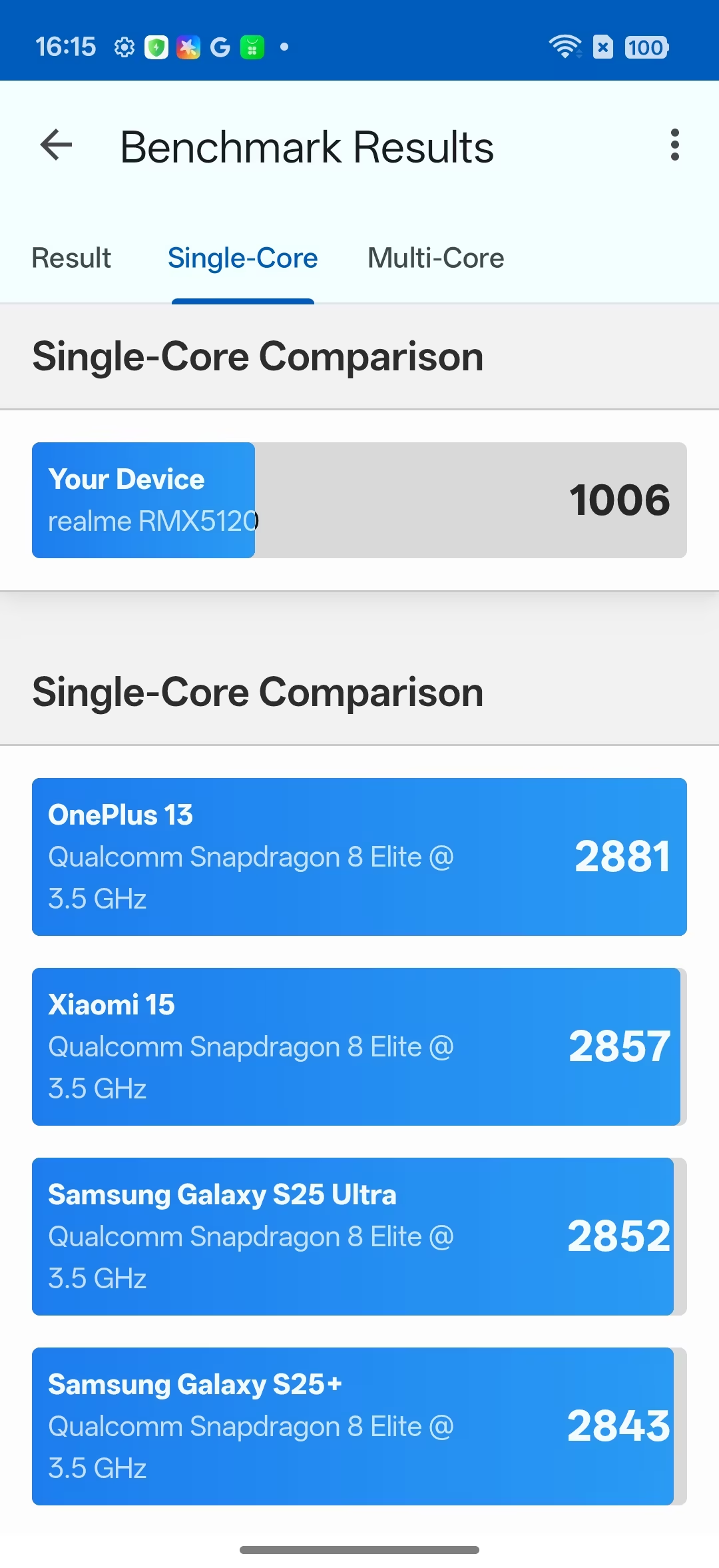
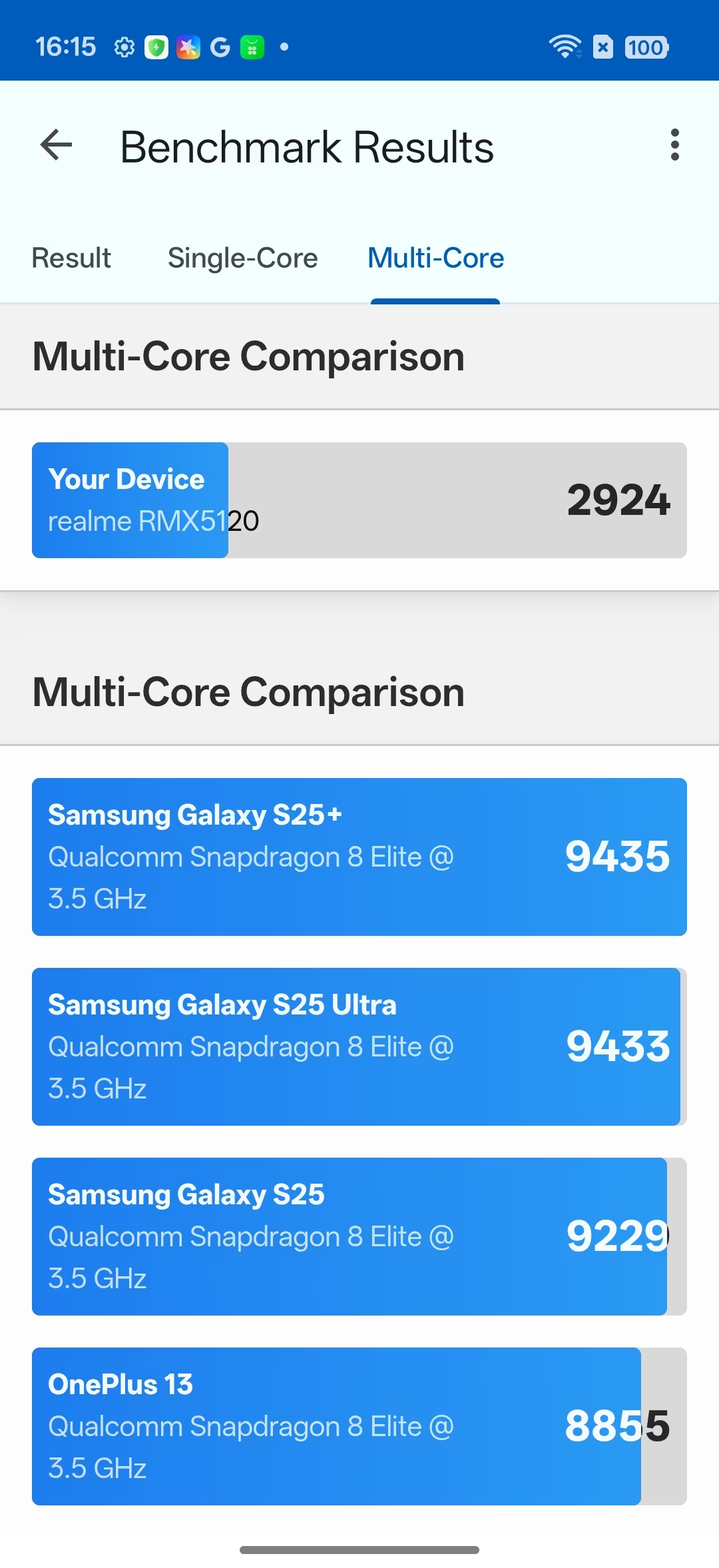
GeekBench 6 multi-core score lands at 2,924-far behind flagship chips like the Snapdragon 8 Elite on Samsung’s Galaxy S25+ that scores over 9,400. That threefold performance gap matters if you’re processing heavy video edits or running demanding games at max settings. For everyday tasks like social media, messaging, and streaming, this gap isn’t noticeable, so there’s little reason to overspend unless your workload demands it.
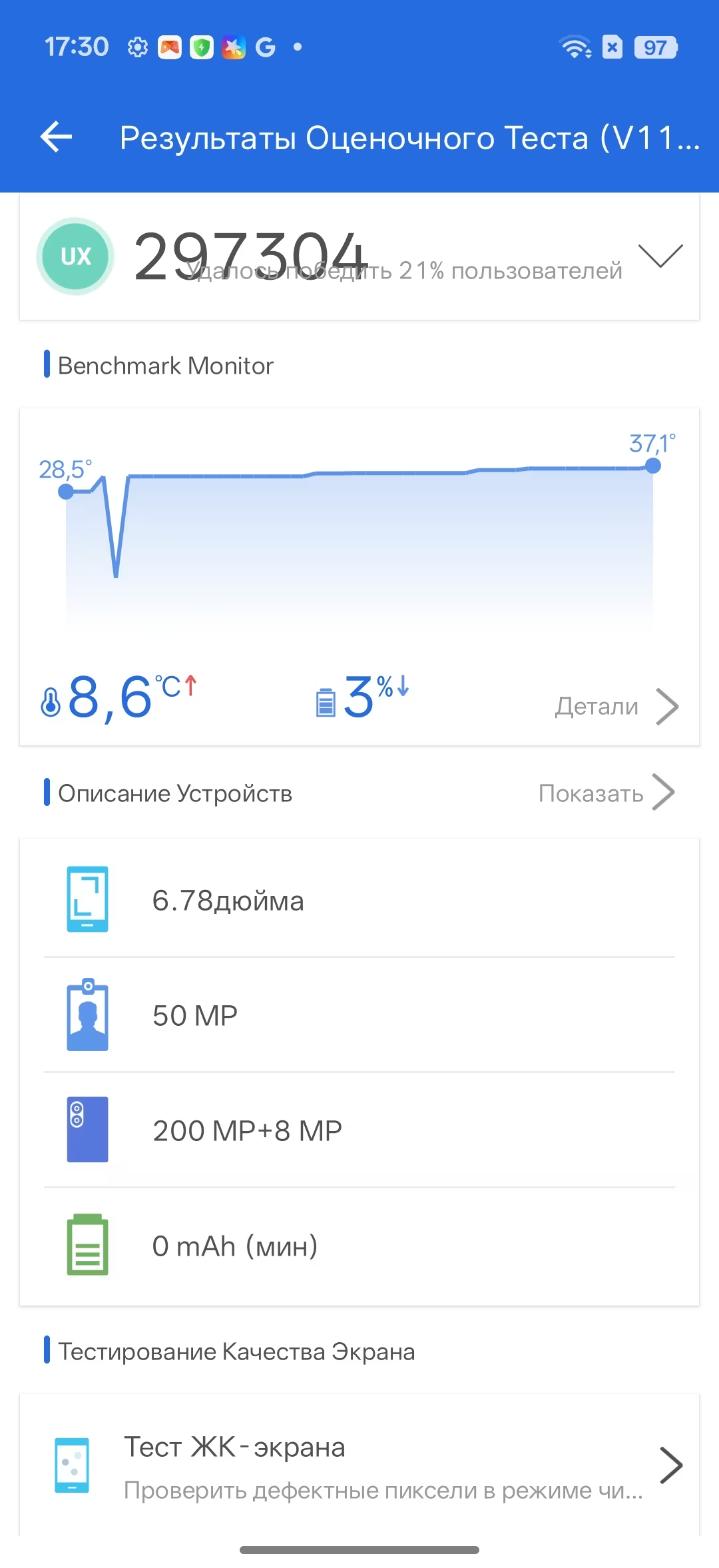
AnTuTu UX benchmark registers a solid 1,004,605 points, with interface responsiveness measured at 297,304 points-better than 21% of users. The UI feels fluid in practice: smooth animations, quick app launches, and zero noticeable freezes over two weeks of testing.
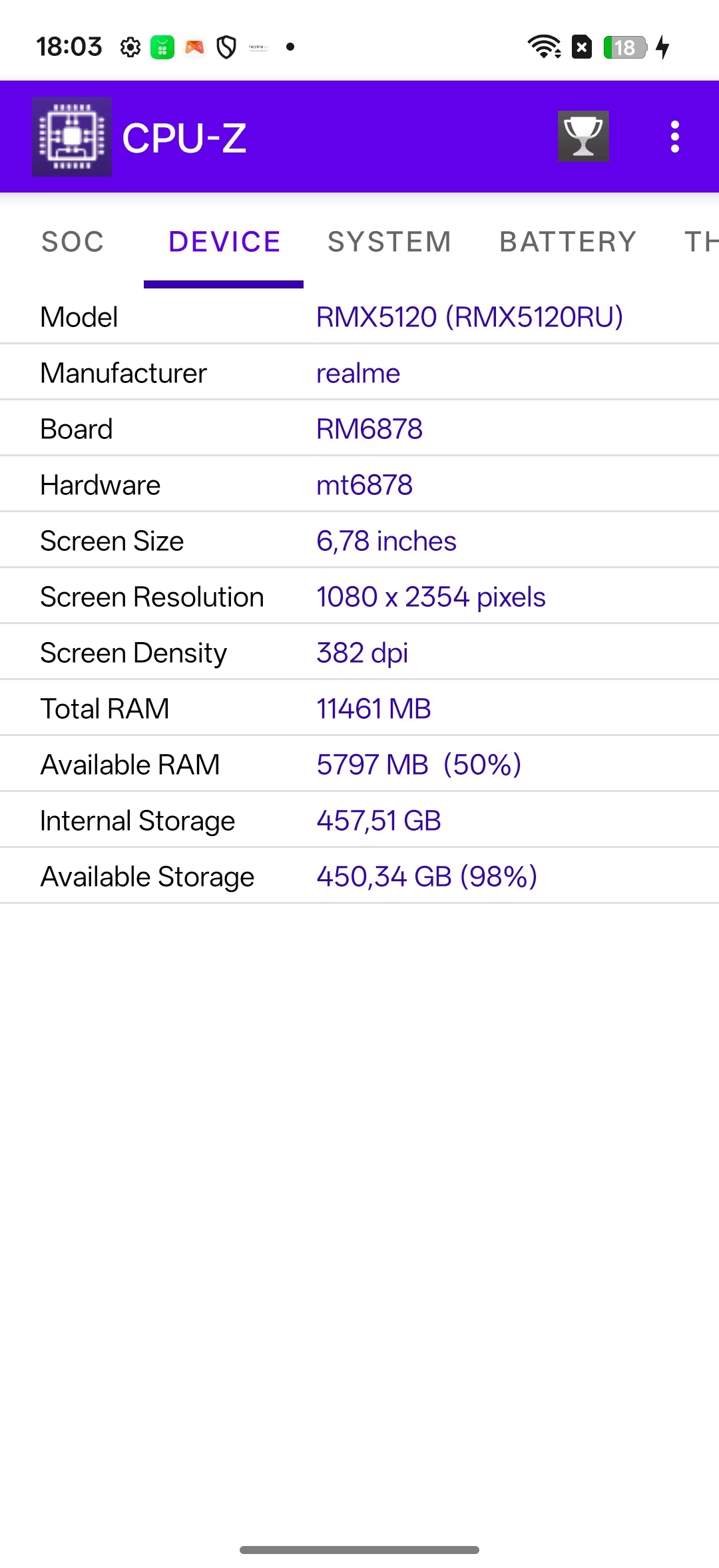
The device ships with LPDDR4X RAM, topping out at 12GB, and up to 512GB storage-of which around 28.4GB is taken by system files and pre-installed apps, leaving over 480GB free. No microSD expansion is available. It supports dynamic RAM expansion using internal storage to increase available memory up to 14GB, though this offers negligible performance improvement beyond multitasking safeguards.
Realme 16 Pro camera: daytime, night, and selfies
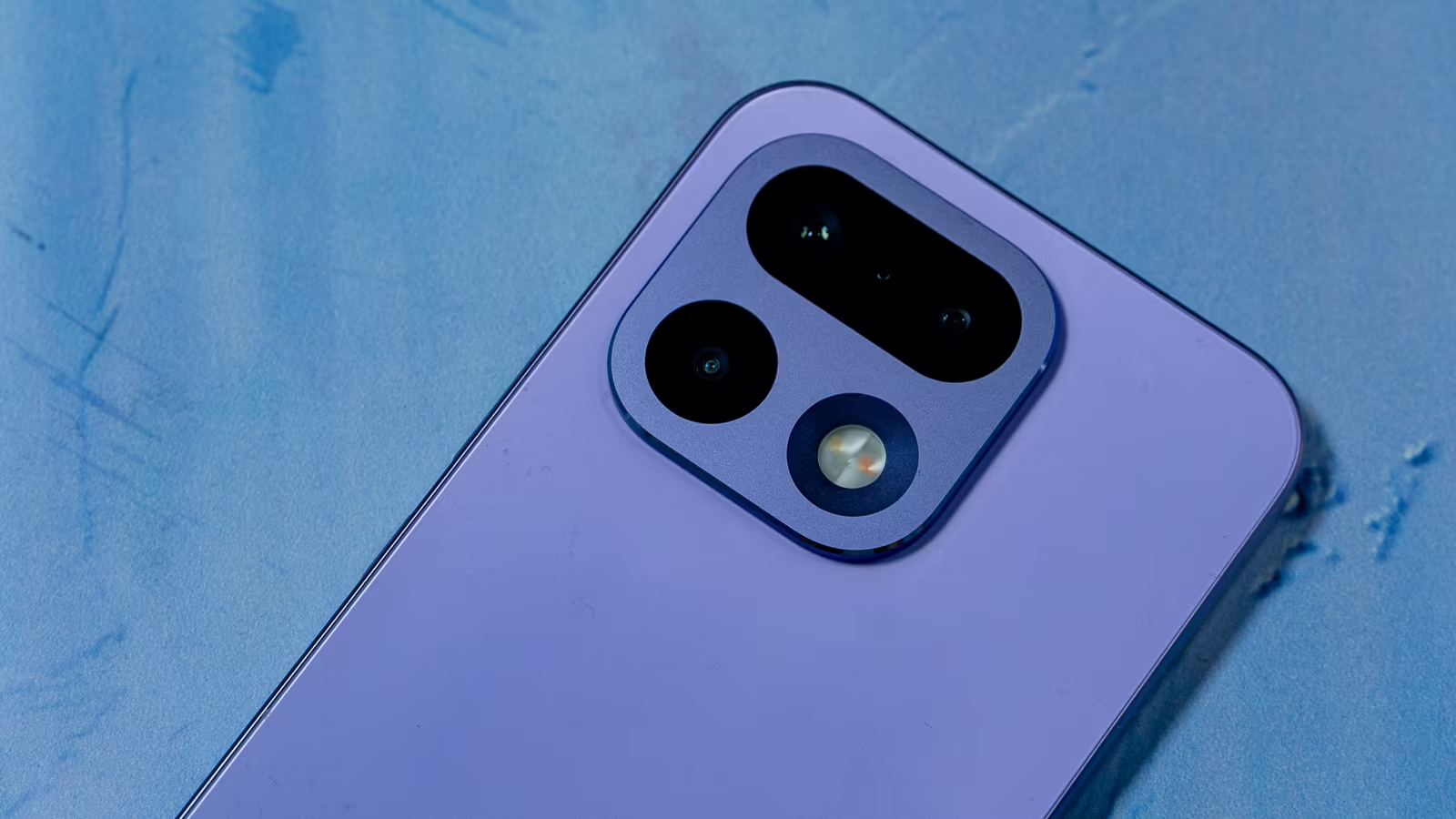
The camera is realme 16 Pro’s headline feature. It sports a 200MP Samsung HP5 sensor (S5KHP5), measuring 1/1.56 inches, with an f/1.8 aperture, 23mm-equivalent focal length, optical and electronic image stabilization. This is a serious sensor for this price, surpassing typical midrange smartphone cameras.
Primary camera performance
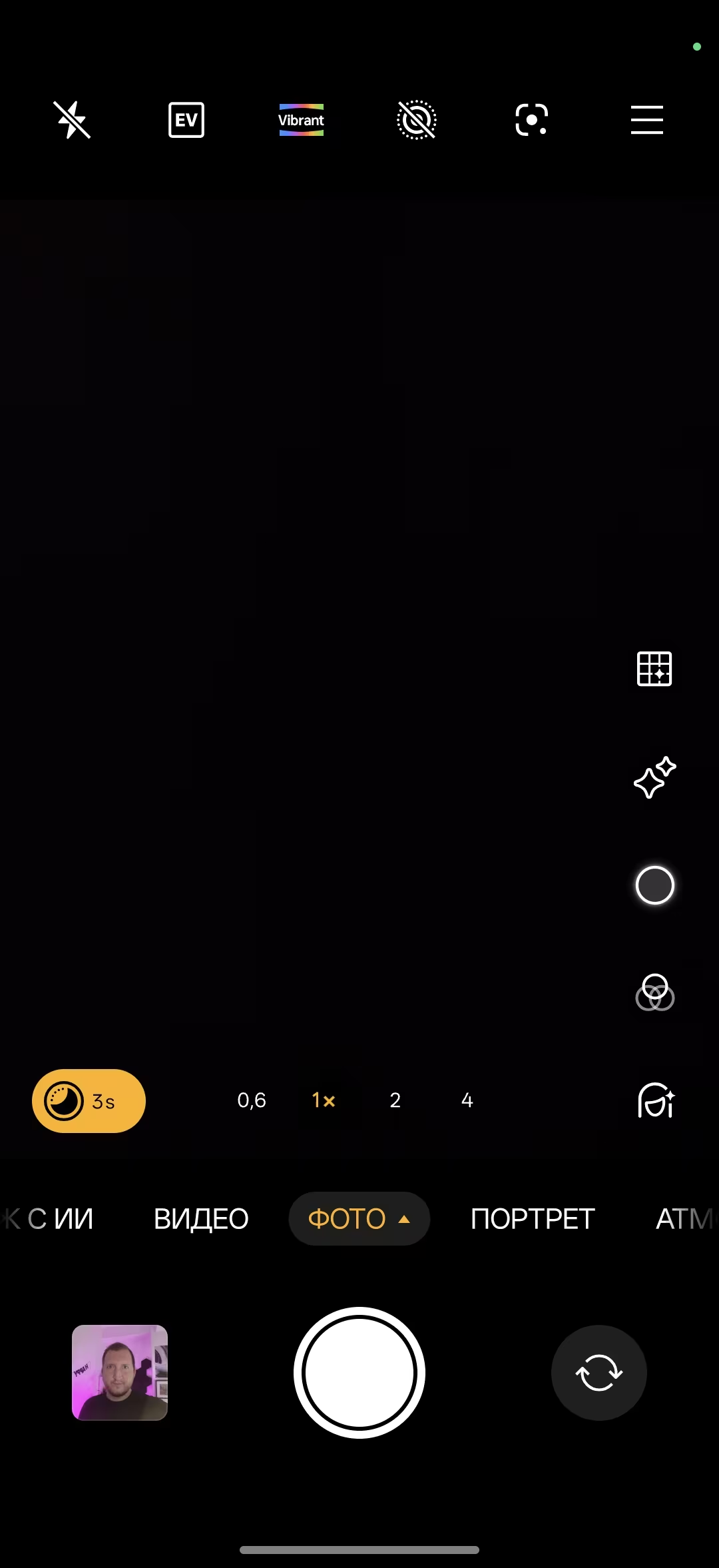
In good lighting, shots are impressive. Realme uses LumaColor image processing, which delivers natural colors without oversaturation. Unlike many Chinese midranges that boost skin and scenery unnaturally for social media appeal, realme 16 Pro renders faithful colors with reliable dynamic range and well-preserved shadows. For punchier colors directly from the camera, a Vibrant mode is available.
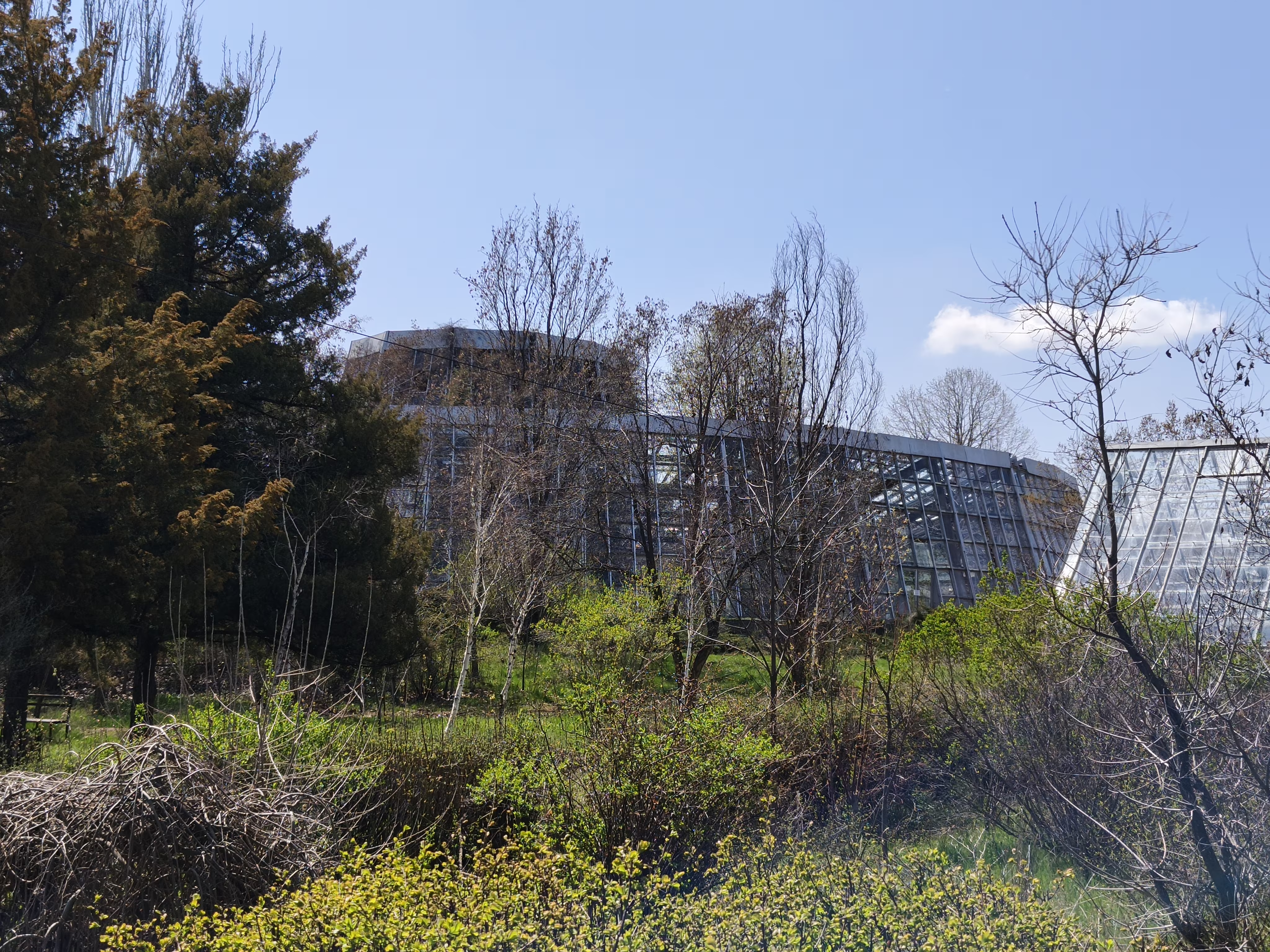
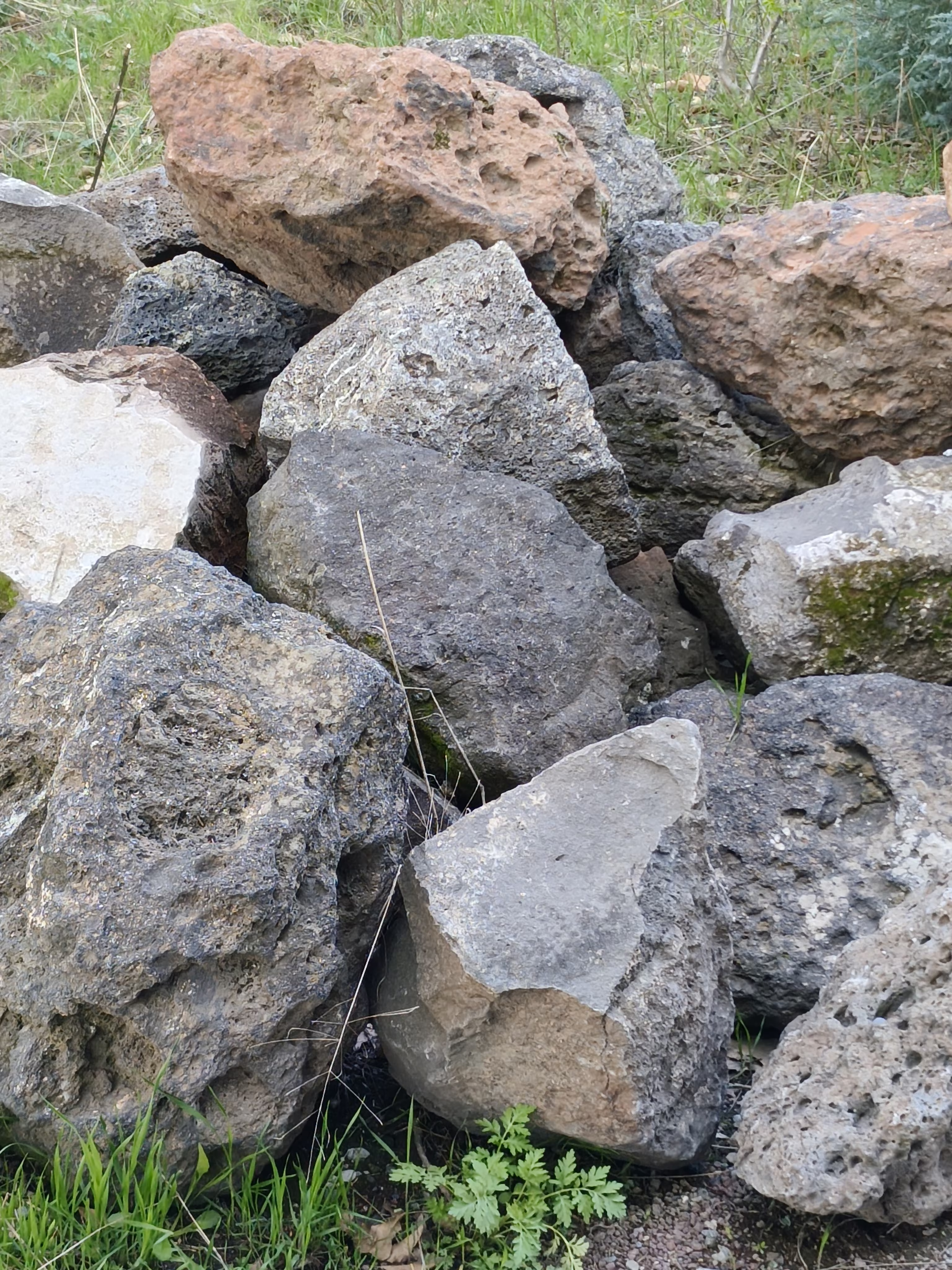

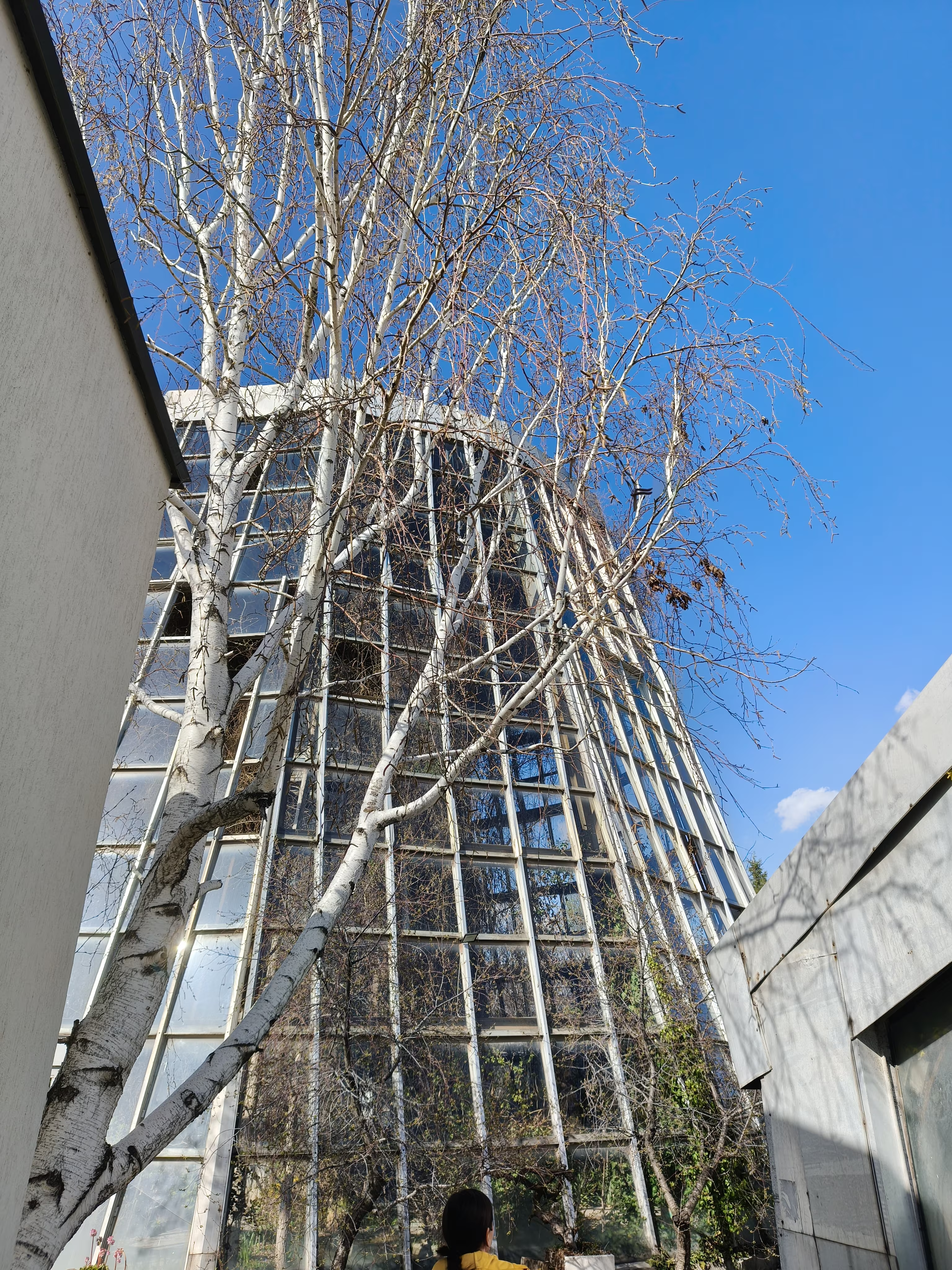

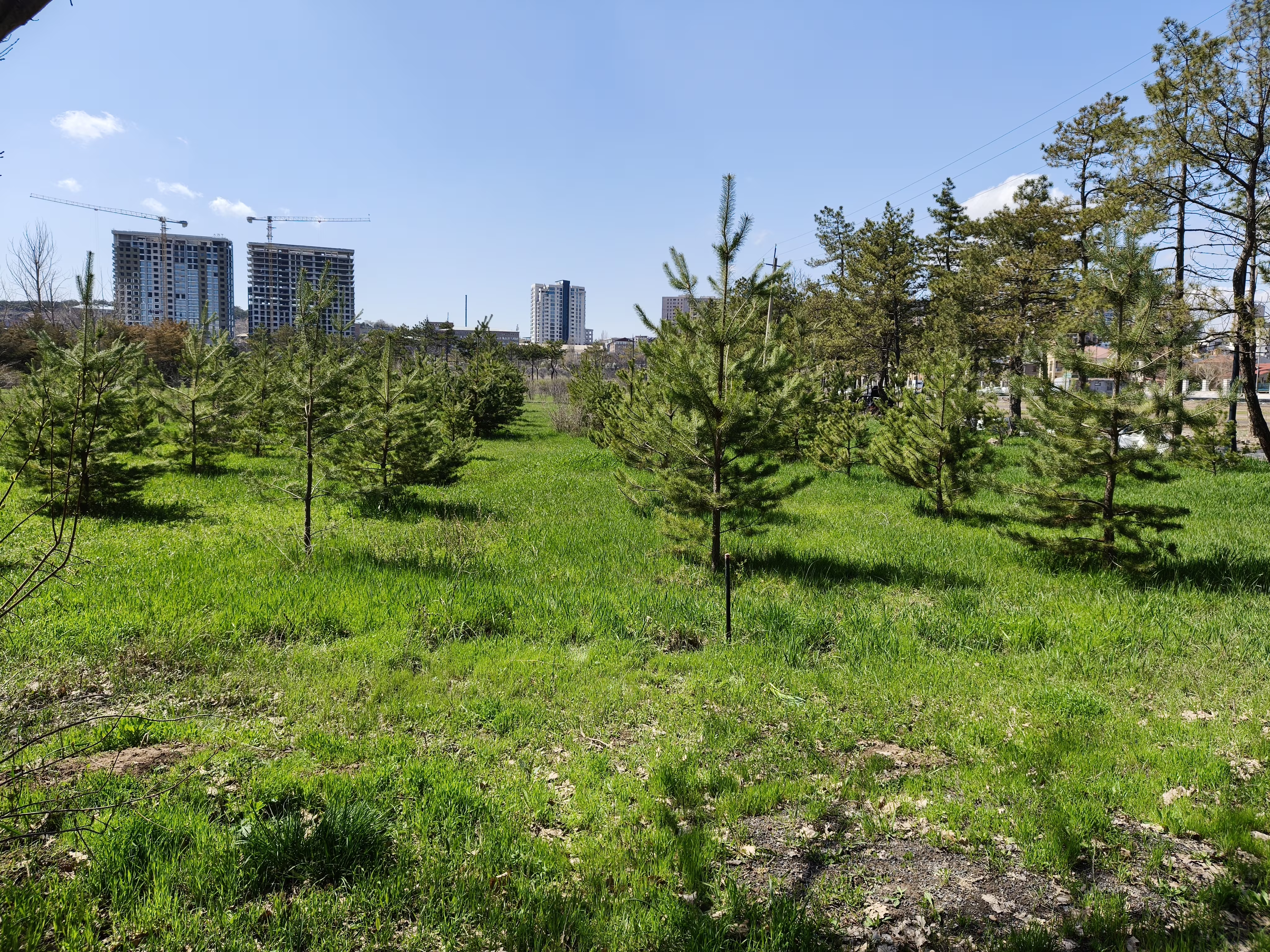
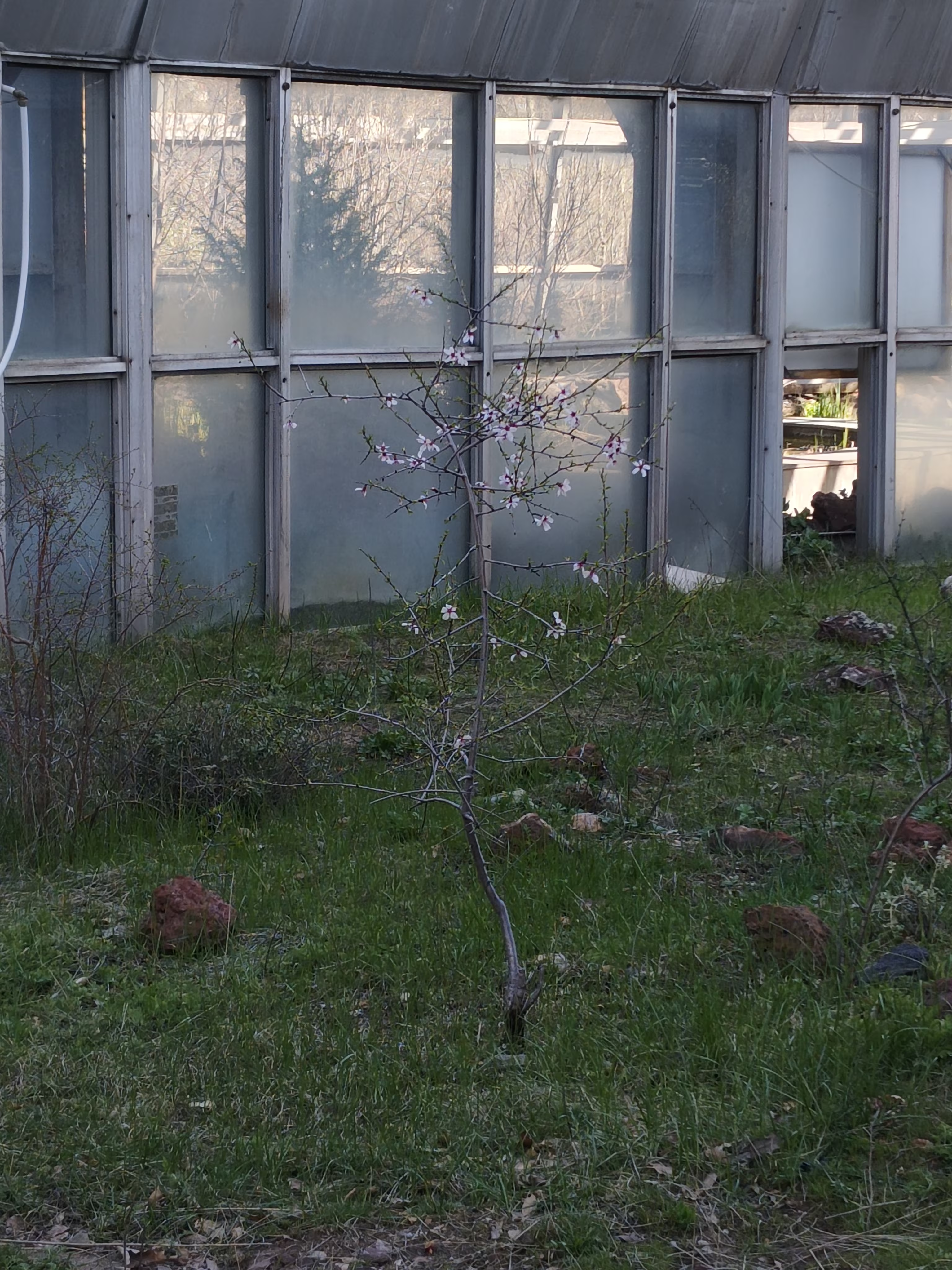
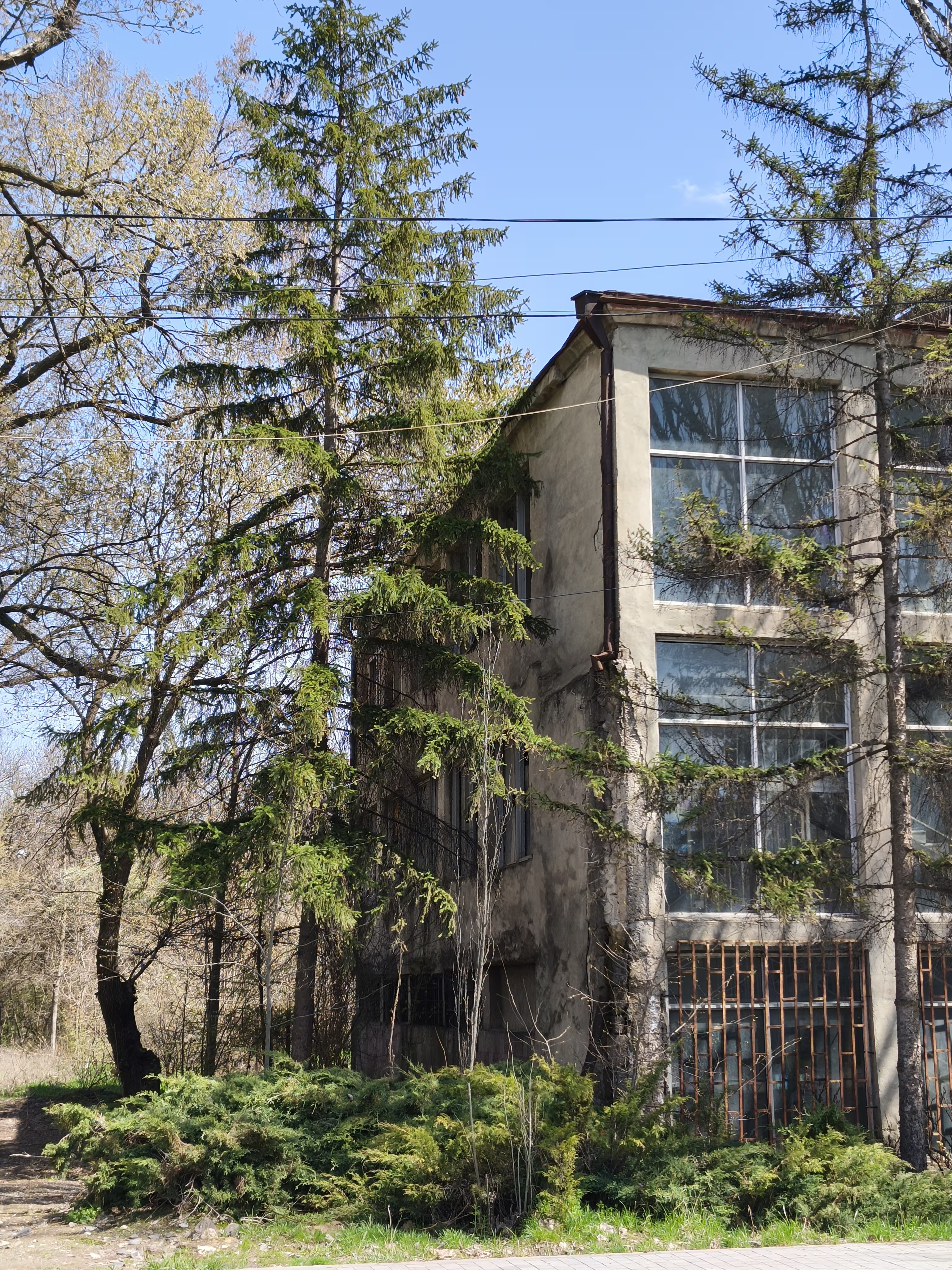
Standard photos are saved at 14.6MP, an optimized file size for sharing and display. A dedicated 200MP mode records massive files for cropping without loss. Optical zoom reaches 2x by cropping the sensor. Beyond that, digital zoom kicks in from 3.5x upward, with visible softness at 4x and severely degraded detail by 30x-an impractical level for serious shots.
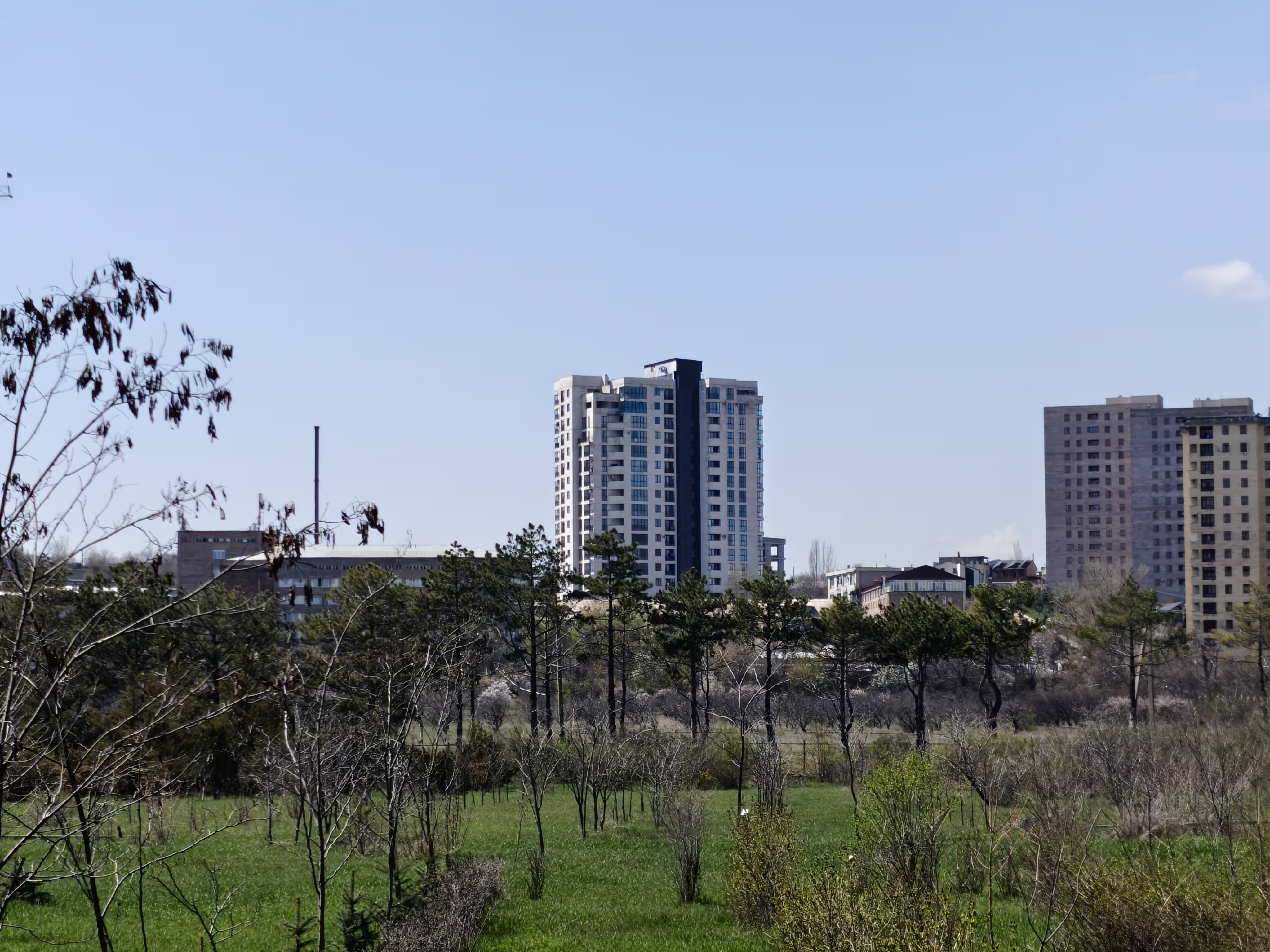
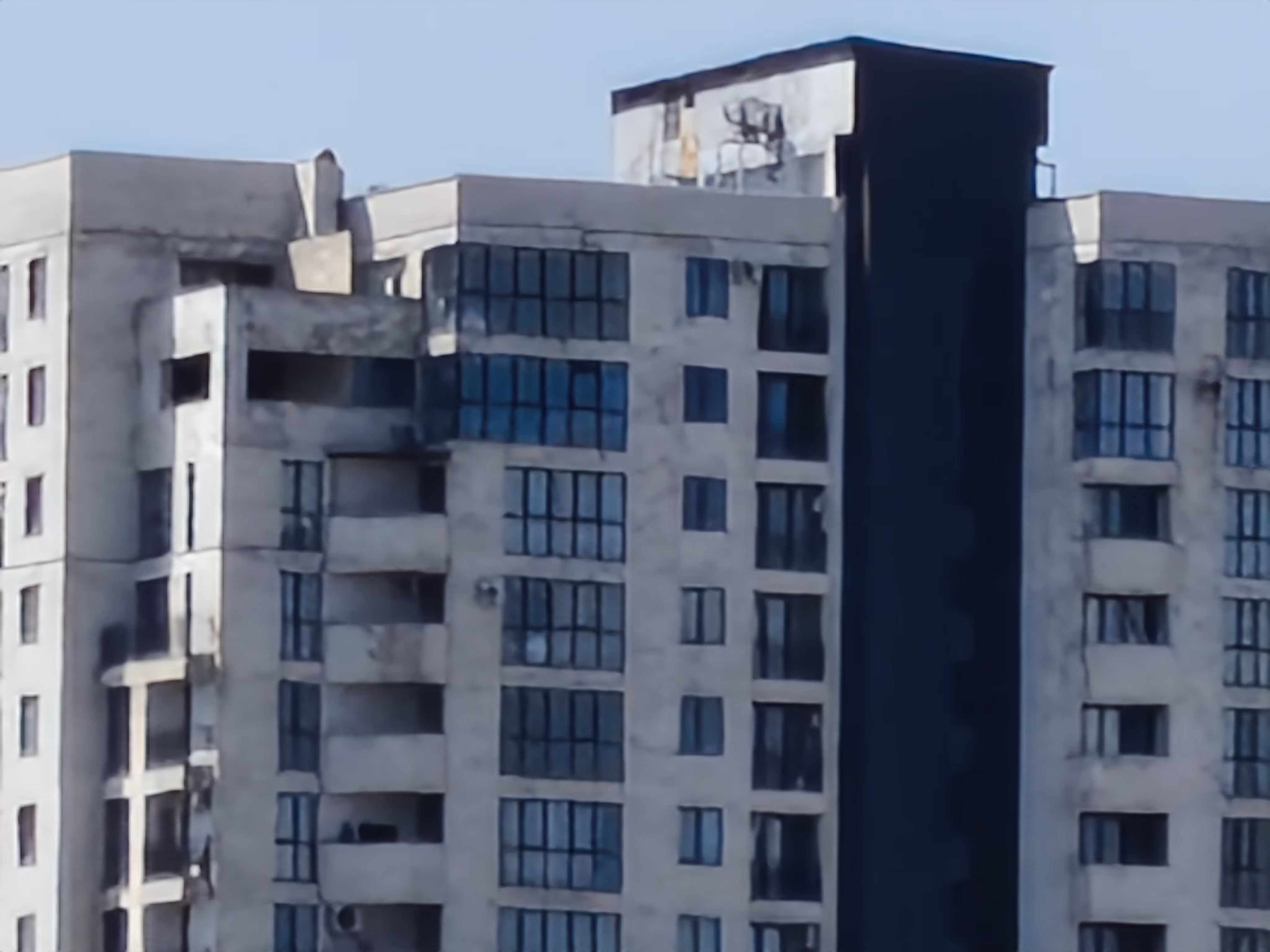
Portrait mode impresses with natural background blur and precise subject separation, avoiding common faux pas like clipping ears or turning hair into blobs. The bokeh effect feels genuine, not a cheap digital render with concentric circles. Indoors with uneven lighting, however, the algorithm occasionally confuses foreground and background, slightly smudging shoulders-noticeable but not deal-breaking.


Night photography on Realme 16 Pro
Night shots outperform expectations for this price. The main sensor maintains decent dynamic range and balanced white levels without slipping into the distracting greenish hues often seen on budget handsets. There is a warm tone bias that generally enhances evening scenes with cozy light. Detail remains above average but doesn’t rival premium flagships.

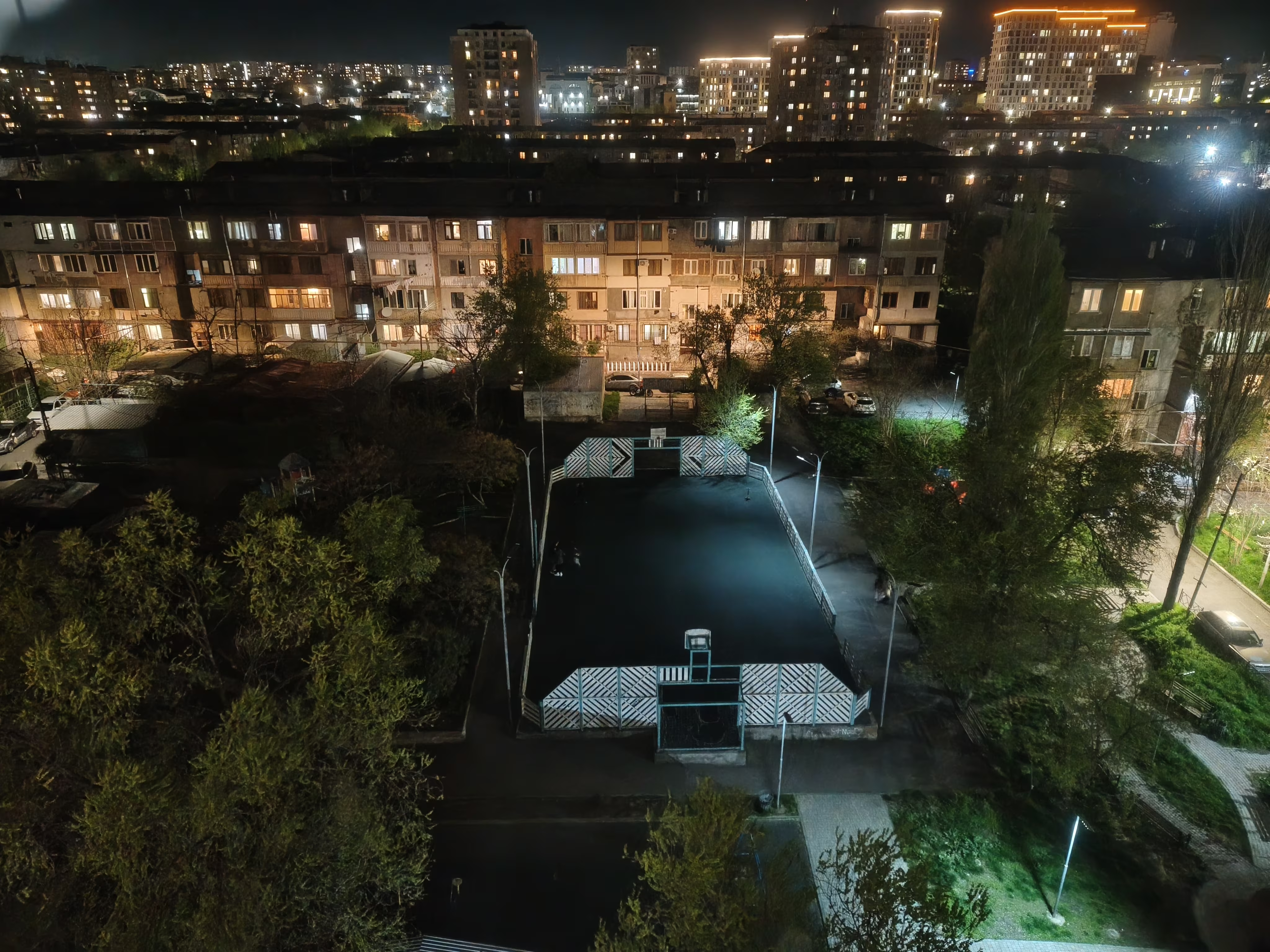
The night mode works automatically or manually, capturing and stitching multiple exposures in 2-3 seconds. Crucially, it avoids overly smoothing textures in favor of retaining natural grain-unlike many budget phones that end up with images resembling oil paintings. Noise reduction is effective but doesn’t sacrifice sharpness.
The ultra-wide camera, however, fares poorly in low light. Its 8MP sensor lacks optical stabilization, resulting in lost detail and frequent overexposure in high-contrast night scenes. It’s best reserved for daylight shooting.
Selfie camera performance
Selfies come courtesy of a 50MP front camera with an f/2.4 aperture and fixed focus at a 22mm equivalent focal length. While fixed focus limits sharpness for anything closer than 40 cm-which isn’t a common selfie distance-the camera delivers crisp, well-exposed shots in good light. Colors lean slightly pale, possibly due to habituation to other phones’ aggressive beautification filters, but skin tones remain accurate with no unnatural red or yellow shifts. The default skin smoothing effect is modest and can be toggled off entirely.


Portrait mode on the selfie camera also performs well, offering clean subject-background distinctions with natural bokeh and minimal artifacts around hair edges in most scenes. Realme’s Portrait Master provides 21 color profiles and 5 style presets-overkill for most users, who tend to stick to just two or three.
Video recording supports up to 4K at 30fps on both front and main cameras, while the ultra-wide is capped at 1080p / 30fps. HDR video and 4K @ 60fps modes are available. Stabilization during video capture is the weak spot for the series-electronic stabilization works but feels insufficient for active shooting. It’s workable for family videos but not ideal for sports or high-motion filming.
Battery life and charging on realme 16 Pro
Where the realme 16 Pro truly shines is battery endurance. Packing a massive 7000mAh cell inside a surprisingly thin 7.75mm frame, realme leverages a silicon-carbon Titan Battery technology that fits more capacity into less space. In comparison, rivals commonly max out around 5000mAh, leaving users scrambling to recharge by day’s end.
Testing confirms the marketing claims. In the standard battery rundown test, the phone lasted an impressive 14 hours and 18 minutes. In real-world usage-including Wi-Fi, intermittent 4G, and 144Hz display mode-it delivered over 7.5 hours of screen-on time across two days. Two full days of mixed use without charging is excellent for a mid-tier device in 2026.
The 80W SuperVOOC charger tops up the battery from empty to 52% in 22 minutes and completes a full charge in about one hour. There’s no wireless charging, but the phone supports bypass charging, which powers the device directly from the adapter under heavy load without stressing the battery. Users can also cap charging at 80%, 85%, or 90% to extend battery lifespan-a useful feature for overnight charging.
Important note for international buyers: in some markets outside Russia, the battery capacity is reduced to 6500mAh, charging speed drops to 45W, and the charger is not included in the box.
Software and connectivity on realme 16 Pro
The phone runs realme UI 7.0 atop Android 16 out of the box. The company promises three Android version upgrades and four years of security patches. While good, this is less generous than some competitors offering four to five years, which is becoming a purchasing factor for budget-conscious buyers.
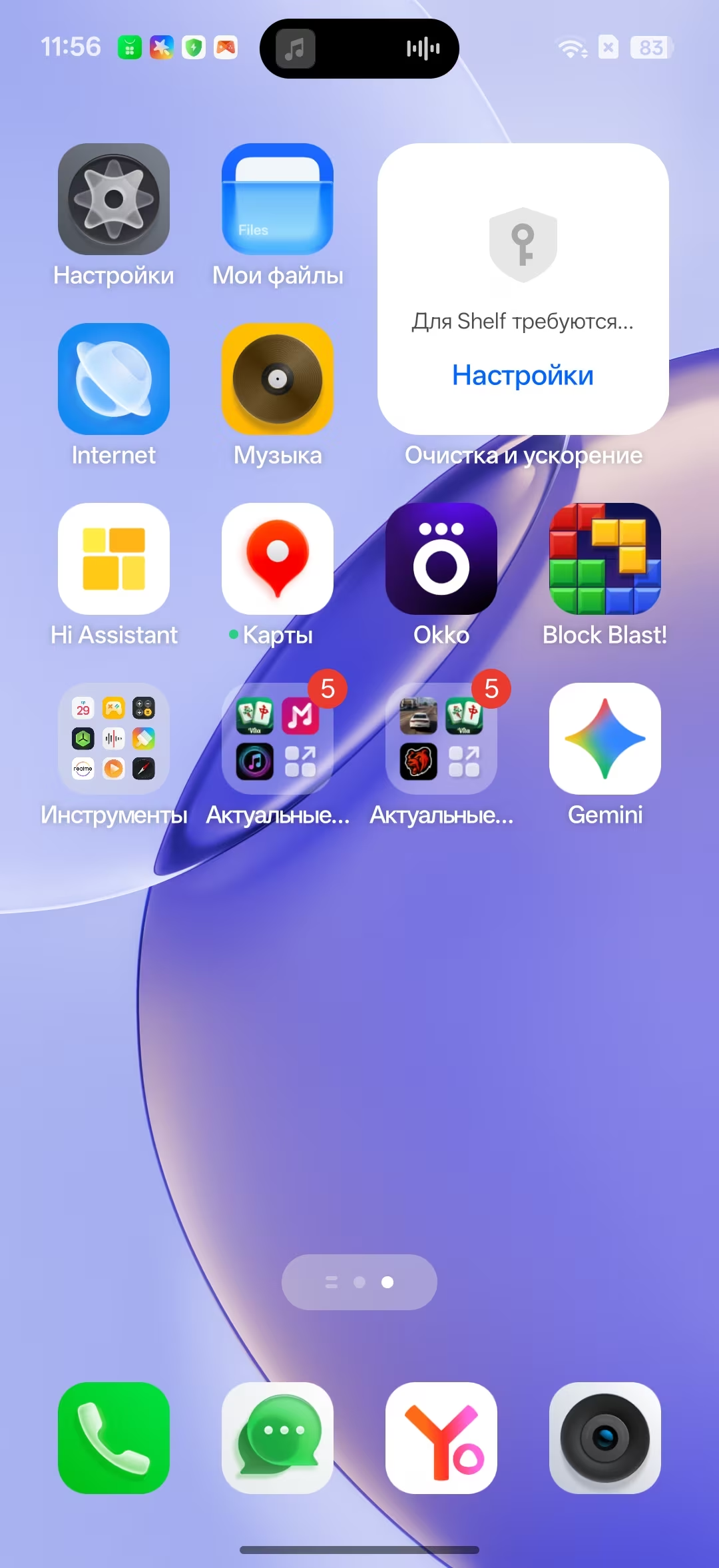
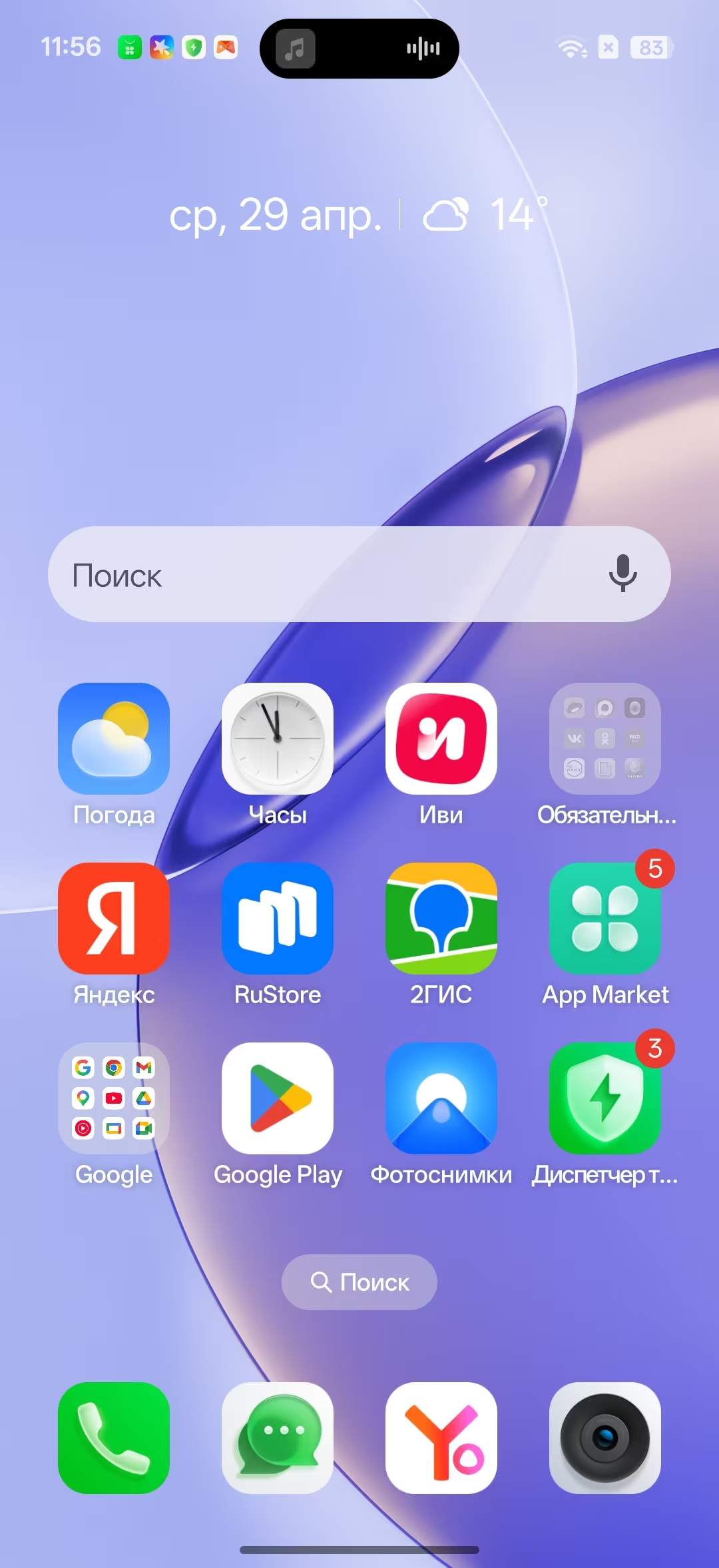
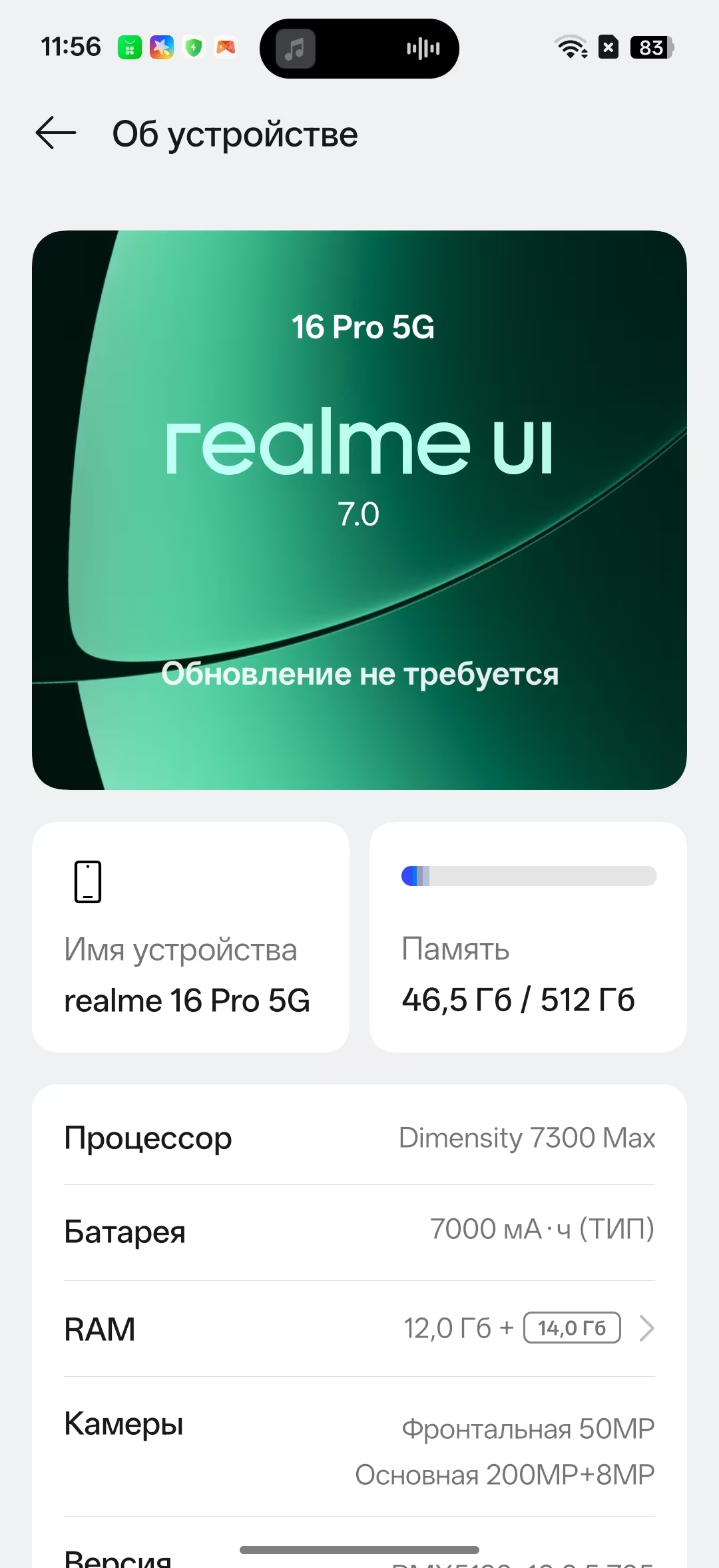
Realme UI 7.0 feels swift and ad-free in system apps, which marks a notable advantage over some competitors like Xiaomi’s MIUI. Pre-installed software includes popular Russian apps such as Yandex, IVI, 2GIS, RuStore, and Okko, alongside a couple of games and a set of region-specific apps. AI features include Google Gemini, AI Recording, AI Framing Master, AI Smart Loop, AI Notify Brief, and AI Gaming Coach. An IR blaster is also present to control TVs, air conditioners, and other appliances.
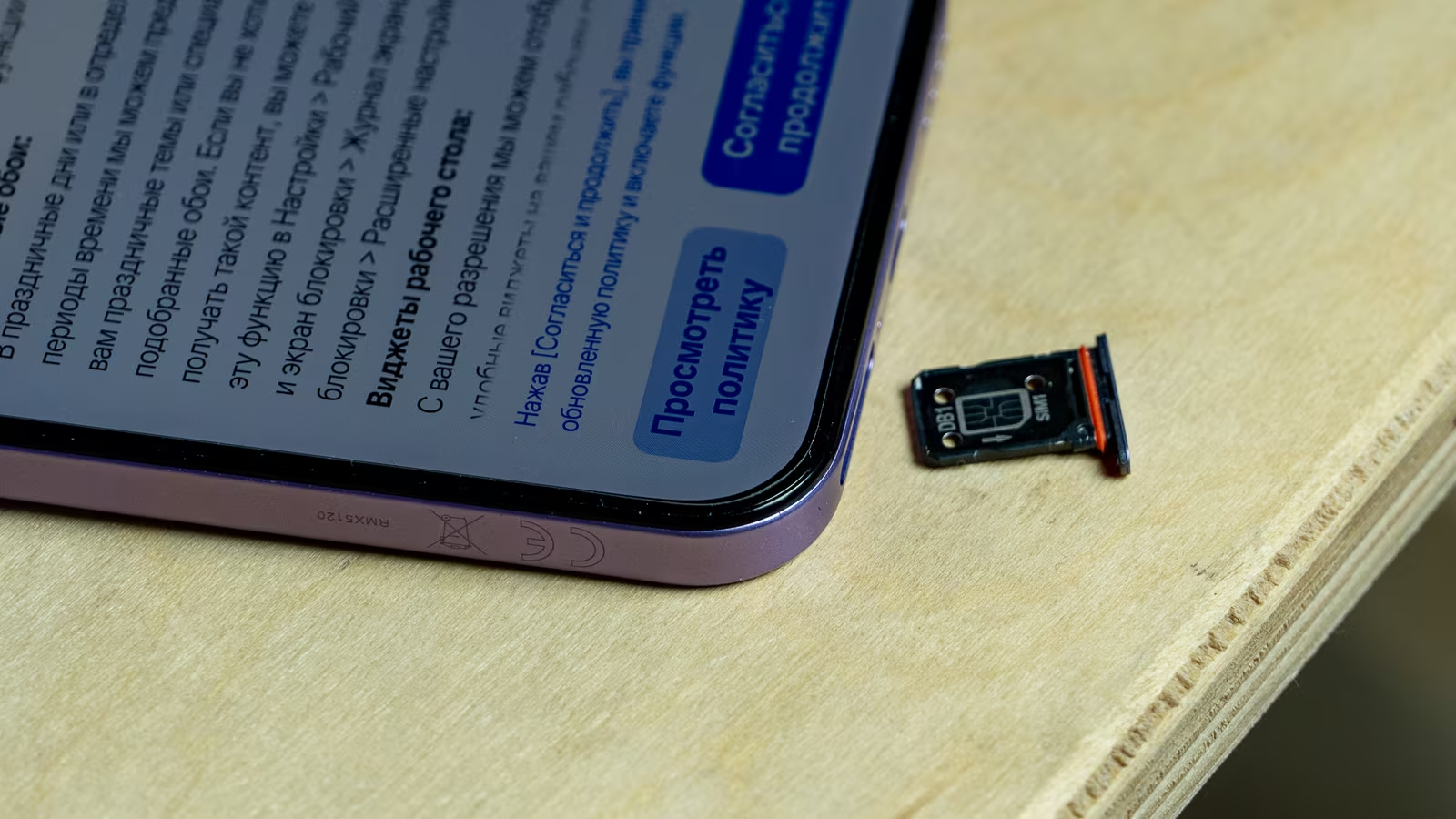
The phone supports 5G in both standalone (SA) and non-standalone (NSA) modes, covering a comprehensive array of bands including n1, n3, n5, n8, n28B, n40, n41, n77, and n78. Other connectivity features include Wi-Fi 6, Bluetooth 5.4 with LDAC and aptX HD codecs, GPS with GLONASS and BeiDou, OTG, and NFC. NFC is present in both Russian and global models but may be absent on certain regional variants, so verify when buying from third-party sellers. Unfortunately, eSIM support is missing in the Russian model, limiting users to dual nano-SIMs.
Realme 16 Pro frequently asked questions
- Does realme 16 Pro have NFC?
Yes, the Russian and global versions include NFC, but availability depends on the region. When buying via marketplaces or resellers, confirm the exact configuration. - What’s the price of realme 16 Pro in Russia?
The 8GB/256GB version costs 38,990 rubles (~$530), and the 12GB/512GB version is 44,990 rubles (~$610). - How does realme 16 Pro differ from realme 16 Pro+?
Three main differences:
– Chipset: 16 Pro uses MediaTek Dimensity 7300-Max; Pro+ swaps in Snapdragon 7 Gen 4.
– Camera: Pro+ features a 50MP periscope telephoto lens with 3.5x zoom; 16 Pro lacks this.
– Display: Pro+ has curved edges and higher peak brightness (1800 nits vs. 6500 nits claimed on 16 Pro but realistically about 1400).
Price gap is around 10,000 rubles (~$135). - How does realme 16 Pro perform in night photography?
Better than expected for its price, with good dynamic range and balanced white balance avoiding greenish tints. Warm tone shifts add pleasant ambiance. Ultra-wide camera struggles at night due to a small sensor without optical image stabilization. - How long does the battery last?
Under mixed real-world use, it lasts about two days. Charging from zero to 100% takes approximately one hour with the included 80W charger.
The realme 16 Pro stakes its claim as a thoughtful mid-range phone, emphasizing durability, battery endurance, and a standout camera sensor-not flashy specs or flagship inflation. The Japanese-designed body and top-tier ingress protection certifications punch above its price, while the silicon-carbon battery and fast charging keep it in pace with more expensive rivals.
Its performance won’t wow gamers or content creators chasing raw power but will satisfy everyday users prioritizing reliability, smooth UI, and crisp imaging. Looking ahead, realme’s challenge lies in expanding software support longevity and improving camera video stabilization to further differentiate in a crowded mid-tier segment. With mid-range phones increasingly defining mainstream smartphone experience globally, realme 16 Pro’s blend could influence affordable flagship design trends beyond Russia’s borders.