

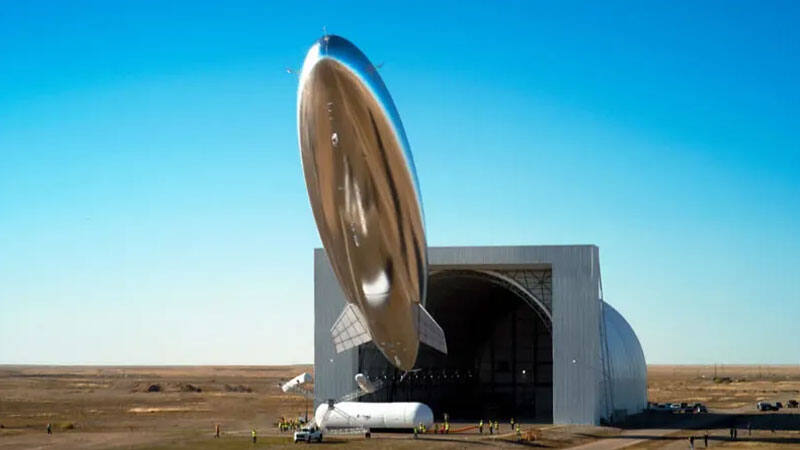
A U.S. company has just pushed a very weird idea a lot closer to reality: a solar-powered airship that can act as a mobile cell tower from the stratosphere. Sceye says its SE2 platform completed a 12-day endurance flight and is now headed toward trials in Japan with SoftBank, where one airborne platform is meant to do the work of several terrestrial towers without the orbital-broadband price tag. The company’s stratospheric cell tower test also points to a possible alternative to satellites for some coverage jobs.
The pitch is simple enough. Put communications gear at more than 15,000 meters, keep it there for days, and use sunlight to stay aloft. That gives you lower latency than satellite service and much wider coverage than a single mast on the ground, which is exactly why telecom operators keep circling high-altitude platforms even though the idea has been discussed for years without turning into a mainstream network tool.
12 days aloft and a 10,000 km test flight
Sceye says the SE2 airship, which is about 82 meters long and carries solar panels on its body, stayed airborne for 12 days and traveled more than 10,000 km from the U.S. to Brazil during its final test before Japanese trials. The company describes the flight as its Endurance Program, and the goal was not just to stay up, but to prove it could keep station for long stretches without giving up control.
During the program, the airship completed one full day-night cycle over New Mexico and then three more consecutive daily cycles off the coast of Brazil. By day, the panels charged lithium-sulfur batteries rated at 425 Wh/kg; by night, that stored energy powered the tail motor and the communications payload. The sharpest bit of performance was station-keeping: Sceye says the platform drifted no more than one kilometer in a day.
SoftBank’s bet on high-altitude networks
The platform is being developed under contract with SoftBank, which has been one of the more serious corporate backers of high-altitude communications for years. That matters because the field has long been full of promising demos and not enough persistence; a system that can survive weather, energy swings, and long sorties is the difference between a stunt and a deployable network layer.
Sceye says testing in Japan will begin this summer. If SoftBank decides these platforms should stay in everyday service, they could become a useful complement to ground infrastructure in remote regions. If not, the more obvious first job is disaster response, where fast temporary coverage beats waiting for trucks, towers, and permits.
How the Sceye airship compares with satellites and towers
- Coverage: one platform is said to replace a dozen cellular towers.
- Latency: lower than low-Earth-orbit satellite networks.
- Power: solar panels plus lithium-sulfur batteries, with night operations handled from stored energy.
- Range: more than 10,000 km covered in the latest test flight.
The awkward question is whether regulators, operators, and weather will let this class of platform become routine. The technology is moving, but the telecom industry has heard a lot of elegant sky-high promises before; the next useful proof point will be whether SE2 can do the boring part well, day after day, in commercial trials.