

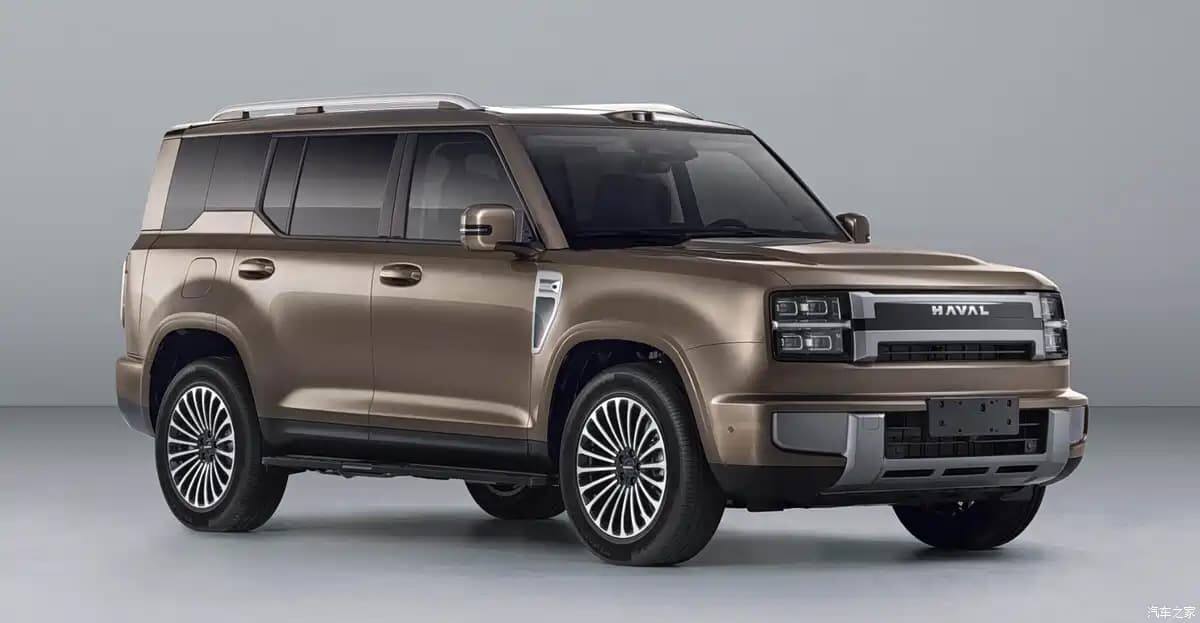
Haval has finally put a name on its new flagship SUV: Great Wall H10. The model, previously floating around the internet under the HX code, is moving toward launch as a larger and more advanced alternative to the H9, with two body lengths, 5- and 6-seat layouts, and enough hardware to make most family SUVs look a bit underdressed.
This is not a timid update. The H10 mixes proper off-road cues with EV-era extras such as a roof-mounted lidar, an 800-volt electrical architecture, and a plug-in hybrid setup. That combination tells you where Haval thinks the upper end of the market is going: less mud-plugger, more tech-packed heavyweight.
Great Wall H10 size, seats and body options
The SUV is based on the Guiyuan platform and will be offered in two lengths. The dimensions are 5138 or 5299 x 2050 x 1970 mm, with a 3000 mm wheelbase. Haval will also sell it with either five or six seats, which should give buyers a more useful choice than the usual ”bigger trim, same cabin” routine.
Different versions also get different approach and departure angles, which is a small but telling detail. It suggests the longer variant is not just a stretched people-mover, but part of a broader attempt to keep the SUV credible off paved roads.
Haval’s new flagship leans hard into off-road styling
Visually, the Great Wall H10 goes for the square-jawed, upright look that premium adventure SUVs love to wear. It has blocky headlights, a tough-looking stance and a deliberately rugged profile, plus optional extras including a panoramic roof, two-tone paint, a spare wheel mounted on the tailgate, deployable side steps and rear-hinged doors.
That rear-hinged-door setup is a bit of a flex in this segment, and it should make the H10 stand out in a market where many rivals are increasingly polished but visually forgettable. The lidar on the roof is another hint that Haval wants buyers to see this as more than a brute-force SUV.
800-volt hybrid hardware and electric range
Under the skin, the H10 will use Haval’s Hi4 plug-in hybrid system with 1.5-liter and 2.0-liter petrol engines rated at 167 hp and 242 hp. It also gets a 42.8 kWh traction battery, 800-volt architecture, and crab mode, which is either very useful in tight spots or a very expensive party trick, depending on your parking habits.
- 1.5-liter engine: 167 hp
- 2.0-liter engine: 242 hp
- Battery: 42.8 kWh
- Electric range: 180 km on one version, 176 km on another
The claimed electric range is respectable for a large SUV, though the more interesting story is the architecture. More Chinese brands are pushing 800-volt systems into bigger vehicles because it helps with charging and efficiency, and Haval clearly wants the H10 to sit near the front of that wave rather than watching it pass by.
The open question is how aggressively Haval will price it. If the Great Wall H10 lands close to the H9, the spec sheet could do a lot of heavy lifting; if it climbs too high, it will be competing against better-known luxury and electric SUVs with a lot more brand cachet.