

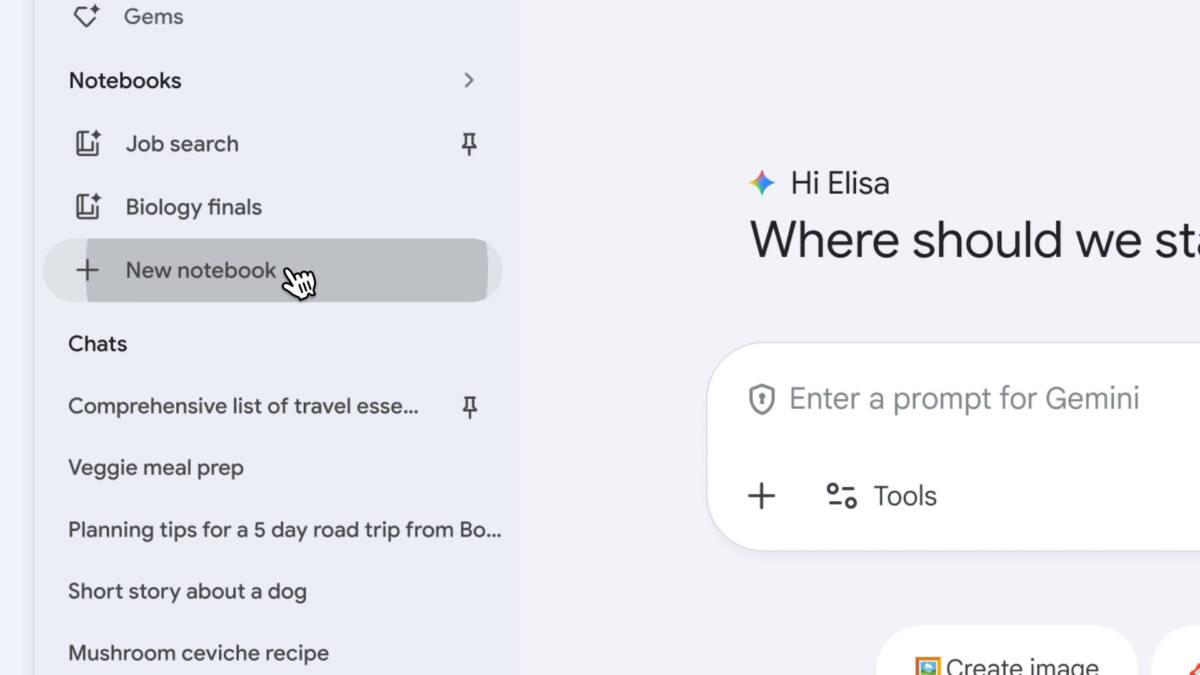
Google is adding ”Notebooks” to Gemini, a new way to group related chats, keep project material in one place, and feed the model extra files for better answers. The Gemini Notebooks feature looks a lot like Anthropic’s Claude Projects, which is probably the point: if AI assistants are becoming workspace software, users will expect something better than a giant, messy stream of prompts.
The feature is rolling out first to paid Gemini users, with free users and mobile users set to get access in the coming weeks. That staggered launch is a familiar Google playbook, and it also gives the company time to see whether people actually use notebooks for real work rather than just naming one ”Trip stuff” and forgetting it exists.
What Gemini Notebooks do
A Notebook works as both a container and a context pack. You can keep conversations tied to a single topic or project together, then upload supporting material so Gemini has more to work with when it replies. In practical terms, that could mean travel plans, booking confirmations, insurance records, restaurant lists, and brochures living in the same place as the chat that refers to them.
That matters because chatbots are only as useful as the context you feed them. Without structure, users end up re-explaining themselves every few prompts, which is a silly way to use software that sells itself as intelligent.
NotebookLM and Gemini now overlap on purpose
Google is also linking Notebooks with NotebookLM, so material can move between the two tools. That gives Gemini users a cleaner handoff: build a more structured summary in NotebookLM, then keep working from the same source material in Gemini without starting from scratch.
The overlap is interesting because it suggests Google sees its AI tools less as separate products and more as stages in one workflow. Competitors are heading the same way, with Microsoft folding Copilot deeper into Office and Anthropic pushing Claude toward more persistent project-based work.
Claude-style organization, but with Google’s reach
Claude Projects has had a stronger reputation for this kind of organization, and it is available to free users outright. Google’s answer is not especially subtle: copy the useful part, connect it to NotebookLM, and hope the wider Gemini ecosystem is enough to pull people in once the free rollout lands.
- Paid Gemini users get Notebooks first.
- Free and mobile users get access in the coming weeks.
- Notebooks group chats and accept files for added context.
- NotebookLM sync lets users move material between tools.
If Google gets the rollout right, Gemini Notebooks could become one of those small features that quietly changes habits. The bigger question is whether users want a chat app with folders, or whether they will stick with the cleaner, more document-like rivals that already sell organization as the main event.