

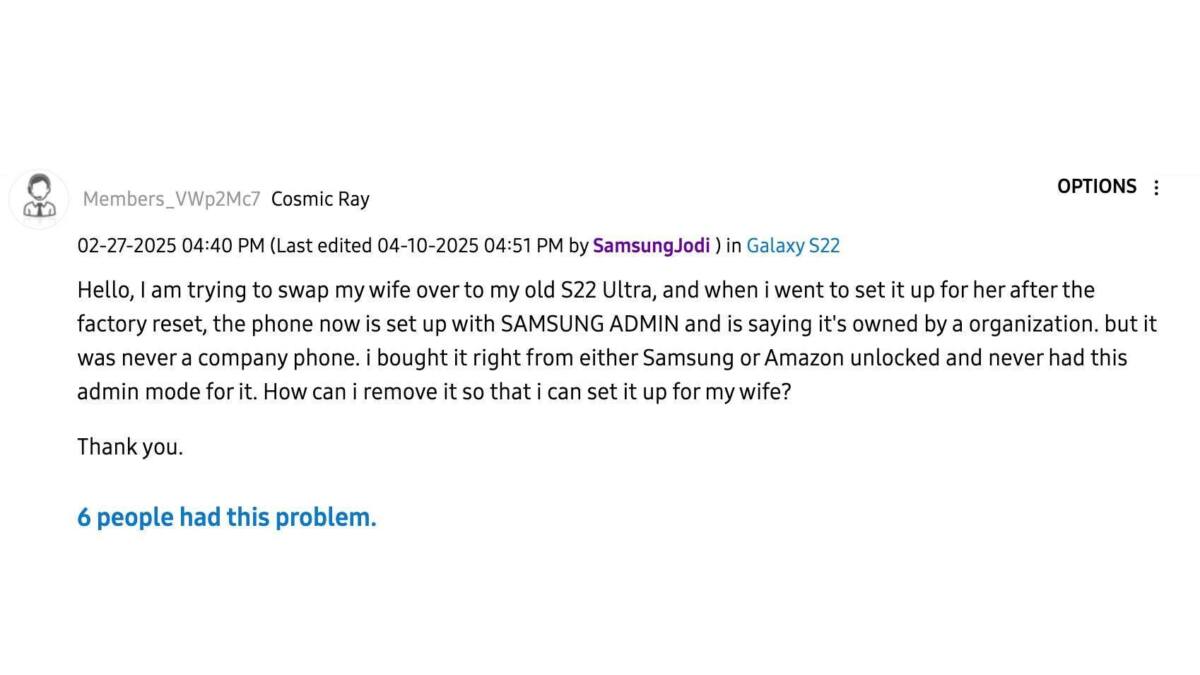
A strange Galaxy S22 Ultra ownership bug is turning some phones into corporate-managed devices after a factory reset, and the bad news for affected owners is that the lockout does not appear to be their fault. The phones were bought through normal retail channels, but during setup they suddenly report that an organization controls them – apparently via a mystery company called Numero LLC.
The twist is nasty because these are not dead phones. They still work, but only if the setup process is allowed to hand over elevated permissions to the unknown manager. For a flagship device that cost real money, that is a spectacularly annoying way to find out your handset has been living a double life.
According to reports, the affected units were enrolled through Samsung’s Knox Manage system using their IMEI numbers, which is exactly the kind of backend tool companies use to control fleets of phones. That should have been fine for enterprise hardware. It is a lot less fine when the device in question was sold as a consumer phone and only reveals the problem after a reset.
How the Galaxy S22 Ultra ownership bug works
Once the reset begins, the phone flags a Factory Reset Protection lock and refuses to finish setup without permission from Numero LLC. Samsung and Knox support reportedly point users at each other, which is a lovely little customer-service carousel for anyone trying to recover a phone they already paid for.
There is a darker wrinkle here too: a custom Android build does not solve it, because the control sits deeper than a normal software wipe. In practical terms, the choice is ugly – accept a company-controlled handset or treat a perfectly good flagship as e-waste.
Why the Galaxy S22 Ultra issue showed up years later
The Galaxy S22 line launched in 2022, and many owners only ran into the problem now because they waited until a reset to notice anything was wrong. That timing matters: devices often get reset when they are being handed down, sold, or cleaned up before retirement, so a hidden management link can sit unnoticed for years.
There is also a broader industry pattern here. Phone makers increasingly blur the line between consumer and enterprise tooling, and when the backend records are wrong, users inherit the mess. Samsung is not alone in using device-enrollment systems, but it is the sort of failure that makes ”secure management” sound a lot less comforting.
What owners of affected Galaxy S22 Ultra phones can and cannot do
- A factory reset does not clear the management lock.
- Installing another Android version does not remove the Knox-level enrollment.
- Samsung says only trusted resellers can register devices to Knox servers.
- A compromised reseller, or a separate authorization flaw, are both plausible explanations raised by the reports.
That leaves users in a miserable spot, especially if they were trying to pass the phone on to family members and discovered the lock only after privacy-sensitive data was already on the device. Samsung has not publicly commented, and until someone can identify Numero LLC or remove the enrollment, the mystery device ownership problem will keep looking less like a bug and more like a small-scale supply-chain fiasco.
The bigger question is whether this is an isolated mess or a sign that consumer phones can be silently swept into enterprise control far more easily than owners assume. If Samsung cannot trace the registration path, expect more people to start asking a very basic question before and after every reset: who actually owns the phone in your hand?