


Esteo has launched preorders for its debut model: the V27, a hybrid SUV set to be assembled in Saint Petersburg at the former Hyundai manufacturing facility. The starting price is pegged at 5.75 million rubles (around $72,000), placing it immediately in Russia’s high-end SUV segment where buyers expect more than just a badge-they care about range, all-wheel drive, and size.
The V27’s design joins the ranks of large, boxy SUVs with familiar cues reminiscent of the Toyota Land Cruiser Prado 250 and classic Land Rover silhouettes. This style hits the mark for the Russian market, where demand has shifted decisively toward big crossovers and SUVs. With many Western brands retreating amid geopolitical tensions, Chinese and homegrown models are stepping into the gap.
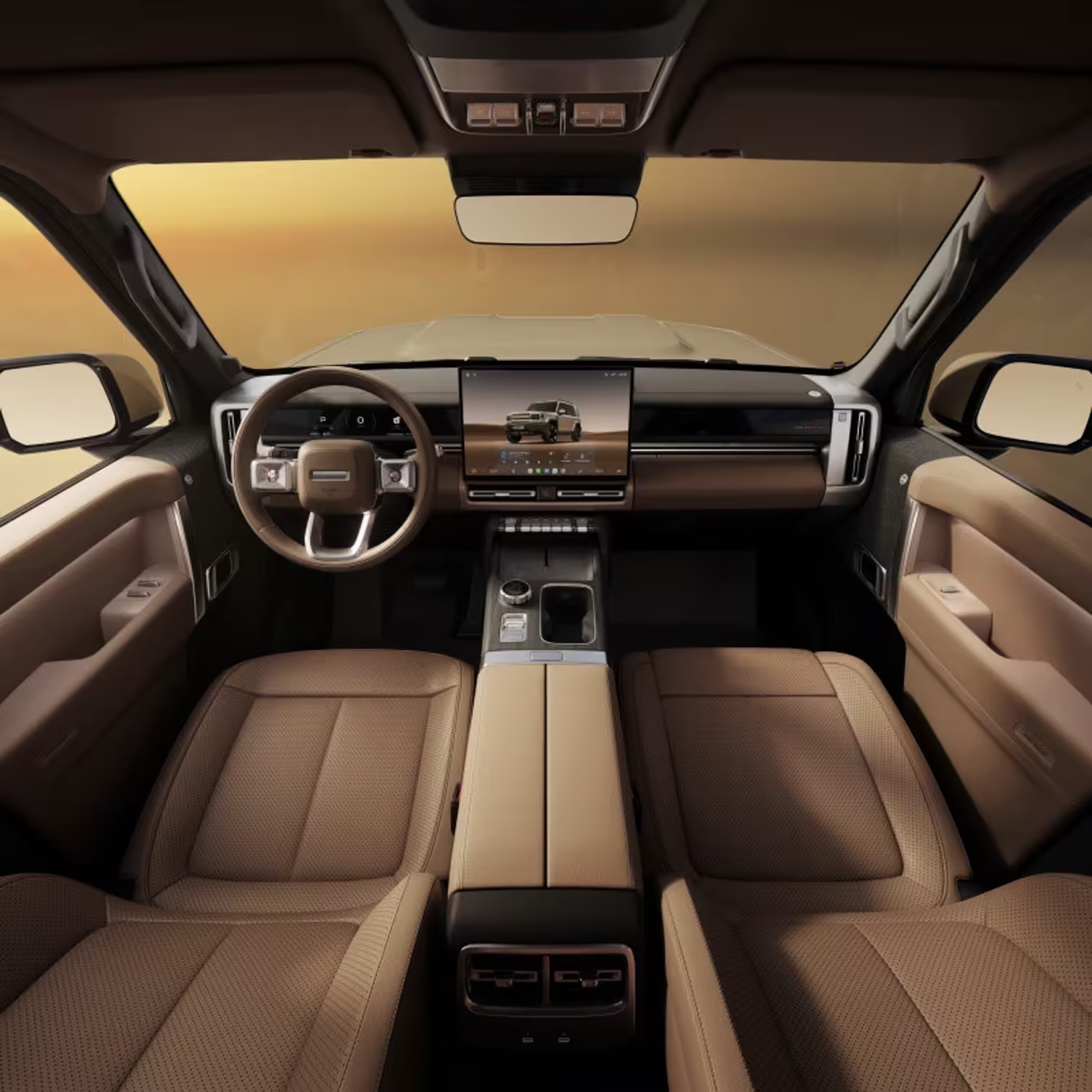
Under the hood, the Esteo V27 employs a series hybrid setup: two electric motors deliver a combined 456 horsepower to the wheels, while a 1.5-liter gasoline engine acts solely as a generator to recharge the battery, without any direct mechanical link to the drivetrain. This configuration benefits a heavy SUV by providing strong initial acceleration and improved fuel economy in urban driving.
Esteo V27 specifications
- Combined electric motor output: 456 hp
- 0-100 km/h (0-62 mph) acceleration: 5.9 seconds
- Estimated driving range: over 800 km (500 miles)
- Ground clearance: 220 mm (8.7 inches)
- Dimensions (L×W×H): 5045 × 1976 × 1894 mm
- Wheelbase: 2900 mm (114 inches)
Esteo highlights features tailored for Russian conditions: an intelligent all-wheel-drive system, a body structure reinforced with a high percentage of ultra-high-strength steel, and a battery thermal management system optimized for cold winters. These are priorities for local buyers focused on endurance through severe frosts, road clearance, and stable highway performance over flashy displays.
The V27 comes in a single, well-equipped trim level featuring a panoramic glass roof, heated and ventilated seats, a Snapdragon 8155-powered multimedia system, and physical buttons to control climate and driving modes. The latter stands out as conventional tactile controls remain a selling point amid widespread touchscreen fatigue.
Preorders are already open via Esteo’s dealer network, but the company hasn’t revealed when deliveries will begin. Production will take place at the Saint Petersburg facility once operated by Hyundai. Since Hyundai’s departure, the plant has shifted to assembling cars under the Solaris brand, another local name. Esteo’s project appears to be a move to keep the factory busy without lengthy downtime for retooling. It’s unclear if the V27 will be mostly assembled from kits or receive deeper localization.
Priced at 5.75 million rubles, the V27 enters a crowded field of large SUVs that includes models like the Tank 500. Parallel imports of hybrid offerings such as Li Auto come at higher price points. For Esteo, the V27 is a test: at this price, buyers demand not just bold styling but reliable service, steady production, and clear delivery timelines.
The Russian market has become a unique proving ground for hybrid and electric vehicles as domestic brands seek to fill voids left by Western automakers. Esteo’s hybrid V27 exemplifies this transition, combining classic SUV appeal with modern electrification. Observers will be watching how well the new model competes against both imported hybrids and emerging Chinese entrants, especially in terms of performance, build quality, and after-sales support.
Moving forward, the key questions for Esteo will be its ability to ensure consistent production and to establish a service infrastructure that matches buyer expectations in Russia’s demanding climate. Success here could signal a broader trend for Russian-made electrified SUVs and push competitors to accelerate their own hybrid offerings tailored to this evolving market.