

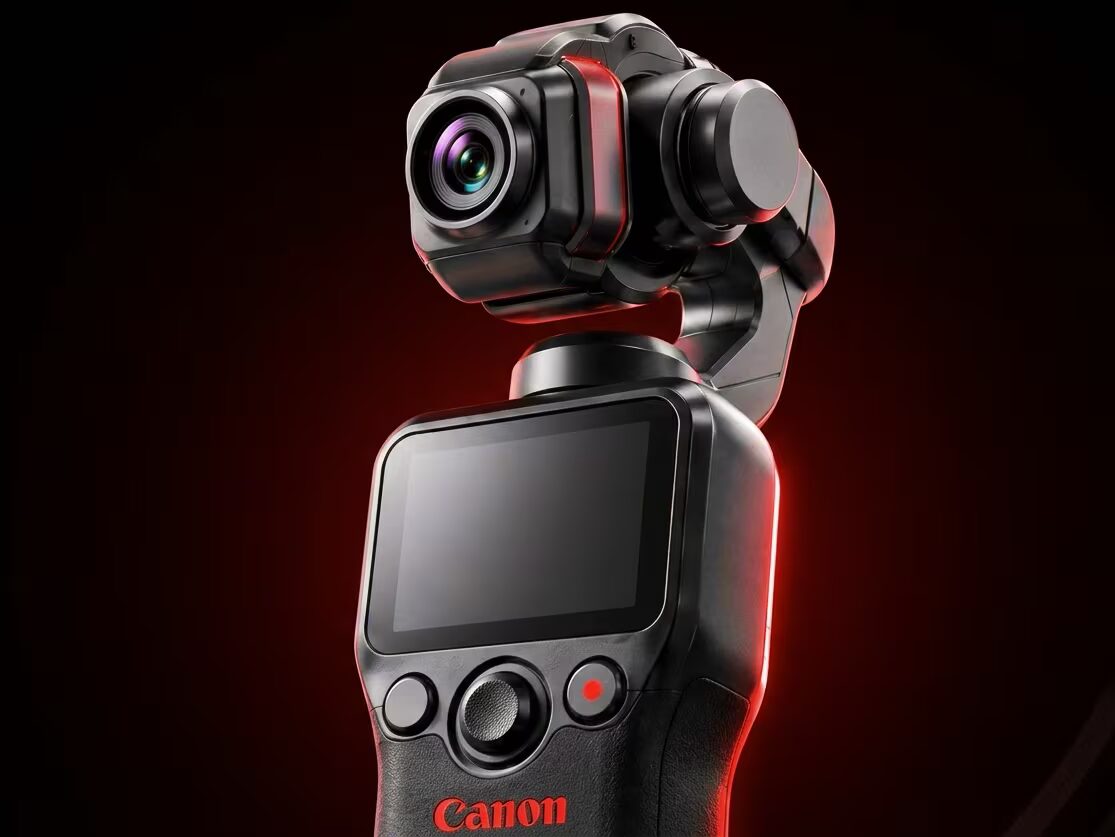
Canon is preparing to enter the compact gimbal camera market with a new device featuring integrated three-axis stabilization, signaling a shift away from the modular lens designs it explored back in 2021. A recently uncovered patent reveals Canon’s focus on reliability and durability in this ambitious project, aiming to compete directly with established gimbal camera makers like DJI and Insta360.
The patented design sticks to the classic handheld gimbal style: a grip, a screen, and a stabilized camera module. However, Canon’s main innovation lies in its intelligent power management system. The camera can detect when it’s about to power down and automatically fold into a secure, safe position using magnetic sensors and image analysis. This approach is intended to reduce mechanical wear, unlike competitors’ devices that simply limp down in power-off mode.
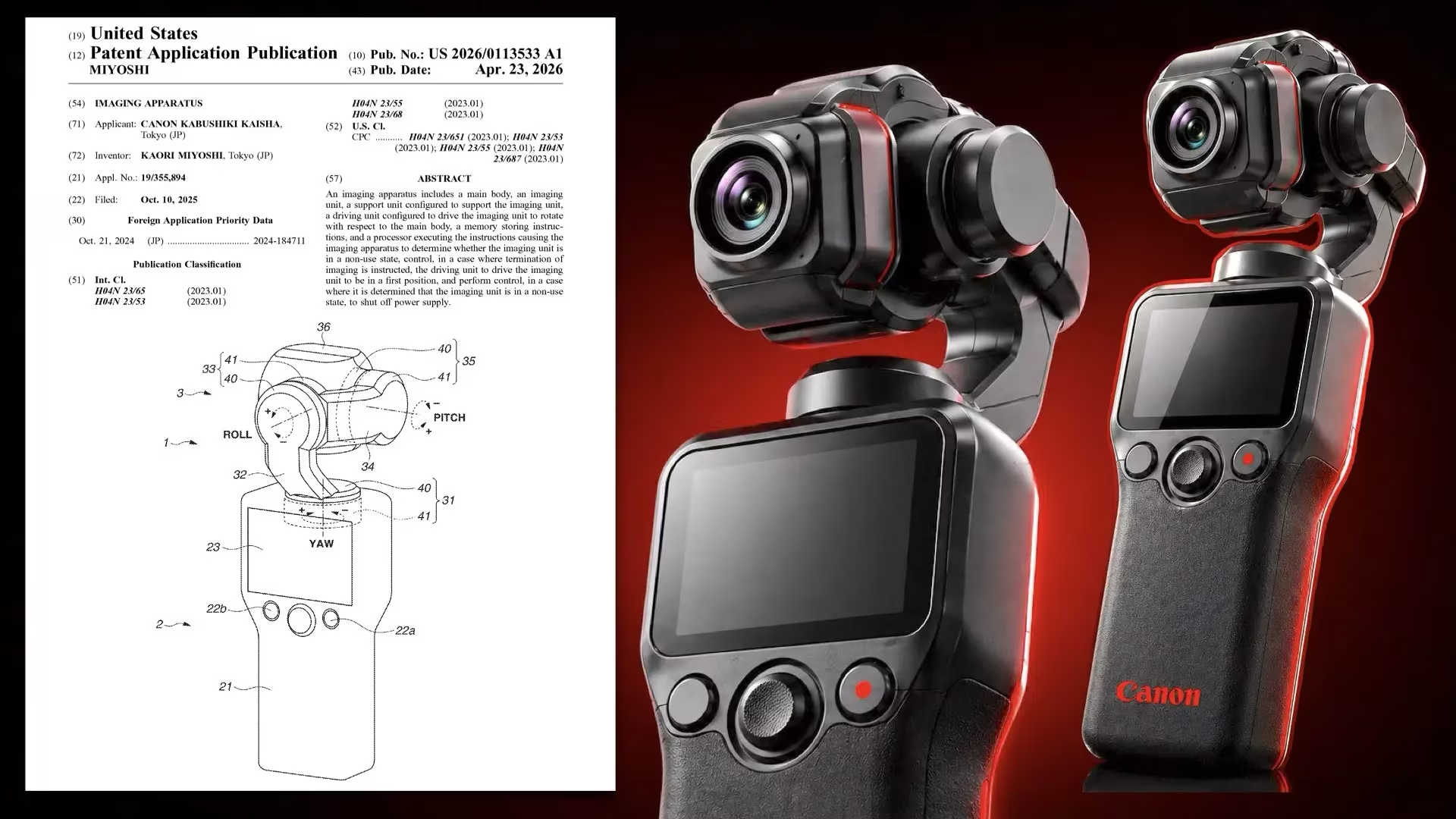
Canon faces tough competition in the compact gimbal camera segment. By the time their new gimbal camera hits shelves, the market will already be saturated with offerings from DJI and Insta360, including:
- DJI Osmo Pocket 4 – featuring a 1-inch sensor and 4K video recording at 240 fps
- DJI Osmo Pocket 4P – a dual-camera version with 3x optical zoom
- Insta360 Luna Ultra and Luna Pro – modular cameras with Leica-tuned optics and advanced zoom capabilities
Unlike these multi-module, zoom-focused competitors, Canon appears to be prioritizing smart power control, long-term durability, and a more predictable user experience. This strategic pivot could appeal to users who value device longevity and steady performance over flashy feature sets.
Canon’s move is risky given the dominance of DJI and Insta360 in compact gimbal cameras. Success won’t come from competing on specs alone. Instead, Canon will likely leverage its brand strength, imaging expertise, and signature color science to argue that smarter engineering trumps raw specs in the gimbal camera arena.
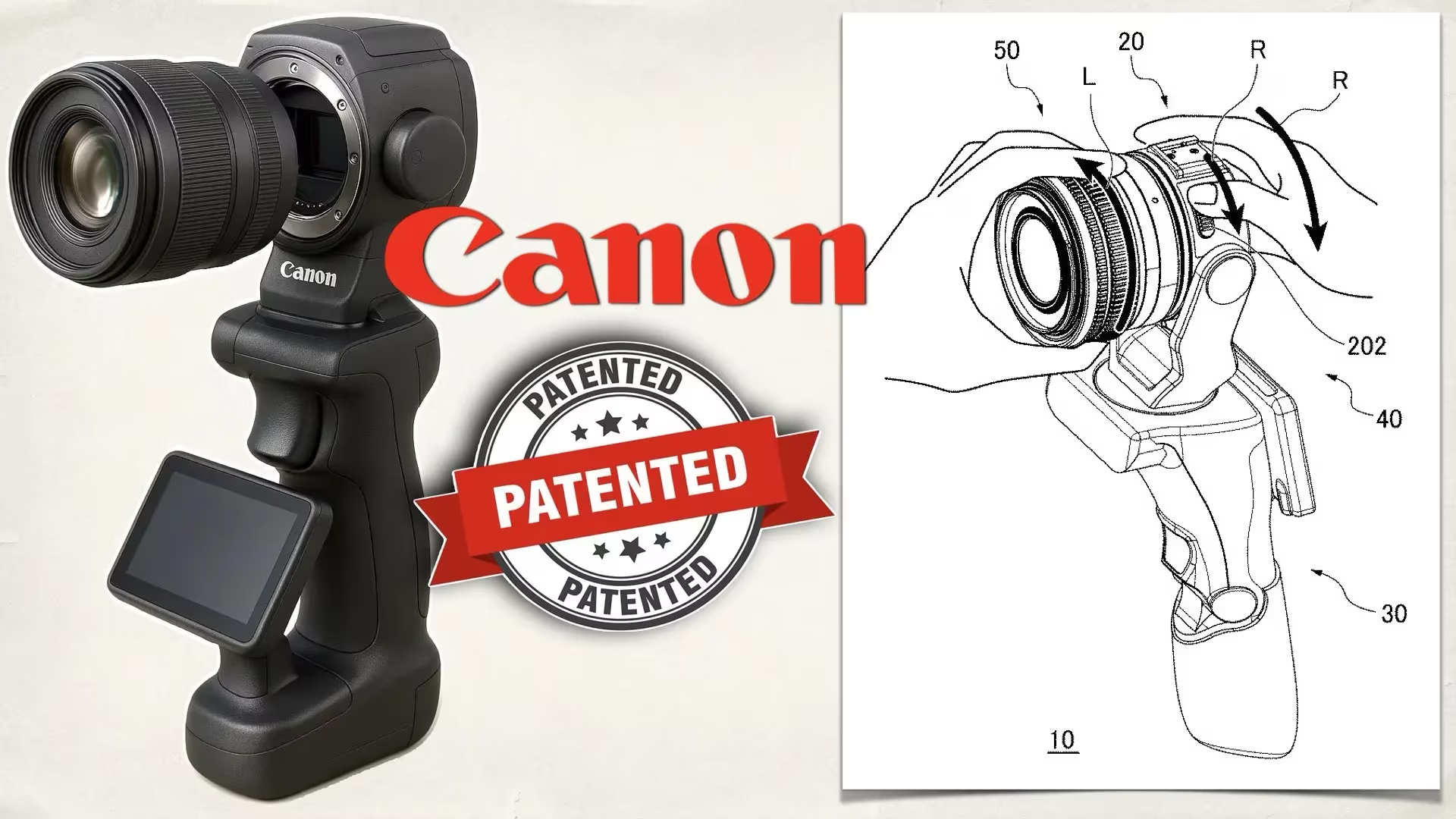
It’s important to remember that having a patent doesn’t guarantee a swift product launch. Still, Canon has filed at least three patents related to gimbal cameras, underlining a serious commitment to developing this category. The latest patent shows a clear evolution from conceptual designs toward a more production-ready form factor.
Patents don’t require a working prototype, but Canon’s detailed attention to software logic, sensor operations, and motor control signals indicates early-stage pre-production development rather than just theoretical design.
With a crowded compact gimbal camera market dominated by DJI and Insta360, Canon’s upcoming device will need to stand out through innovative mechanics and user-friendly intelligence rather than pure horsepower. Watching how Canon positions this product-whether it leans into durability, usability, or image quality-will reveal if it can carve out a new niche in compact stabilized cameras.