

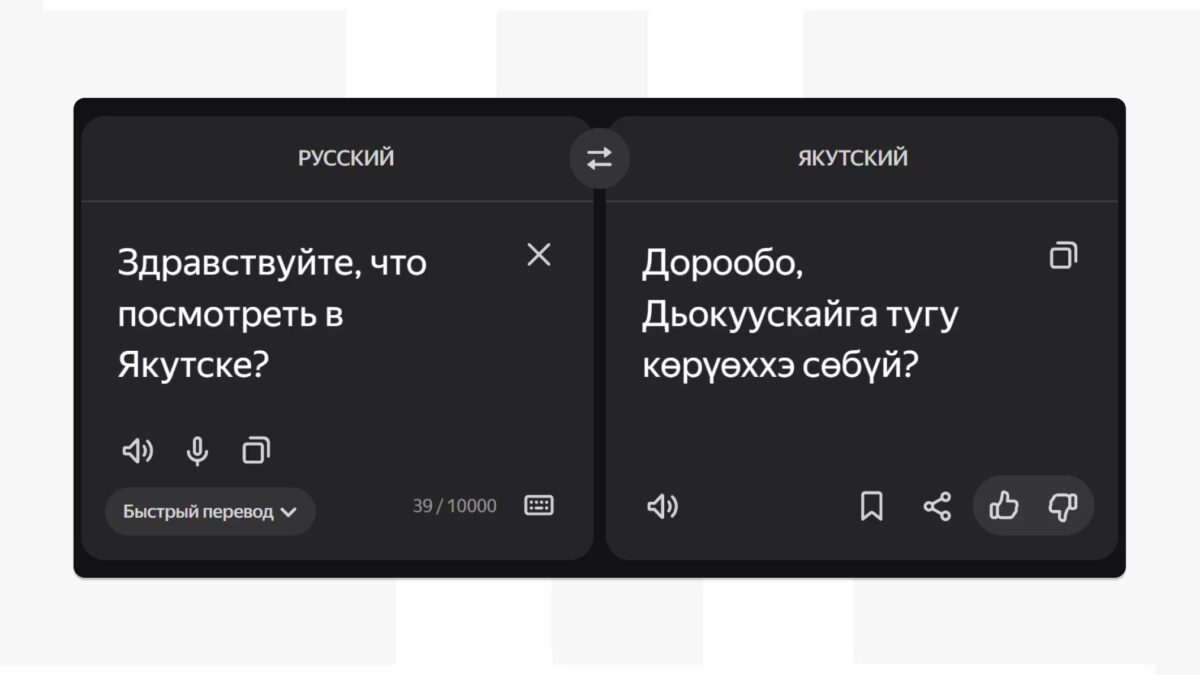
Yandex has added Yakut language support for speech recognition and synthesis across its services, enabling real-time oral translation between Yakut and Russian. This update means the company’s tools don’t just translate text anymore-they can now understand Yakut spoken aloud and vocalize translations back and forth. The feature is already live in Yandex Translate, the Yandex Keyboard apps for Android and iOS, as well as in the translation widget within Yandex Search.
The most noticeable change is Yakut’s integration into voice-driven workflows. Previously, users needed to type phrases manually; now, they can simply speak them. In dialog mode within Yandex Translate, one person can speak in Russian and the other in Yakut, with the app automatically translating and voicing each side’s replies in the appropriate language.
Yandex Keyboard also supports Yakut voice input, instantly converting speech into text. This functionality is handy for messaging and situations where typing is inconvenient or impossible. For a language of Yakut’s size, this isn’t just a gimmick-it’s a practical tool enhancing everyday communication.
Yakut, also called Sakha, ranks among the top five most requested minority languages on Yandex’s platforms, alongside Tatar, Bashkir, Chuvash, and Mari. It holds official status alongside Russian in the Sakha Republic (Yakutia), with several hundred thousand speakers. The demand for voice-enabled tools here is very practical, reflecting real user needs rather than token inclusion.
Globally, speech technology support for small and mid-size languages remains rare. While major international platforms steadily add new tongues, fully featured recognition, synthesis, and conversational translation for regional languages are still uncommon. For Yandex, this move also strengthens its foothold within Russia’s diverse regions, where localizing services often matters more than interface tweaks.
If these new Yakut voice features gain traction, the logical next step is to expand voice support to other Russian minority languages already present in Yandex Translate. This is especially timely as voice interfaces become a standard part of daily digital life-users quickly notice when their native language isn’t available for spoken interactions.