

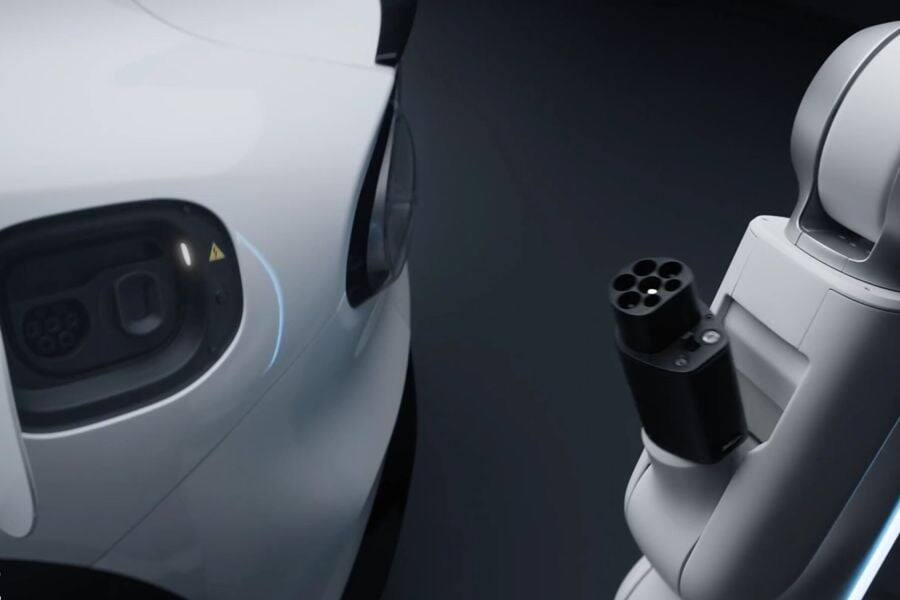
Xiaomi has shown off a home charging robotic arm that can plug into an electric vehicle on its own, then unplug it when the job is done. The pitch is simple: fewer awkward bends, fewer cable-wrangling sessions, and a cleaner way to charge in a tight home parking space. The arm is slim enough to fit into narrow spots, with a body width of 152mm, and it can be controlled remotely from a smartphone.
That makes the demo more interesting than a neat bit of hardware theater. Xiaomi already sells a growing range of home charging gear, so the robotic arm looks less like a one-off stunt and more like the next step in a broader EV accessory push. Home charging is still where most convenience battles are won or lost, and a system that removes the physical hassle of plugging in is exactly the kind of feature that can make daily ownership feel less annoying.
Xiaomi EV charging lineup
The company already offers home charging piles in 7kW and 11kW versions.
- The 7kW model measures 400mm x 180mm x 120mm, runs on 220V single-phase power, and uses a 640g charging gun.
- The 11kW version keeps the same physical size but steps up to 380V three-phase power and a 770g charging gun.
- Xiaomi also sells the Mijia Car Portable Charger and Discharge Gun, which can charge at 2.8kW and discharge at 3.5kW using standard 220V household power.
A feature Xiaomi has been building toward
This is not Xiaomi’s first mention of automatic EV charging. The company had already listed robotic arm charging as a planned feature in its Xiaomi Pilot Technology autonomous driving package, alongside autonomous valet parking. In other words, the new arm is not some random moonshot; it is a visible piece of a roadmap Xiaomi has been hinting at for a while.
Xiaomi Auto Technology has also received approval for an EV charging system patent from the Chinese Intellectual Property Organization, and the company filed another patent for a wireless EV charging setup involving an autonomous cargo vehicle. That is a lot of paperwork for a simple job: getting electrons into a battery without making the owner do the grunt work.
Pricing is still missing
There is no price or availability yet for the robotic arm, which is the least surprising part of the whole demo. Xiaomi tends to lean hard on competitive pricing with its EV accessories, so the real question is whether this becomes a premium convenience item or a mass-market add-on that could actually spread beyond gadget obsessives.
If Xiaomi can keep the hardware compact and the cost sane, automatic home charging could move from sci-fi garnish to a genuinely useful standard feature. The bigger test is whether buyers want the convenience enough to pay for it – or whether they are perfectly happy doing the last two seconds of the job themselves.