

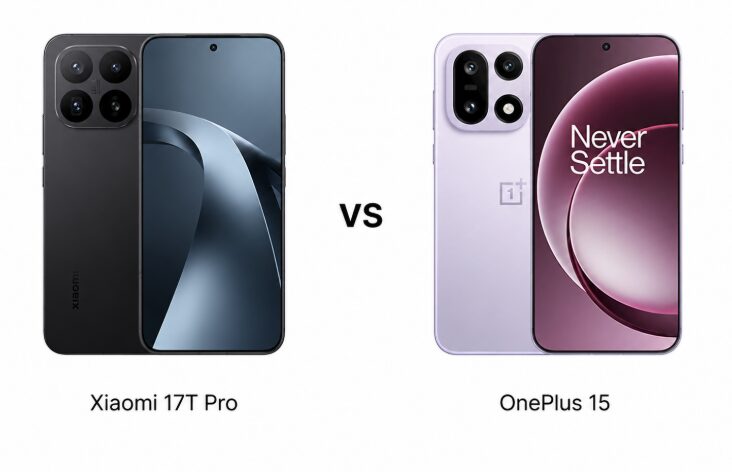
Xiaomi and OnePlus are taking two slightly different roads to the same expensive destination. The Xiaomi 17T Pro vs OnePlus 15 comparison comes down to camera appeal and battery capacity on one side, and a more rounded flagship package on the other. The OnePlus 15 also brings faster charging, tougher protection, and a newer Snapdragon platform.
That split is pretty familiar if you follow Android flagships: one brand sells a story about imaging, the other sells the whole package. In this case, the gap is narrow on paper, but the OnePlus 15 stacks enough small upgrades to make the decision less about raw specs and more about what kind of compromise you dislike least.
Display and build differences
Both phones use glass and aluminum, but the OnePlus 15 gets the sturdier pitch. It carries IP68/IP69 certification and an ultrasonic fingerprint scanner, while the Xiaomi 17T Pro sticks with Gorilla Glass 7i and IP68 protection. The Xiaomi does have the brighter screen on paper, hitting 3,500-nit peak brightness with a 144Hz AMOLED panel and Dolby Vision support.
OnePlus counters with an LTPO AMOLED display at 165Hz plus HDR Vivid and Ultra HDR support. That means smoother scrolling and better power management, which is the kind of thing you actually notice after a week, not after a spec-sheet stare-down.
Chipset and battery numbers
The Xiaomi 17T Pro runs on the MediaTek Dimensity 9500 built on a 3nm process, paired with UFS 4.1 storage. The OnePlus 15 goes with Qualcomm’s Snapdragon 8 Elite Gen 5 and Adreno 840 GPU, a combination that should have the edge in sustained gaming and app optimization.
- Xiaomi 17T Pro: 7,000mAh battery, 100W wired charging, 50W wireless charging
- OnePlus 15: 7,300mAh battery, 120W wired charging, 50W wireless charging, bypass charging, reverse wireless charging
On endurance alone, both look excellent. But the OnePlus 15’s bigger battery and broader charging toolkit make it the more complete travel companion, especially if you hate watching your phone heat up while it tops off.
Camera hardware tells the story
This is where Xiaomi makes its pitch most aggressively. The 17T Pro has Leica branding, a 50MP main camera, and a 50MP periscope telephoto lens with 5x optical zoom. That gives it a clear advantage for portraits and distant subjects, and it is the more obvious pick if camera personality matters to you.
The OnePlus 15 takes the safer route with a triple 50MP setup: wide, periscope telephoto, and ultrawide. Its telephoto reaches 3.5x optical zoom, but the better-balanced mix and 32MP selfie camera with autofocus and 4K 60fps recording make it easier to recommend to people who want fewer weak spots rather than one headline feature.
Xiaomi 17T Pro price vs OnePlus 15 price
The Xiaomi 17T Pro is priced around ₹75,000, while the OnePlus 15 sits around ₹80,000. That is close enough to make the cheaper phone look tempting, especially since Xiaomi brings Leica tuning, a brighter display, and a huge battery to the table.
Still, the extra ₹5,000 buys more than bragging rights. OnePlus adds a newer chipset, tougher ingress protection, an ultrasonic fingerprint sensor, faster charging, reverse wireless charging, and a display that feels more modern. For buyers shopping in this bracket, the bigger question is not which phone is better on a slide, but whether they want the best camera value or the most complete flagship.
If Xiaomi wants the cleaner win, it will come from camera buyers who care about zoom and price. If OnePlus keeps leaning into practical upgrades instead of flashy gimmicks, the 15 should be the safer recommendation for most people spending flagship money.