

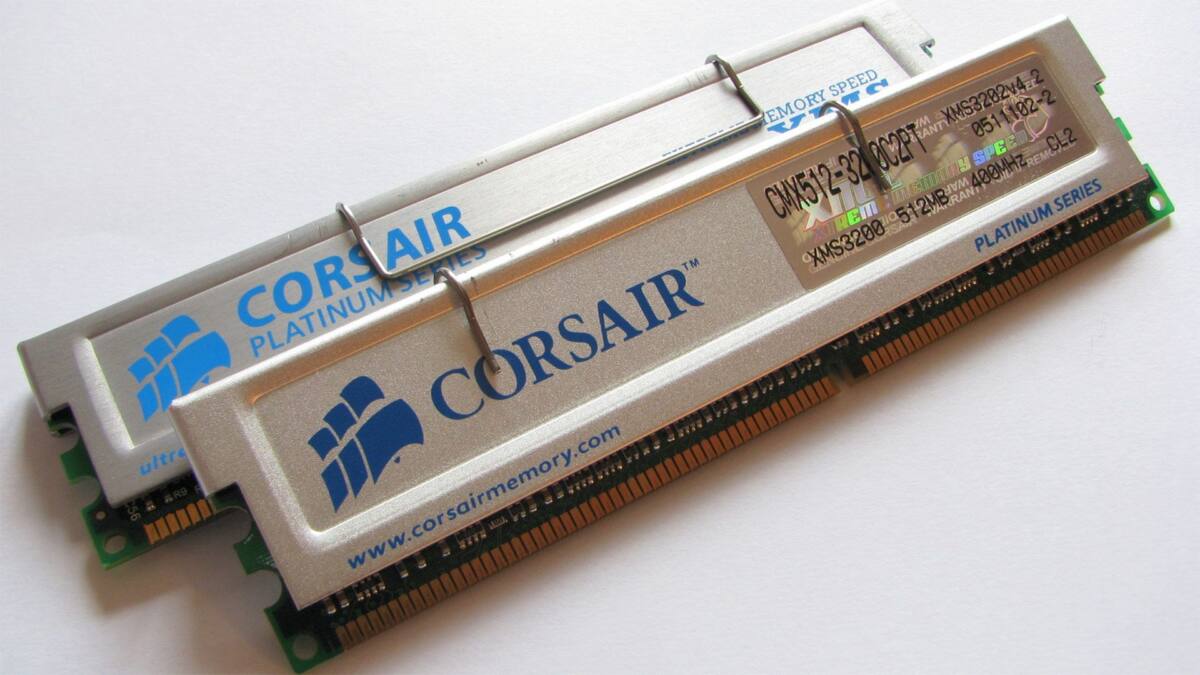
Windows 11 has been coaxed onto hardware that belongs in a museum, not a modern desktop: a DDR1 motherboard, an Intel Core 2 Quad Q6600, and an ATI Radeon HD 4650 AGP card. The build comes from Omores, a tech tinkerer who also says the system is ”completely stable” – a small but satisfying slap in the face to anyone who treats compatibility as a fixed law.
The stunt lands in the middle of a broader memory crunch that has been pushing enthusiasts to think about old parts in new ways. DDR2 was already being squeezed; DDR1 is the next absurd checkpoint, and this Windows 11 experiment shows how far determined hobbyists can stretch Microsoft’s latest desktop OS when they are willing to mix driver archaeology with a bit of engineering stubbornness.
Windows 11 on a DDR1 board with AGP and Core 2 support
The motherboard doing the heavy lifting is an ASRock ConRoe 865PE, one of those crossover boards that made the transition from older standards look almost elegant. It let builders keep DDR1 memory and AGP graphics while moving up to Core 2 Duo and Core 2 Quad processors, which is exactly the kind of weirdly practical compromise that PC DIY culture has always loved.
Omores did not show the rated speed of the DDR1 sticks, so the exact memory spec is unknown. Still, DDR-400 was the top official non-overclocked DDR1 standard, and that is the obvious ceiling for a system like this if you are trying to make a point rather than just make the thing boot.
The ATI Radeon HD 4650 AGP needed the most work
The hardest part of the build appears to have been the ATI Radeon HD 4650 AGP card. Omores says AGP 8X is fully functional and H.264 hardware decoding is active after ”hacking” the setup and forcing ATI’s Windows 7 64-bit drivers from 2012 onto the machine. That is the sort of phrase that should make any sane person back away slowly, which is exactly why enthusiasts love it.
Once the system was verified with tools such as CPU-Z and GPU-Z, the fun part began. Windows 11 on the DDR1 hardware handled modern browsers, embedded video, hardware decoding, a few games, and even 3D benchmarks without falling over. It also ran Crysis, because of course it did.
Why this old PC experiment works at all
The interesting part is not just that the machine boots, but that it stays stable on hardware with no UEFI and only ACPI 1.1. Microsoft’s own Windows 11 IoT line already supports BIOS systems, so the real surprise is less ”impossible hack” and more ”hidden room in the house the company never put on the front tour.”
That leaves one open question: how many other supposedly obsolete PC combinations are still capable of running a current operating system if someone is willing to dig through old driver packages and ignore conventional wisdom? Enthusiasts have answered that question before, and they rarely stop when the answer starts getting interesting.