

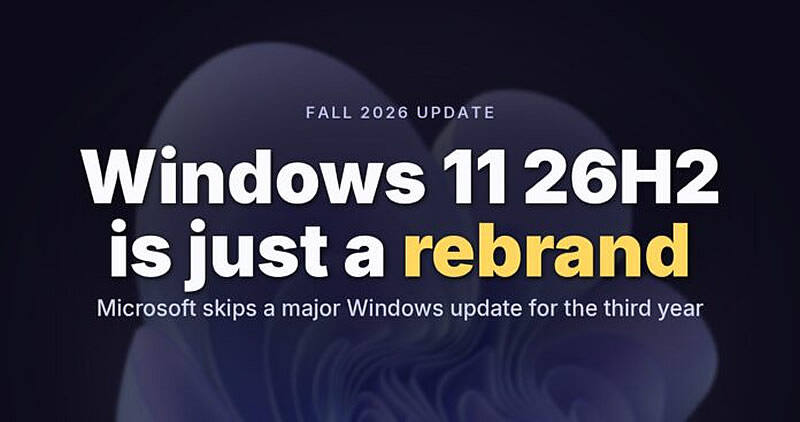
Microsoft has confirmed that Windows 11 26H2 will arrive in autumn 2026, and it is shaping up to be the software equivalent of a quiet office memo: small, fast, and deliberately uneventful. The update will ship as an enablement package under 500 KB, install in under five minutes with one restart, and roll out to users of 24H2 and 25H2 without any visible redesign or feature splash. For businesses, that is the point – fewer moving parts, fewer surprises, and fewer chances for a patch day to turn into a fire drill.
That approach also reflects a broader shift at Microsoft. Instead of reserving major changes for big version jumps, the company is pushing more functionality through monthly cumulative updates, which makes Windows 11 feel less like a yearly product cycle and more like a continuously serviced platform. In practice, that means the big headline release is getting smaller while the real feature work happens in the background.
What Windows 11 26H2 changes for users
For home users and most professionals, there is very little drama here. Microsoft says the hardware requirements stay unchanged: 4 GB of RAM, 64 GB of storage, and a processor clocked at 1 GHz or higher. The support window also remains familiar, with Home, Pro, Pro EDU, and Pro for Workstations receiving updates through October 2028, while Enterprise, Education, and IoT Enterprise extend to October 2029.
- Update size: under 500 KB
- Install time: less than five minutes
- Reboots required: one
- Minimum RAM: 4 GB
- Minimum storage: 64 GB
Microsoft’s split between 26H2 and 26H1
There is one wrinkle: Microsoft is also preparing Windows 11 26H1, but that version will sit on a new platform and require newer chips such as Nvidia N1, also known as RTX Spark, and Snapdragon X2. The company says 26H1 will not be functionally different from 26H2, which is a neat way of saying the hardware race matters more than the feature list for that branch.
Patch Tuesday is doing more of the heavy lifting too. Features such as a movable taskbar and Low Latency Profile are now being delivered through regular cumulative updates rather than waiting for a big flagship release. That is efficient, but it also blurs the old rhythm of Windows upgrades: the annual version number still matters, just less than it used to.
Windows 11 26H2 rollout timing and enterprise appeal
Microsoft expects Windows 11 26H2 to begin rolling out in October 2026, though some users may see it as early as the last week of September, with the broad push landing in the run-up to the holidays. The company did not say whether this enablement-package model will still be the plan for 27H2, which leaves one obvious question hanging over the next release cycle: if Windows updates keep getting smaller, does the version number start to matter less than the machines they run on?