

When it comes to power banks, consumers usually choose between lightweight 10,000mAh options for daily use or larger 20,000- to 25,000mAh models for travel. By 2026, the GaN charger market is well-established with brands like Anker, Ugreen, and Baseus dominating, so the choice boils down to form factor, port selection, and whether cables are included.
Compared to Apple, Samsung, or OnePlus, Xiaomi’s embrace of PPS for fast charging on a non-proprietary charger model reflects the broad industry move toward interoperability and user convenience. While Apple still pushes its Lightning standard (though transitioning to USB-C), and Samsung adopted PPS years ago, Xiaomi’s strategy makes high-speed charging more accessible without locking users into specific chargers or cables.
Looking ahead, the real competition will be on how quickly bigger batteries can be charged safely without generating heat or degrading battery life, and which manufacturers deliver chargers and phones that balance speed, convenience, and longevity. Xiaomi’s 17T series hints at a future where large-capacity phones won’t feel like a chore to power up overnight, but also won’t demand specialized chargers that clutter your bag.
There’s no need to overspend on heavy chargers for the standard Xiaomi 17T-good 65- to 70W blocks cover its needs perfectly. The 17T Pro, however, calls for at least a 100W PPS charger to unleash its charging potential.
When it comes to power banks, consumers usually choose between lightweight 10,000mAh options for daily use or larger 20,000- to 25,000mAh models for travel. By 2026, the GaN charger market is well-established with brands like Anker, Ugreen, and Baseus dominating, so the choice boils down to form factor, port selection, and whether cables are included.
Compared to Apple, Samsung, or OnePlus, Xiaomi’s embrace of PPS for fast charging on a non-proprietary charger model reflects the broad industry move toward interoperability and user convenience. While Apple still pushes its Lightning standard (though transitioning to USB-C), and Samsung adopted PPS years ago, Xiaomi’s strategy makes high-speed charging more accessible without locking users into specific chargers or cables.
Looking ahead, the real competition will be on how quickly bigger batteries can be charged safely without generating heat or degrading battery life, and which manufacturers deliver chargers and phones that balance speed, convenience, and longevity. Xiaomi’s 17T series hints at a future where large-capacity phones won’t feel like a chore to power up overnight, but also won’t demand specialized chargers that clutter your bag.
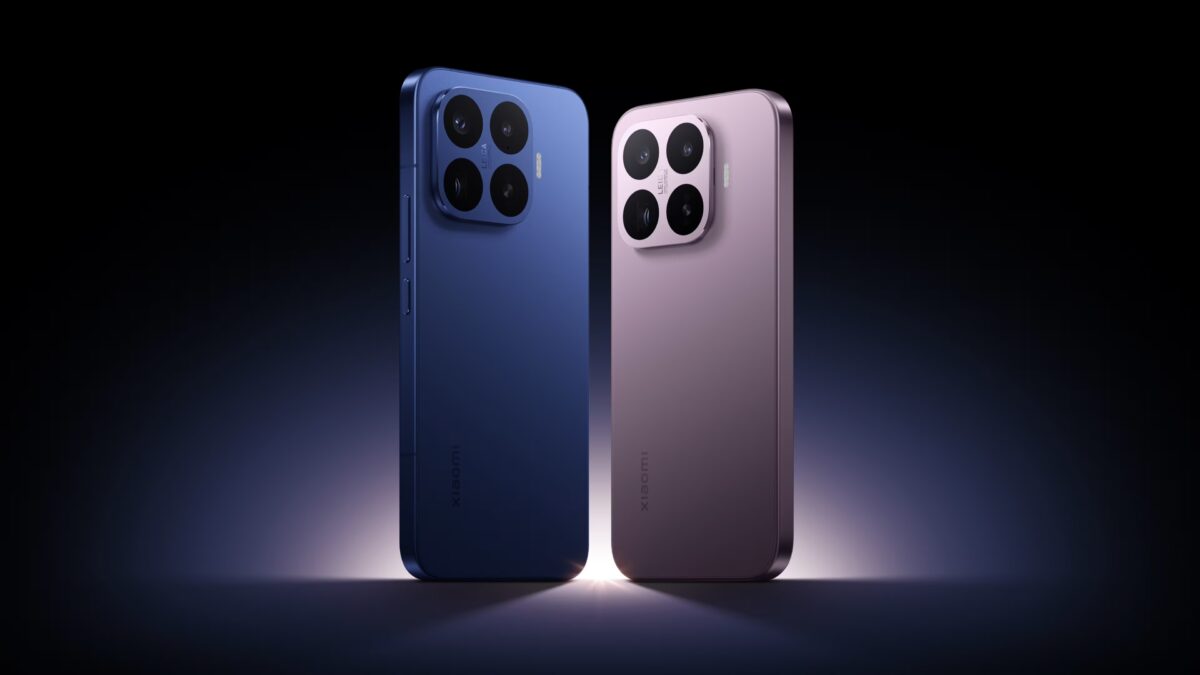
Xiaomi’s 17T lineup stands out not just for Leica cameras and vivid OLED displays, but for batteries that feel like pocket-sized power banks – 6500mAh on the 17T and a hefty 7000mAh on the 17T Pro. That jump in capacity raises a practical question: what kind of charger can juice these phones quickly without leaving them tethered to the wall all evening? And does the ultra-fast 140W charging even make a difference for these models?
Here’s the quick take: the standard Xiaomi 17T hits its charging peak comfortably with a 65- to 70W adapter, while the 17T Pro demands a 100W charger that supports PPS (Programmable Power Supply) to unlock its full potential. Charging speeds beyond these numbers won’t push the phone’s limits any further-models capped by their internal controllers simply won’t charge faster, no matter the wattage on the brick.
Xiaomi has simplified charging choices compared to a few years ago. They kept their HyperCharge tech but embraced the widely supported PPS standard, which many modern GaN chargers also use. This puts Xiaomi closer to Samsung’s approach-Samsung flagships have long used PPS-while brands like OnePlus still often require proprietary chargers and cables to hit maximum speeds.
Power requirements for Xiaomi 17T and 17T Pro smartphones
The Xiaomi 17T supports wired HyperCharge at 67W and third-party PPS chargers up to 50W. In practice, a 65W or 70W charger is the sweet spot. You can use a stronger charger, but it won’t make a difference in charging speed.
The 17T Pro steps it up with official 100W wired charging and 50W wireless HyperCharge. Plus, it’s compatible with PPS charging up to 100W from third-party chargers. This flexibility is a big shift-previously, many Android phones only maxed out charging speeds with the included charger. The 17T Pro can take full advantage of off-the-shelf GaN chargers without throttling.
- Xiaomi 17T: optimal charging at 65-70W
- Xiaomi 17T maxes out at 67W via HyperCharge, 50W via PPS
- Xiaomi 17T Pro requires a 100W charger for best performance
- Xiaomi 17T Pro supports up to 100W PPS and 50W wireless charging
- 140W chargers don’t speed up charging beyond the phones’ limits
One detail often overlooked is the cable. High-power charging needs a quality USB-C cable capable of handling the required current. Using an older or incompatible cable simply forces the phone to drop to slower charging modes. Phones that include the right cable in the box make for a smoother real-world experience than specs alone suggest.
Battery capacity is another standout point. The 7000mAh cell in the 17T Pro is impressive even by 2026 standards, where silicon-carbon batteries are becoming common in flagship phones. For comparison, current Samsung and Google flagships typically hover around 4700 to 5100mAh, so Xiaomi’s approach clearly favors bigger battery life over slim dimensions.
Recommended chargers and power banks for Xiaomi 17T series
For the Xiaomi 17T, compact 65- to 70W power adapters are ideal. They max out the phone’s fastest charging and remain portable enough for everyday carry, unlike bulky laptop chargers.
Baseus PicoGo AC22 Ultra Mini is a standout power bank offering 10,000mAh with a built-in 45W USB-C cable that doubles as a wrist strap. This design makes on-the-go charging hassle-free-grab, plug in, and stash without fumbling for cables.
Anker Nano Power Bank targets the same niche but includes a 70cm retractable cable, 10,000mAh capacity, 45W output, and features like a status screen and temperature control. It strikes a nice balance between portability and power, making it a solid daily companion compared to oversized ”laptop-style” banks.
Ugreen Nexode Power Bank 20K 100W sits in the middle ground with 20,000mAh capacity and full 100W output for fast charging the 17T Pro at full speed. Ugreen claims the case is about 20% lighter and more compact than many competitors in this class.
There’s no need to overspend on heavy chargers for the standard Xiaomi 17T-good 65- to 70W blocks cover its needs perfectly. The 17T Pro, however, calls for at least a 100W PPS charger to unleash its charging potential.
When it comes to power banks, consumers usually choose between lightweight 10,000mAh options for daily use or larger 20,000- to 25,000mAh models for travel. By 2026, the GaN charger market is well-established with brands like Anker, Ugreen, and Baseus dominating, so the choice boils down to form factor, port selection, and whether cables are included.
Compared to Apple, Samsung, or OnePlus, Xiaomi’s embrace of PPS for fast charging on a non-proprietary charger model reflects the broad industry move toward interoperability and user convenience. While Apple still pushes its Lightning standard (though transitioning to USB-C), and Samsung adopted PPS years ago, Xiaomi’s strategy makes high-speed charging more accessible without locking users into specific chargers or cables.
Looking ahead, the real competition will be on how quickly bigger batteries can be charged safely without generating heat or degrading battery life, and which manufacturers deliver chargers and phones that balance speed, convenience, and longevity. Xiaomi’s 17T series hints at a future where large-capacity phones won’t feel like a chore to power up overnight, but also won’t demand specialized chargers that clutter your bag.