

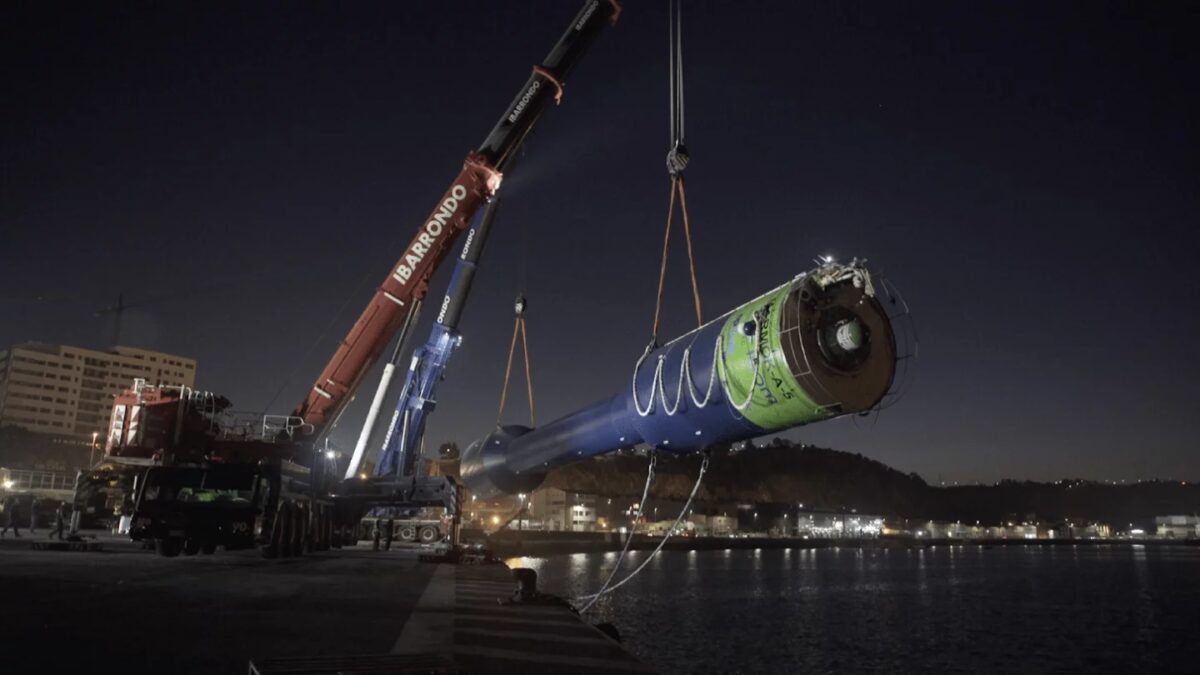
A Spanish engineering firm has taken another swing at one of clean energy’s most stubborn problems: turning ocean waves into reliable electricity. IDOM’s MARMOK-A-5 prototype has now been installed and connected to the grid at the Biscay Marine Energy Platform off the coast of Bizkaia in northern Spain, giving the project a real-world test after years of development.
The device is hard to miss. The floating wave energy converter stands 140 ft (42 m) tall, with about 20 ft (5 m) above the surface, and measures 20 ft (5 m) across. Anchored in nearly 300 ft (90 m) of water, it displaces 160 metric tons and is designed to squeeze electricity out of moving seas without needing the kind of fixed offshore structure that makes many marine-energy projects so expensive.
At its core, MARMOK-A-5 is a point absorber oscillating water column. Waves make the water move inside a cylindrical chamber, compressing air above it like a piston. That airflow drives a turbine, and the electricity travels to shore through a subsea cable. The latest version adds intelligent control systems, controllable blades, and onboard batteries, which is a polite way of saying the machine is trying to stay useful instead of becoming expensive scrap during bad weather.
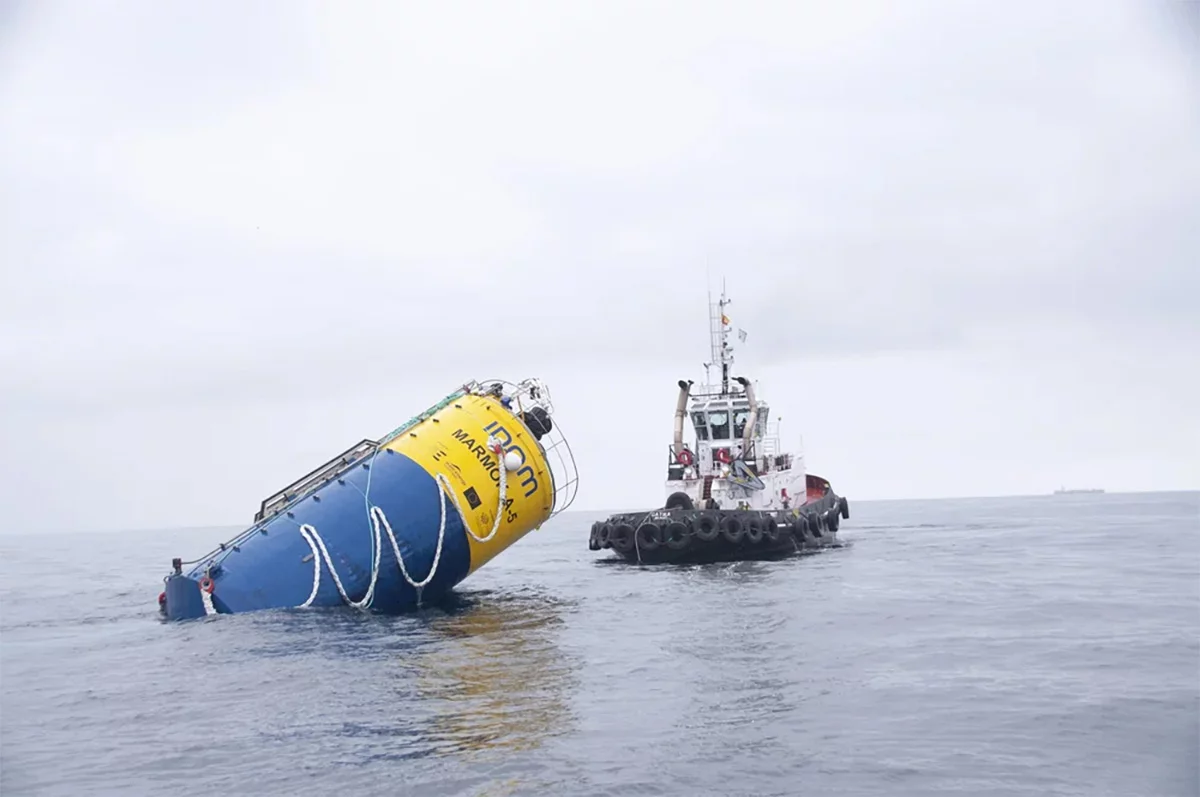
MARMOK-A-5 output and deployment
The prototype can generate up to 30 kW of electricity, enough to cover roughly 15-20 average US homes at peak output. That is hardly utility-scale power, but that is not the point yet: wave energy needs long-duration proving grounds before anyone starts talking seriously about commercial rollout. EuropeWave, the EU-wide R&D program backing the effort, is putting about €20 million (US$23 million) into that exact problem.
- Height: 140 ft (42 m)
- Above-water section: about 20 ft (5 m)
- Diameter: 20 ft (5 m)
- Water depth at anchor point: nearly 300 ft (90 m)
- Maximum power output: 30 kW
Wave energy still has a hard job ahead
IDOM says the safe installation and grid connection at BiMEP mark a key step toward commercial reality, and fair enough. The industry has spent years collecting impressive hardware and not nearly enough bankable economics. Other projects are pushing in parallel too, including Ocean Energy’s massive OE-25 off Hawaii, a University of Western Australia test in King George Sound, and Wavepiston’s plan for a 50-MW installation to serve Barbados.
The pattern is familiar: wave power is abundant, the engineering is punishing. Surviving storms, keeping maintenance manageable, reducing costs, and avoiding damage to marine ecosystems are the hurdles that keep wave converters in prototype purgatory. MARMOK-A-5 now has its best chance yet to show it can do more than bob nicely in the Atlantic.
The real question is whether this trial produces cleaner power numbers and fewer headaches than earlier iterations. If it does, Spain may have found a small but credible foothold in a sector that has been promising the ocean for years and delivering much less.