

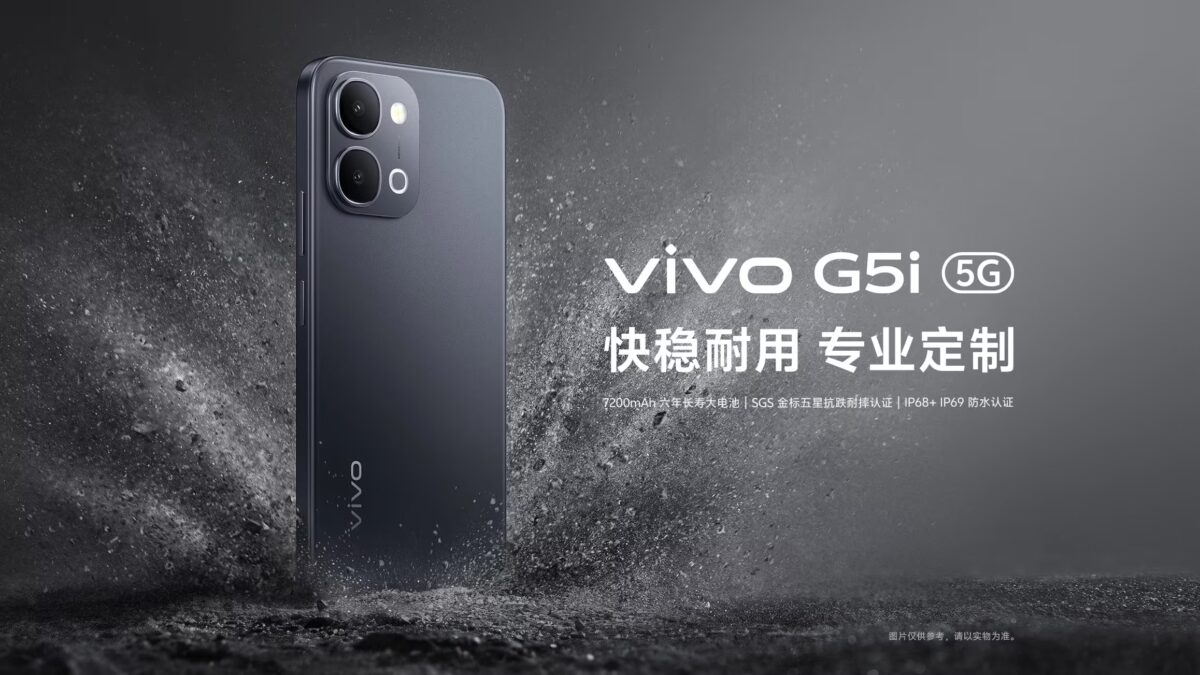
Vivo has quietly rolled out two budget-friendly smartphones in China-the G5i and G5z-with nearly identical specs and the same chassis, both labeled V2531A. Their standout features include a massive 7200mAh battery, IP68/IP69 water and dust resistance, and Qualcomm’s Snapdragon 4 Gen 2 chipset.
Both models are already listed on Vivo’s Chinese website. The 6GB RAM and 128GB storage variant costs 2,199 yuan (~$320), while the 8GB RAM and 256GB storage option goes for 2,899 yuan (~$420). These devices do not compete in the ultra-cheap segment, nor are they performance powerhouses. Instead, Vivo emphasizes long-lasting battery life and reliable everyday use.
Under the hood is the Snapdragon 4 Gen 2, Qualcomm’s 4nm chip designed for affordable 5G smartphones. Paired with up to 8GB RAM and UFS 3.1 storage up to 256GB, these devices should offer smoother app launches and faster file transfers compared to the slower memory common in this price range.
Vivo G5i and G5z specifications
- Display: 6.75-inch LCD, HD+ resolution, 120Hz refresh rate
- Processor: Qualcomm Snapdragon 4 Gen 2 (4nm)
- Memory: Up to 8GB RAM and 256GB UFS 3.1 storage
- Battery: 7200mAh with 44W fast charging
- Cameras: 50MP rear, 8MP front
- Protection: IP68 and IP69 water and dust resistance
- Extras: NFC, IR blaster, side-mounted fingerprint sensor
The headline feature here is the 7200mAh battery, significantly larger than the more common 5000-6000mAh capacity found in similar smartphones. Combined with the efficient Snapdragon 4 Gen 2 chip, these phones should easily last a full day-even with heavy use. Vivo also claims the battery can maintain capacity for up to six years and highlights a five-star durability rating for drops and shocks. While the marketing sounds ambitious, the trend is clear: Chinese brands are increasingly focusing on longevity and ruggedness over flashy cameras in affordable devices.
There are compromises. The LCD display has a modest HD+ resolution, and the front camera is just 8MP, which may not satisfy photography enthusiasts or gamers seeking high-end visuals. However, everyday essentials are covered: NFC for contactless payments, an IR blaster to control home appliances, and a robust water and dust resistance rating typically reserved for pricier models.
Vivo is targeting users who want a dependable phone that lasts without surprises. If 7000mAh-plus batteries become standard, endurance-focused smartphones could quickly shift from niche to mainstream in the midrange segment. For Vivo, these models also carve out a unique position, appealing to buyers who prioritize battery life and durability over sharper screens or better cameras that competitors offer at similar prices.