

British scientists have tested the ultra-black coating Vantablack 310 on satellites and found it could finally dim their brightness to levels acceptable for astronomers. The material reflects just 2% of incoming light, and researchers calculate it can reduce satellite glare to nearly the threshold the International Astronomical Union deems safe for the night sky. If in-orbit tests confirm this, satellite makers may have a straightforward way to dramatically reduce the visibility of mega-constellations from Earth-based telescopes.
How Vantablack 310 reduces satellite brightness
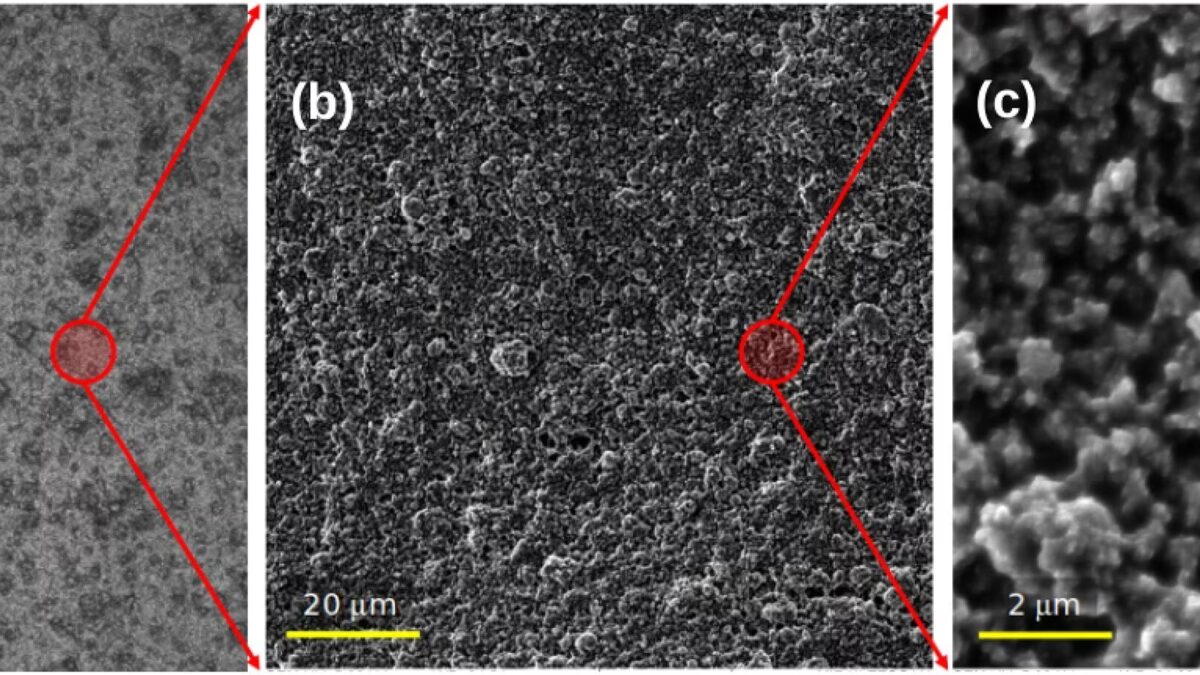
A team from the University of Surrey led the study, with the coating developed by Surrey NanoSystems, a company spun off from the same university. Researchers measured how the coating behaves under various lighting angles and viewing directions, then modeled how a satellite coated in Vantablack 310 would appear from Earth. Their results were published in the Monthly Notices of the Royal Astronomical Society.
Growing satellite numbers increase glare concerns
The concern has escalated as the number of satellites in low Earth orbit has exploded. Reflected sunlight creates trails and streaks in telescope images, making it harder to spot faint galaxies, supernovas, and potentially hazardous asteroids. According to the UN Office for Outer Space Affairs, thousands of active satellites are orbiting Earth, with SpaceX’s Starlink constellation alone surpassing 7,000 satellites. Plans to launch over 1.7 million more satellites in the coming years have astronomers worried that this interference will intensify.
Benefits of Vantablack 310 for telescope observations
Vantablack 310 offers another advantage beyond lowering overall brightness: it scatters reflected light evenly, cutting down on the sharp flares that often come from metallic surfaces. This matters because such sudden glints can heavily disrupt wide-angle sky surveys. Observatories like the Vera Rubin Observatory, which is already preparing to battle satellite trails regularly, could particularly benefit from this improved coating.
Previous efforts to reduce satellite glare
Efforts to darken satellites aren’t new. SpaceX experimented with a ”DarkSat” coated model, followed by using sunshades called VisorSats, but these solutions never fully solved the problem. Now, the Surrey team plans to test Vantablack 310 in space aboard the Jovian-1 satellite, a joint project by the universities of Surrey, Portsmouth, and Southampton. If orbital tests match lab results, satellite manufacturers will gain a promising new tool, and astronomers will get a chance to validate these improvements with real observations rather than simulations alone.
Future impact of Vantablack 310 on satellite design
The challenge of satellite glare is just one part of the growing collision between the rapid expansion of commercial satellite constellations and the need to preserve dark skies for scientific discovery. As more launches fill low Earth orbit, coatings like Vantablack 310 could set a new standard for balancing satellite utility with astronomers’ demands – potentially shaping design choices for the million-plus satellites planned in the decade ahead.