

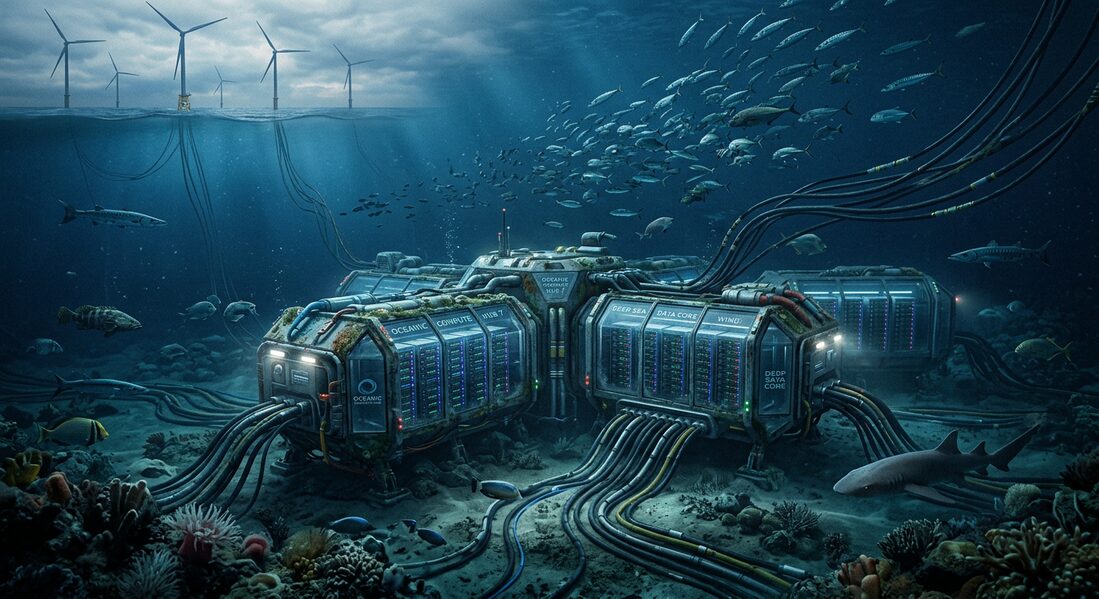
China has put a commercial underwater data center into service off the coast of Shanghai, and the pitch is as bold as it sounds: nearly 2,000 servers, ocean cooling, and power tied to offshore wind. The project cost $226 million, sits about 35 meters below the surface, and is aimed at AI, 5G, and big-data workloads that keep chewing through electricity and heat management like there is no tomorrow.
The facility was officially launched in June 2025, completed in October 2025, and only moved into full commercial operation last week after early tests in February went well. That timeline matters: data center operators everywhere are under pressure to find cheaper cooling and cleaner electricity, and underwater infrastructure is one of the stranger answers now being tried at scale.
What the underwater data center actually does
The site has a capacity of 24 MW and uses seawater as its main cooling system instead of conventional air-based equipment. In practical terms, that means less space wasted on chillers and a much easier path to dumping heat, which is one of the biggest hidden costs in AI-era computing.
- Capacity: 24 MW
- Server count: nearly 2,000
- Depth: about 35 meters
- Cost: $226 million
Why offshore wind power changes the equation
The data center is linked to offshore wind farms, so part of its electricity comes from renewable generation rather than the usual fossil-heavy grid mix. That is the smart bit: instead of moving electricity to the servers and then spending more energy to cool them, the project tries to compress the whole problem into one offshore system.
There is still a catch, of course. Underwater hardware has to survive pressure, corrosion, and the annoyance of being hard to service. So the system relies on sealed modules and remote management, which sounds elegant until something breaks and a technician has to go fishing for your server rack.
Shanghai underwater data center and the AI infrastructure push
China is not just showing off engineering theater here. The real bet is that data centers can be pushed closer to power sources and cooler environments as AI demand climbs, a theme that has also driven experiments with liquid cooling, modular edge sites, and other ways to squeeze more computing out of less infrastructure.
If the Shanghai site runs reliably, expect more interest in niche deployments where land, power, and heat are all expensive. If it does not, it will still have served its purpose: reminding the industry that the AI arms race is now deep enough to go underwater.