

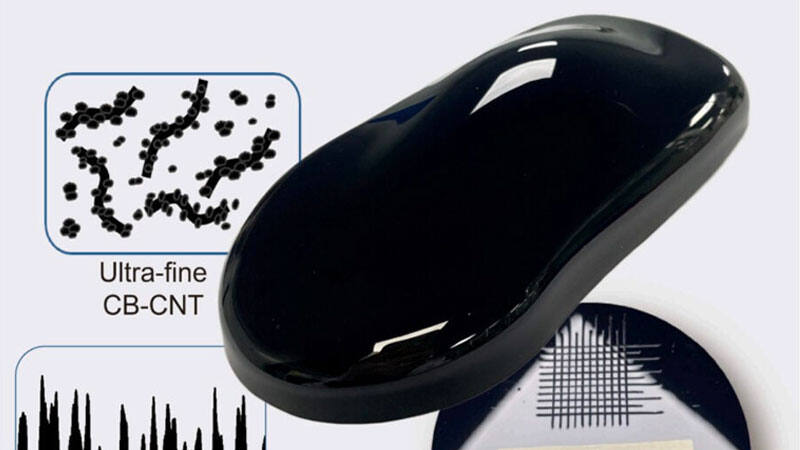
A research team from Singapore has built an ultra-black car paint that soaks up nearly all visible light, erases surface detail to the human eye, and looks less like a coating than a hole punched through reality. The target is not stealth fighters or space telescopes this time, but high-end black cars for buyers who want ”premium” to be read from orbit.
The coating is a water-based composite made from technical carbon black and carbon nanotubes. Unlike ordinary black paint, which mainly relies on pigment absorption, this one adds structural absorption: the nanotubes and carbon particles trap incoming light inside a microstructure until very little escapes.
Singapore car paint absorbs 99.90% of visible light
According to the researchers, average absorption in the visible range reaches 99.90%, while average reflectance sits at around 0.08%. That is absurdly dark even by the standards of exotic coatings, and it puts the finish in the same conversation as earlier nanotube-based materials that turned car panels into visual black holes.
BMW showed an X6 with Vantablack about seven years ago, but that project never made it onto roads. It ended up drawing more interest from military uses, including submarine coating, which tells you a lot about how impractical ”cool-looking” can be once safety rules enter the chat.
Why the finish cannot just be matte
The big problem is obvious: if a car body visually disappears, other drivers may not see its shape, edges, or depth correctly. The team says a glossy finish would be safer than a matte one, because it reduces the brain-bending optical effect that makes the object look like empty space.
That is the same trade-off the industry keeps running into with extreme coatings: the darker the material gets, the more useful it becomes for niche applications and the less friendly it is to normal consumer products. Paint can be art, but it also has to survive traffic.
Water, humidity and the long road to production
Past nanotube coatings have struggled with adhesion and moisture, so the Singapore team focused heavily on durability. Samples survived 10 days in water at 40 °C and 14 days in 95% humidity without visible defects, including peeling.
That is encouraging, but it is not the same as a factory-ready product. Before anyone starts ordering ghost-black Rolls-Royce lookalikes, the material still needs full testing for coating methods, long-term durability, and reliable real-world performance.
If this reaches commercial use, expect it to stay a luxury badge rather than a mainstream paint option. The likely first buyers will be the same crowd that likes black cars in the first place: the kind of customer who wants subtlety, then asks for the darkest possible finish.