

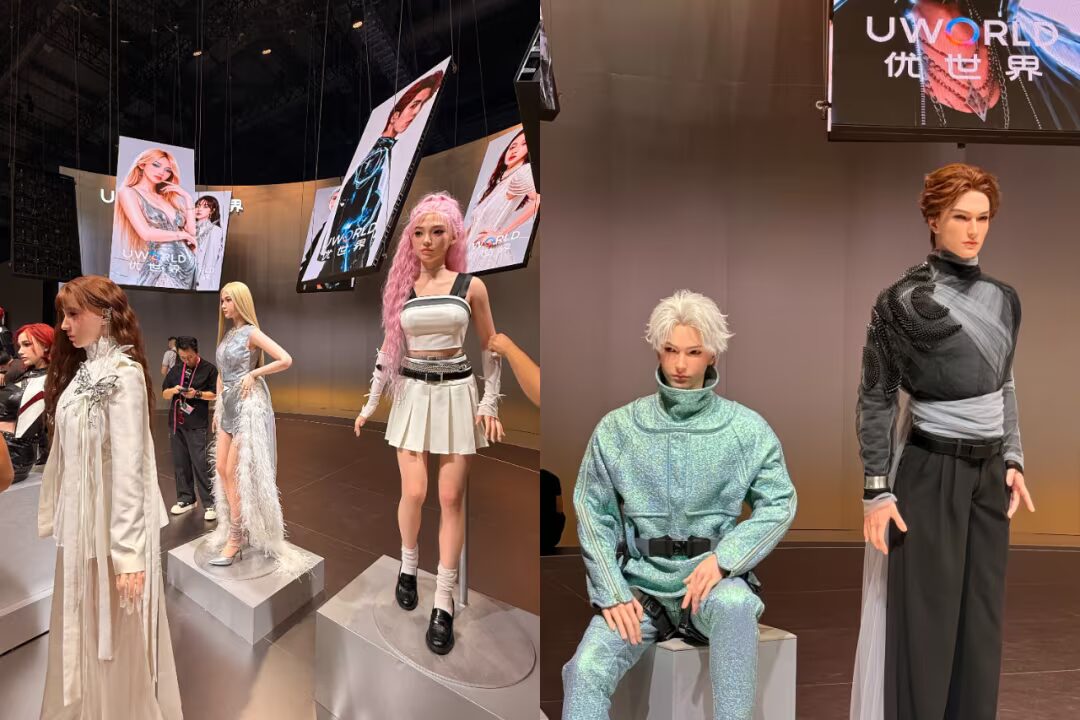
Chinese robotics firm Ubtech has launched the U1 series of humanoid robots, designed primarily for emotional communication, social assistance, and service roles. Unlike many recent humanoids aimed at industrial tasks, the U1 focuses on lifelike appearance, facial expressions, and fast conversational interaction-explicitly excluding any sexual functions.
At early demos, the U1’s realistic silicone skin and fine details stole the spotlight. The robot features textured skin, detailed hands, micro-wrinkles around the lips, and carefully applied makeup. According to Phoenix.com Technology, Ubtech collaborated with outside designers on the robot’s look, and staff even asked attendees not to touch the robot’s face to avoid damaging its makeup.
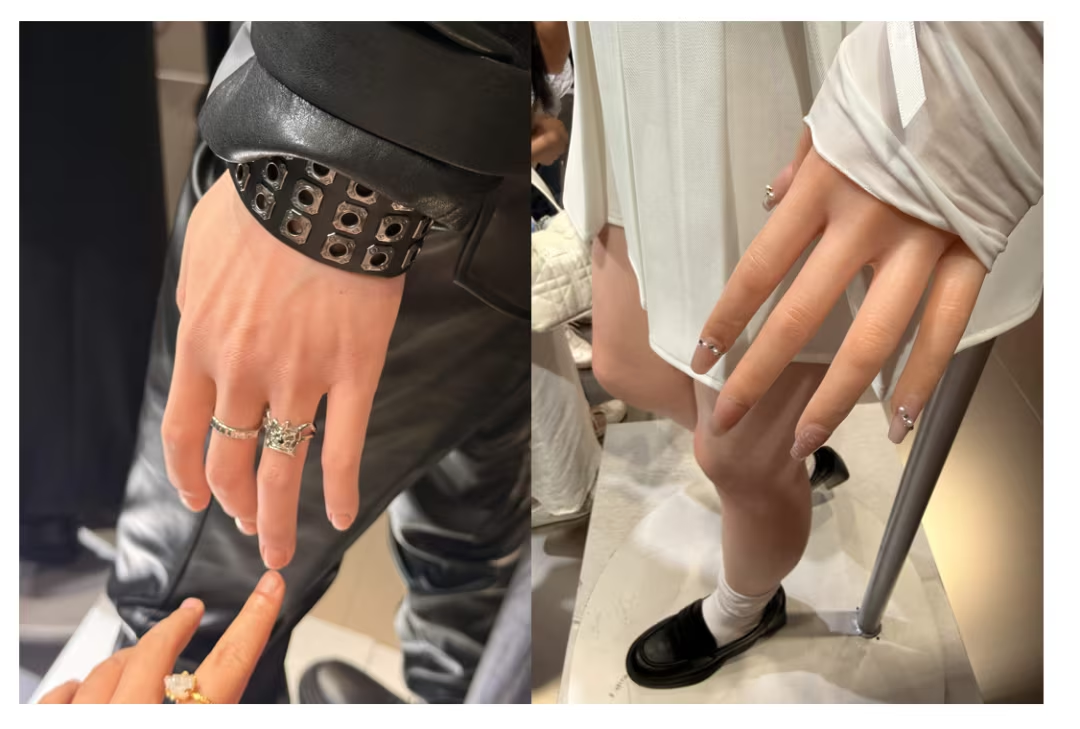
- 88 degrees of freedom
- 19 degrees of freedom in the head
- Over 30 facial micro-expressions
- Recognition of more than 20 emotions with over 90% accuracy
- Speech response delay around 500 milliseconds
Ubtech states the U1 has 88 degrees of freedom and a bionic double-jointed neck that replicates about 90% of basic human head movements. The platform can detect more than 20 subtle emotions with over 90% accuracy. It achieves a conversational latency of approximately 500 milliseconds, while synchronizing lip movements with speech in just 20 milliseconds, reducing the robotic feel of dialogue.
Ubtech envisions the U1 as a household and commercial companion for social interaction, emotional support, elderly care, psychological therapy, guest reception, exhibitions, and education. This sets it apart from recent humanoids, which largely target industrial automation. For example, Tesla’s Optimus is designed for factories and logistics, Figure AI’s Figure 02 was trialed in BMW’s manufacturing facilities, and China’s Unitree rolled out their robots more as research platforms than personal companions.
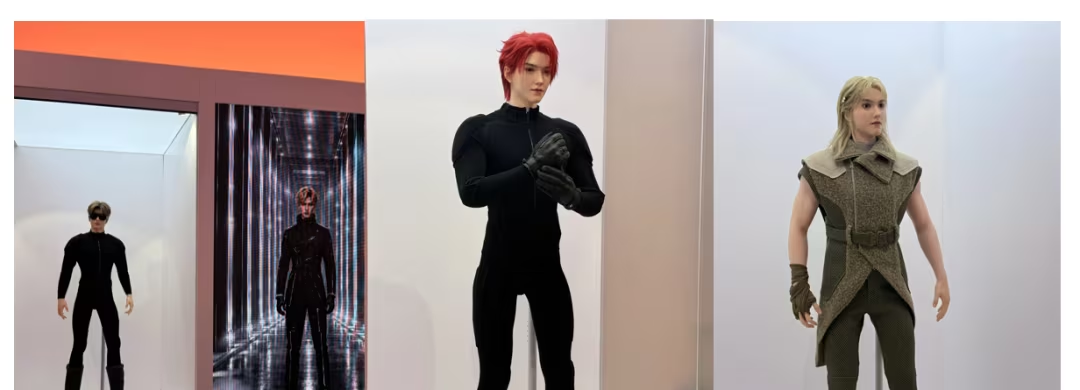
The company highlights that manufacturing the robot’s skin is the toughest challenge, not the AI software. The U1’s three-layer skin model uses materials that mimic human warmth and elasticity. The robot’s head alone consists of 2,000 to 3,000 parts, which accounts for 60-70% of the materials used in Ubtech’s previous industrial robot, the S2.
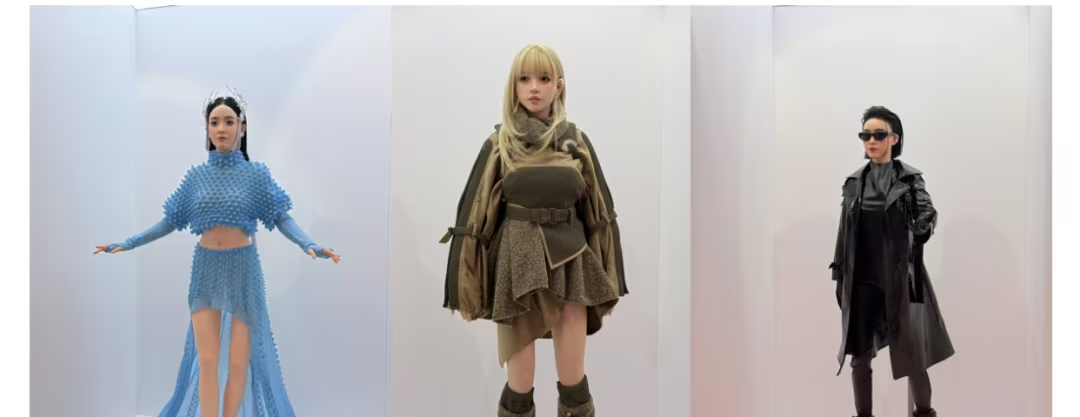
Founder Zhou Jian revealed that eyebrow and eyelash implantation was initially done by hand before the team developed mass-production techniques. This manual craftsmanship is a significant hurdle for humanoids aiming to break into everyday or commercial environments with a believable human presence.
Goldman Sachs projects the humanoid robot market could reach $38 billion by 2035, though most forecasts focus on industrial use. If Ubtech aims to scale its emotional humanoids, it faces the dual challenge of proving both technical reliability and convincing real-world demand beyond trade show showcases.
Ubtech’s U1 lands in an emerging niche: realistic social robots designed to engage humans emotionally rather than replace factory labor. How well the U1 balances lifelike presence with practical utility will be an intriguing test of whether emotional humanoids can carve out a sustainable market alongside industrial giants like Tesla and Figure AI.