• 3 min read
Uber starts testing Lucid robotaxis in San Francisco
Uber’s next robotaxi experiment is already rolling around San Francisco, but only for employees for now. The company has begun testing a premium robotaxi service built around the Lucid Gravity SUV and Nuro’s self-driving
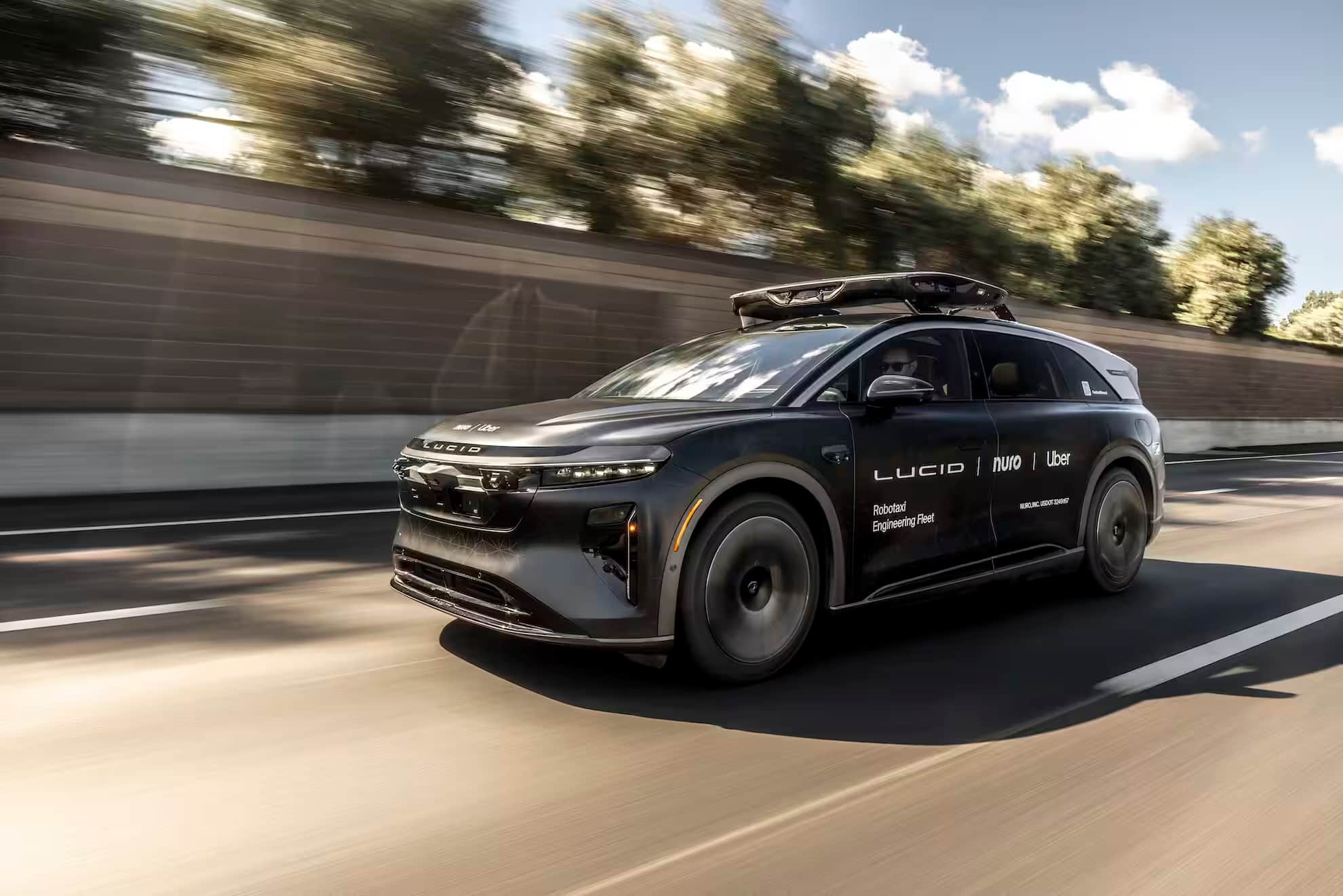
Uber’s next robotaxi experiment is already rolling around San Francisco, but only for employees for now. The company has begun testing a premium robotaxi service built around the Lucid Gravity SUV and Nuro’s self-driving system, a step toward a public launch later this year.
The test fleet is not trying to hide itself. These Gravity SUVs are packed with sensors, run in autonomous mode, and still carry a human safety operator behind the wheel. That is a familiar setup for this stage of development: impressive enough to signal progress, cautious enough to keep regulators and passengers from having a heart attack.
Uber employees are the first passengers
According to Nuro, select Uber employees can request the ride through the Uber app. The point is not to dazzle the public yet; it is to see how the full stack behaves in the messy real world, from the self-driving software to the car to the rider experience.
Recommended reading
Graphite One advances Ohio battery-materials plant
That includes one of the hardest parts of robotaxis: pickups and drop-offs. Anyone who has watched a rideshare driver circle the block three times knows this is a messy human problem. For autonomy systems, it is even messier.
What is inside the Lucid Gravity robotaxi
The robotaxi version of the Lucid Gravity was revealed in January and uses high-resolution cameras, solid-state lidar sensors, and radars to understand its surroundings. Nuro’s system is powered by Nvidia’s Drive AGX Thor computer, which gives the vehicle the processing muscle needed for automated driving.
- Vehicle: Lucid Gravity SUV
- Autonomy stack: Nuro self-driving system
- Compute: Nvidia Drive AGX Thor
- Sensors: high-resolution cameras, solid-state lidar sensors, and radars
Uber invested $300 million in Lucid and separately agreed to buy “at least” 20,000 Gravity SUVs over the next six years. It also put an undisclosed “multi-hundred-million dollar” amount into Nuro, which is a lot of confidence for a company that is still proving the hardware on public roads rather than in a glossy demo.
A premium robotaxi service is the goal
Uber plans to own and operate the service, likely with help from a third party. Production of the modified Gravity vehicles is expected to begin in late 2026, according to a regulatory filing posted last year, so this is still early innings even if the app-based tests make it look more immediate.
Nuro says it has already completed closed-course testing and started public road testing of the autonomous Gravity SUVs late last year. The company also says it now has 100 of the vehicles in its engineering fleet, spread across multiple U.S. cities and states to gather real-world data.
Waymo and Tesla are already in the race
This is the part of the robotaxi race where the winners stop talking about concepts and start sweating the boring stuff: rider handoff, edge-case roads, and whether the vehicle behaves like a polished service or a very expensive science project. Waymo has spent years doing exactly that in select markets, and Tesla is still trying to turn its promises into something more than a demo reel.
If Uber and its partners can make a premium service feel normal for employees, the public launch later this year gets a lot less imaginary. The harder question is whether “premium” becomes a selling point or just a polite way of saying “we need to charge enough to make the math work.”

Frontier Editor
Dan is our resident futurist, covering electric mobility, space exploration, and the smart home. He's interested in atoms just as much as bits. Whether it's a new battery chemistry, a reusable rocket, or a protocol that finally makes IoT devices talk to each other, Dan breaks down the engineering that pushes humanity forward.