

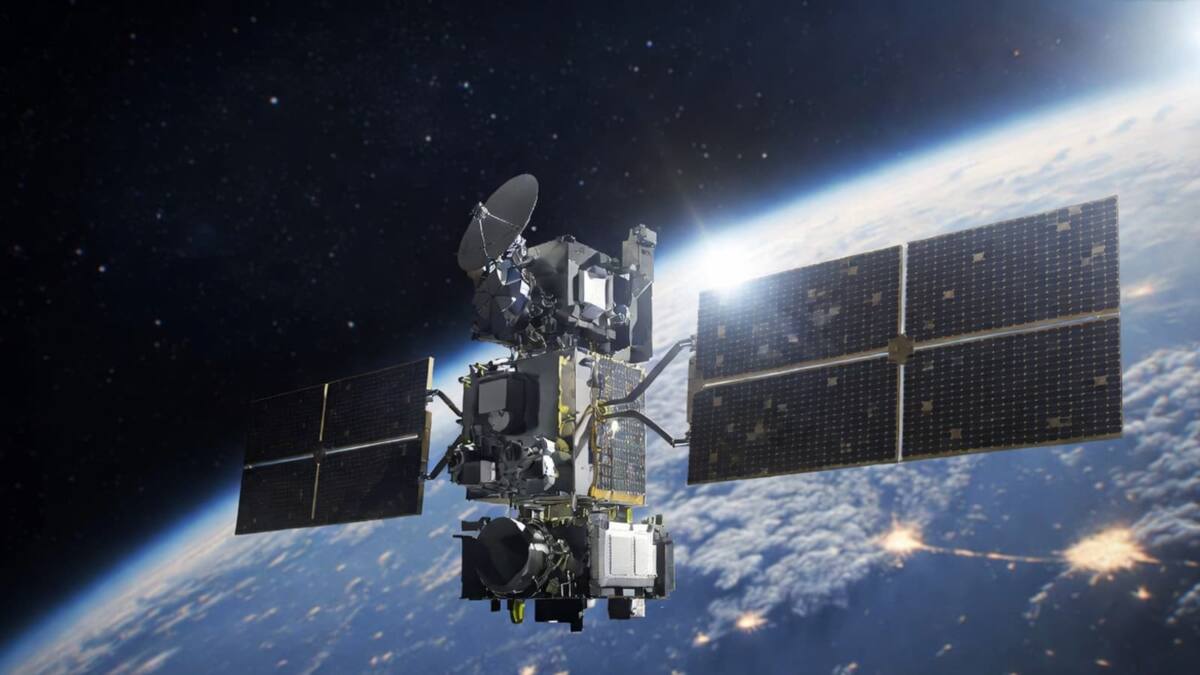
China has sent TJSW-24 into orbit to test multi-band satellite communications and high-speed data transmission, kicking off another round of work on space-based connectivity that could eventually feed both civilian networks and military systems. The TJSW-24 satellite lifted off on a modified CZ-7A rocket from Wenchang on Hainan Island, underscoring how much of China’s launch cadence is now built around the Long March family rather than one-off heavy-lift stunts.
The launch took place on 27 May at 00:16 Beijing time, according to CASC, which said the spacecraft was developed by its Eighth Academy. That makes this the first CZ-7A mission of 2026 and the 15th flight for the rocket overall. In a launch market where bandwidth is becoming as strategic as payload mass, test satellites like this are often the quiet prelude to much louder deployment plans.
CZ-7A adds another flight to the Long March tally
The CZ-7A is a three-stage liquid-fuel rocket and, at roughly 60 meters long, is billed as the longest rocket in China’s lineup. CASC says it can deliver up to 12 tonnes to low Earth orbit or 7 tonnes to geostationary transfer orbit, which gives Beijing a flexible workhorse for missions that need more than a standard medium-lift launcher but less than a headline-grabbing super heavy vehicle.
This was also the 645th launch for the Long March family overall, a reminder that China’s space program is now operating at industrial scale. That matters because repeated launches are how countries turn satellite communications from a demonstration into infrastructure, and China has been steadily building that habit while rivals race to expand broadband constellations of their own.
Why TJSW-24 is worth watching
TJSW-24’s stated job is testing multi-band communications and fast data links, which sounds dry until you remember how aggressively the satellite internet race has accelerated. Starlink set the pace, Europe is moving to secure more sovereign capacity, and China has been pushing its own answer through a mix of experimental spacecraft and larger constellation plans.
- Payload: TJSW-24
- Mission: testing multi-band satellite communications
- Launcher: modified CZ-7A
- Launch site: Wenchang, Hainan
- Launch time: 27 May at 00:16 Beijing time
The next question is whether this test feeds into a broader operational network or stays in the familiar pattern of useful but isolated demonstrations. China has the launch rate and the hardware pipeline; the real tell will be how quickly those experiments turn into services people can actually use, not just acronyms on a mission manifest.