

Tesla Optimus production will start in very small volumes, Elon Musk says, with limited-run output due to begin this summer and mass production only set for next year. Tesla’s humanoid robot push is moving out of the hype phase and into the awkward part: actually making the thing.
That is a much less glamorous timeline than the robot-factory fantasy usually sold alongside Tesla’s AI ambitions, but it is also the realistic one. Building a humanoid robot is not the same as bolting together an electric car, and Tesla is dealing with roughly 10,000 unique components per machine. That alone explains why the company is treating Optimus more like a manufacturing science project than a ready-made volume product.
Why Tesla is leaning on Optimus
Tesla has good reason to keep talking about robots. Growth in EV sales has cooled, and Musk has spent a long time pitching robotaxis and humanoid robots as the next big engines for the business. If those bets work, Tesla gets something far more expandable than another car line; if they don’t, it gets a lot of expensive steel and software with nowhere to go.
The company’s Fremont site, once associated with Model S and Model X production, has already been reoriented toward Optimus work. That shift is a neat reminder that Tesla is willing to repurpose old auto capacity for new dreams, even if the dreams are still in the prototype-to-trickle-production stage.
What Musk said about the Optimus production ramp-up
Musk’s message was blunt: the early output will be modest because Optimus is a brand-new product category for Tesla. In other words, this is not a Model 3-style ramp where the company can lean on familiar car-building muscle memory.
- Limited production: this summer
- Mass production: next year
- Component count: about 10,000 unique parts
That component count is the real tell. Robots are a supply-chain headache disguised as a sci-fi demo, and the hard part is not the public unveiling but getting thousands of parts, tolerances, and suppliers to behave in the same direction.
Tesla’s robot bet is still in the early innings
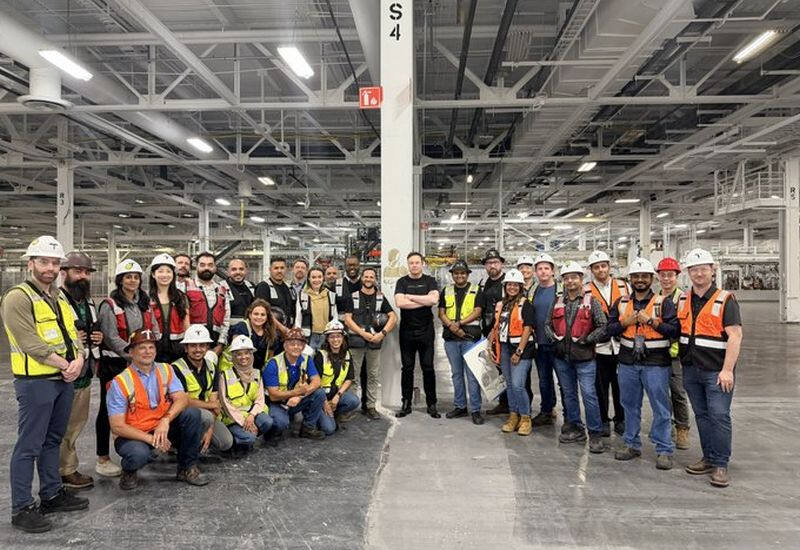
The Fremont photo may have looked like a victory lap, but Musk’s clarification suggests the opposite: Tesla is still at the beginning of the grind. The next milestone is not some cinematic factory takeover; it is whether the company can move from a few robots to a repeatable production process without turning the line into a bottleneck museum.
If Optimus does scale next year, Tesla gets proof that its manufacturing playbook can stretch beyond cars. If it stumbles, expect the robot talk to keep outrunning the output for a while longer.